









Drive-Thru and Parking-Lot Exit Crashes in Florida
By the Law Offices of Wolf & Pravato · Published July 14, 2026
Quick answer: Crashes at drive-thrus and parking-lot exits happen on private property, but the same rules of care and right of way apply. Fault usually turns on who had to yield, and a driver who pulled out or turned without yielding is generally responsible.
Not every crash happens on the open road. Collisions at parking-lot exits, in drive-thru lanes, and in the aisles of shopping centers are common, and they raise a question people often get wrong: do the rules still apply on private property? They do, and understanding how is where Florida car accident lawyers begin.
Crashes off the public road
Parking lots and drive-thrus concentrate slow but constant vehicle movement in tight spaces with limited sightlines: cars backing out, cruising for spaces, cutting across aisles, and nosing out of exits into traffic. Because these crashes usually happen at low speed, drivers assume they are minor or that fault is unclear. Neither is safe to assume, because low-speed crashes can still cause real injuries and the fault analysis is more definite than it looks.
Do traffic laws apply on private property?
The short answer is that a driver’s duty of care follows them onto private property.
The duty of reasonable care in a lot
Even where the formal traffic code may not apply in every particular on private property, every driver owes a duty to operate their vehicle with reasonable care to avoid harming others. A driver in a parking lot must watch for other vehicles and pedestrians, control their speed, and yield where it is reasonable to do so. That baseline duty is what most parking-lot fault comes down to, regardless of the private setting.
Right of way at exits and aisles
Parking lots have an informal hierarchy that courts and insurers recognize. A vehicle in a main thoroughfare or feeder lane generally has the right of way over a vehicle pulling out of a parking space or a smaller aisle, and a vehicle exiting a lot onto a public road must yield to traffic already on the road. A driver who pulls out of a space, crosses an aisle, or exits the lot without yielding to a vehicle with the right of way is usually at fault.
The crashes these areas produce
A few collision types recur at these sites.
Pulling out of a lot into traffic
One of the most serious is a driver exiting a parking lot or drive-thru who pulls into the road without yielding, striking or being struck by a vehicle traveling on the roadway. The exiting driver must wait for a safe gap and yield to through traffic, so pulling out into an oncoming vehicle generally places fault on the driver leaving the lot.
Drive-thru and aisle collisions
Within a lot, crashes happen when two cars back out of opposing spaces at once, when a driver cruising an aisle strikes a car backing out, or when vehicles meet at an uncontrolled intersection of two aisles. Drive-thru lanes add rear-end crashes and disputes when a driver cuts into or out of the line. Each turns on who was moving, who had the right of way, and who failed to look.
Sorting out fault
Because both drivers are often moving in a lot, fault can be shared. Florida’s comparative fault statute apportions responsibility by percentage among the drivers whose conduct caused the crash, and an injured person’s recovery is reduced by any share assigned to them. A driver who was backing without looking, cruising too fast for a crowded lot, or exiting without yielding may bear most or all of the blame, and establishing who had the right of way is what sets those percentages.
Proving a parking-lot or drive-thru crash
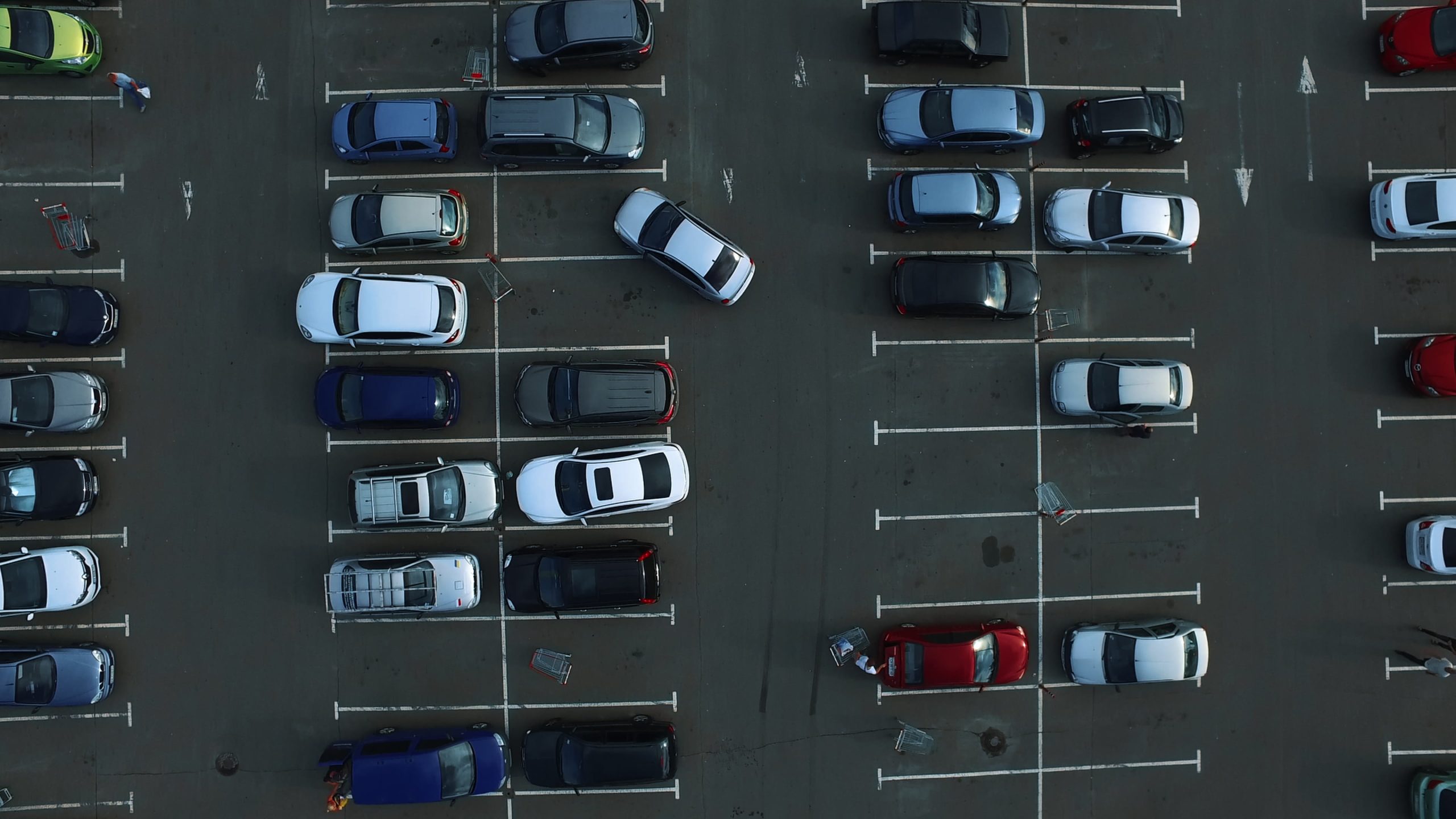
These cases turn on the vehicles’ movements and positions. Parking lots and drive-thrus are usually blanketed with surveillance cameras, and store, business, and dashcam footage frequently captures the crash. The point of impact, the vehicles’ positions, the driver accounts, and witness statements help reconstruct who was moving and who had the right of way. Because footage is overwritten within days, moving quickly to preserve it is one of the most valuable early steps, and reviewing how medical bills are paid after a car accident helps manage costs. Victims can also reach Miami car accident lawyers.
The injuries and full value of a lot crash
A parking-lot or drive-thru crash may happen slowly, but the harm can be real and the claim deserves full attention.
Why low speed still causes real harm
A low-speed impact can still cause whiplash, fractures, and head or back injuries, and a pedestrian struck in a lot can be seriously hurt. The instinct to treat these crashes as trivial can lead people to skip care or accept a quick settlement, when the injuries deserve a proper evaluation and full valuation.
Damages worth documenting
A complete claim accounts for medical care, lost income, and the pain and limitation the crash caused, not a discounted figure based on the low speed. Documenting the injuries thoroughly and letting their full extent become clear protects an injured person from settling for less than the crash actually cost.
Because parking-lot crashes are so often written off as minor, the surrounding evidence matters more than people expect. The near-universal presence of surveillance and store cameras means that, captured in time, footage can settle a disputed account of who was moving and who had the right of way. Securing that video quickly, before it is overwritten, is frequently what turns a he-said-she-said lot crash into a clear picture of who was at fault.
Hurt in a parking-lot or drive-thru crash?
The rules of care and right of way still apply on private property, and low speed does mean no fault. The Law Offices of Wolf & Pravato gather the footage and evidence that show who had to yield. Call 954-522-5800 for a free case review.
Sources: Fla. Stat. §768.81
Frequently Asked Questions:
Q1. Do traffic laws apply in a parking lot?
A driver’s duty of reasonable care follows them onto private property. Even where the formal traffic code does not apply in every detail, drivers must watch for others, control their speed, and yield where reasonable, so parking-lot fault usually comes down to that baseline duty.
Q2. Who has the right of way in a parking lot?
Generally, a vehicle in a main thoroughfare or feeder lane has the right of way over one pulling out of a space or a smaller aisle, and a vehicle exiting the lot onto a road must yield to traffic already on the road. A driver who fails to yield is usually at fault.
Q3. Who is at fault when a car pulls out of a lot into traffic?
Usually the driver leaving the lot. That driver must wait for a safe gap and yield to through traffic, so pulling into the path of an oncoming vehicle generally places fault on the exiting driver.
Q4. Are low-speed parking-lot crashes really worth a claim?
They can be. Low-speed crashes can still cause real injuries, and the fault analysis is more definite than drivers assume. A claim should account for the actual injuries rather than being dismissed because the crash happened slowly on private property.
Q5. Can fault be shared in a parking-lot crash?
Yes. Because both drivers are often moving, Florida’s comparative fault law apportions responsibility by percentage. A driver backing without looking, speeding through a crowded lot, or exiting without yielding may bear most or all of the blame.
Q6. What evidence helps prove a parking-lot crash?
Surveillance, store, business, and dashcam footage, the point of impact, the vehicles’ positions, driver accounts, and witness statements help reconstruct who was moving and who had the right of way. Because footage is overwritten quickly, preserving it promptly is important.
Q7. Are low-speed parking-lot injuries worth pursuing?
They can be. A low-speed impact can still cause whiplash, fractures, and head or back injuries, and a struck pedestrian can be seriously hurt. A claim should reflect the actual injuries rather than being dismissed because the crash happened slowly on private property.
About the Firm
Published by the Law Offices of Wolf & Pravato
For nearly three decades, the Law Offices of Wolf & Pravato have represented injured Floridians and their families across South and Southwest Florida, exclusively on the plaintiff’s side. The firm is led by managing partner Richard P. Pravato, a Board-Certified Civil Trial Attorney (Florida Bar No. 86150). To reach the lawyer who handles cases in your area, visit our attorneys page, explore our practice areas, or learn more about our firm.
Law Offices of Wolf & Pravato · 2101 W. Commercial Blvd., Suite 1500, Fort Lauderdale, FL 33309 · 954-522-5800 · Free case evaluation: 844-643-7200
Disclaimer: This blog post is provided for general informational purposes only and does not constitute legal advice. Reading this content does not create an attorney-client relationship between you and the Law Offices of Wolf & Pravato. Laws change, and every case is different, so you should not act or rely on any information here without consulting a licensed Florida attorney about your specific situation. For advice regarding your circumstances, please contact our office for a free consultation.
Recent Posts
- Wrong Burial Plot and Grave-Site Errors in Fort Lauderdale

- Rainwater Falls at Fort Lauderdale Store Entrances

- Parking-Lot Backing Crashes in Fort Lauderdale: Who Has the Right of Way?
- Elevator and Escalator Injuries at Fort Lauderdale Shopping Centers
- Delivery Driver Car Accidents in Lakeland: Who Pays?

- Injured as a Passenger in Fort Lauderdale: Whose Insurance Pays?




FLORIDA’S PERSONAL INJURY ATTORNEYS FOR + 20 YEARS