













Nighttime and No-Light Bicycle Crashes in Florida: Fault and Lighting Laws
By the Law Offices of Wolf & Pravato · Published July 10, 2026
Quick answer: Florida requires a front light and rear reflector when cycling at night, and a rider without them may share some fault. But a missing light rarely ends a claim because a driver must still use due care and see a cyclist who is there to be seen.
Riding a bicycle after dark carries real dangers: reduced visibility, drivers who do not expect cyclists, and less time to react. Florida law addresses night riding with specific lighting requirements, and a crash often raises the question of whether a rider’s missing light shifts the blame. The answer is more favorable to riders than many assume, and a review of the Florida bike accident claim process starts there.
Why is night riding so risky
At night, a driver’s field of view shrinks to what the headlights illuminate, and a cyclist, small and often unlit, can be hard to spot against a dark background. Drivers are also less likely to anticipate a bicycle after dark, and impaired driving rises later at night. These conditions make nighttime bicycle crashes both more frequent and more severe, which is why both riders and drivers carry heightened responsibilities after sunset.
Florida’s bicycle lighting law
Florida sets clear rules for equipping a bicycle for night riding, and understanding them frames the fault analysis.
What the law requires after dark
Under Florida’s bicycle regulations, a bicycle operated between sunset and sunrise must be equipped with a lamp on the front exhibiting a white light visible from a distance, and a lamp and reflector on the rear exhibiting a red light and reflector visible from a distance. These requirements exist so that a cyclist can be seen by approaching and following traffic. A rider who complies is doing exactly what the law asks to make themselves visible.
Why lights and reflectors matter
Lights and reflectors do more than satisfy the statute; they materially reduce crash risk by making the rider visible when a driver most needs to see them. A front light lets oncoming and crossing drivers detect the rider, and a rear light and reflector protect against being struck from behind. Because visibility is the central challenge at night, proper lighting is one of the most effective steps a rider can take, and it also strengthens a rider’s position in the event of a crash.
A missing light does not end a claim
Riders sometimes assume that being unlit at night automatically defeats their claim. It does not.
The driver’s duty of due care
Regardless of the cyclist’s lighting, a driver has a duty to operate safely and to see what is there to be seen. A driver traveling at a reasonable speed, paying attention, and using their headlights properly can often see and avoid a cyclist, even without a light, especially where street lighting is present. A driver who was speeding, distracted, drunk, or simply not looking cannot excuse the crash by pointing to the rider’s missing light; the driver’s own failure remains a cause.
Comparative fault is not a bar to recovery
When a rider lacked required lighting, the rider may be partly at fault, but Florida’s comparative-fault system reduces recovery by the rider’s share rather than barring recovery entirely. Florida’s comparative fault statute apportions responsibility, so a rider found, for example, partly responsible for being unlit can still recover the remaining portion from an at-fault driver. A missing light is a factor to weigh, not an automatic defeat.
When the driver is clearly at fault
In many nighttime crashes, the driver bears the primary or entire fault regardless of the rider’s lighting. A driver who ran a stop sign or red light, turned across a rider’s path, drifted into a bike lane, passed too closely, or was impaired caused the crash through their own conduct. Where the rider was lawfully positioned and the driver violated a clear duty, the presence or absence of a light may matter little to the outcome. Establishing the driver’s specific violation is what anchors these cases.
Proving a nighttime bicycle crash
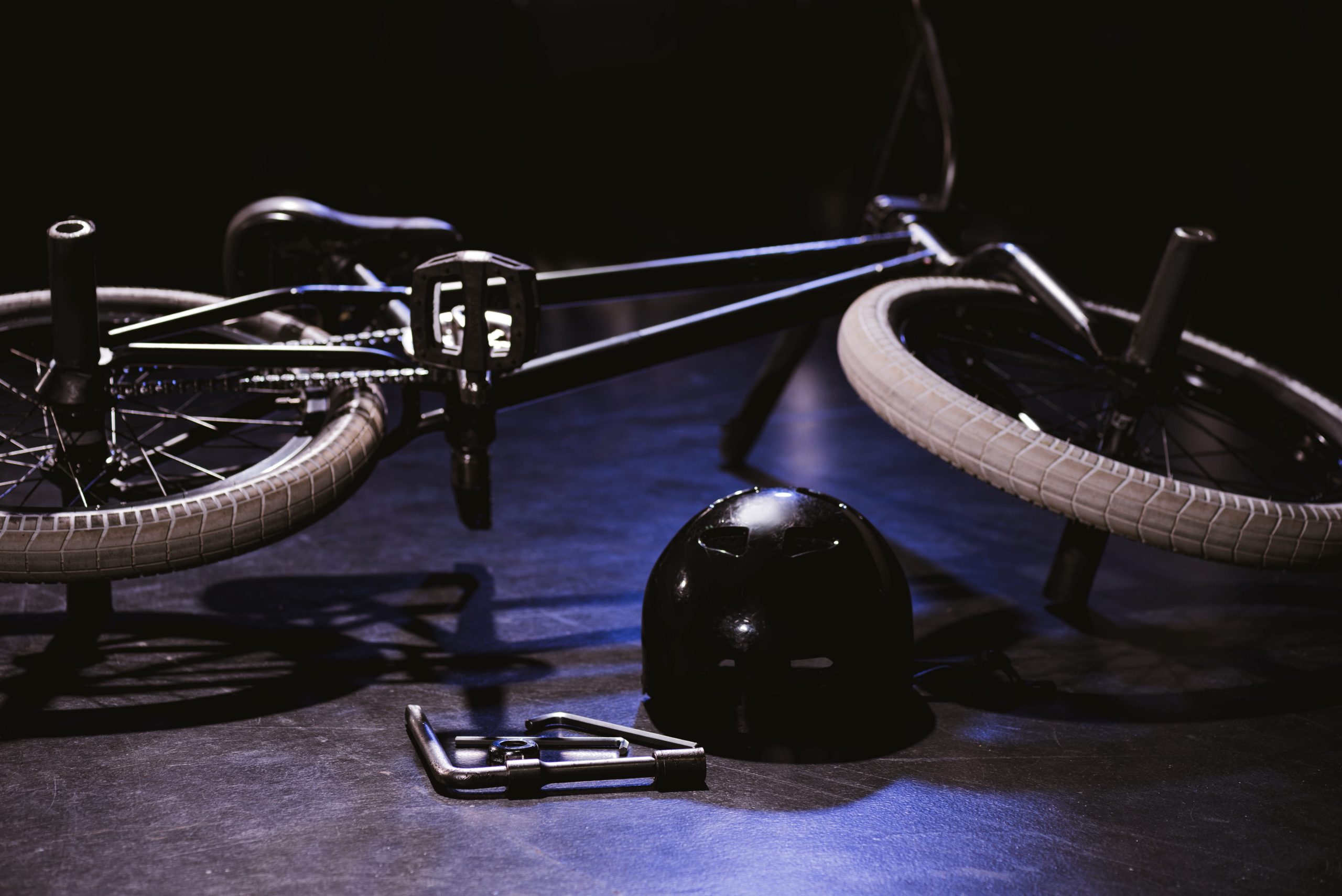
These cases turn on visibility, positioning, and the driver’s conduct. Evidence of the rider’s lighting and clothing, the street lighting at the location, the point of impact, the driver’s speed and attention, and any traffic, business, or dashcam footage helps establish what a reasonable driver should have seen and done. A rider’s own lights or helmet camera can be decisive. Because this evidence fades quickly, prompt investigation matters, and riders can reach Miami bicycle accident lawyers or Fort Lauderdale bicycle accident lawyers.
Injuries and steps after a night crash
A cyclist thrown at night is exposed to serious injury, and the steps taken afterward protect both health and any claim.
Road rash, fractures, and head injury
Hitting the pavement can cause deep abrasions, broken bones, and, despite a helmet, concussion or more serious brain injury. Some harm is not obvious at the scene, so prompt medical evaluation protects health and creates a record tying the injuries to the crash, closing off an argument that the harm came from something else.
Preserving the scene and the lights
Where a rider is able, photographs of the vehicle’s position, the point of contact, and the roadway and street lighting preserve facts that fade fast, and preserving the bicycle and any lights the rider was using can rebut a claim that the rider was unlit. Reporting the crash to law enforcement creates an official record, and identifying witnesses helps establish what a driver should have seen.
Ultimately, a nighttime bicycle case rarely comes down to a single question: whether the rider had a light. It comes down to what a reasonable, attentive driver would have seen and done, and whether the driver met that standard. Building the case around the driver’s speed, attention, and specific conduct, rather than conceding the point because a light was missing, is what gives an injured rider a fair chance at the recovery the law allows.
Hurt in a nighttime bicycle crash in Florida?
A missing light rarely ends a claim, because a driver still must see and avoid a cyclist who is there. The Law Offices of Wolf & Pravato gather the evidence that shows what the driver should have done. Call 954-522-5800 for a free consultation.
Sources: Fla. Stat. §316.2065; Fla. Stat. §768.81
Frequently Asked Questions:
Q1. What does Florida’s bicycle lighting law require at night?
Between sunset and sunrise, a bicycle must have a front lamp showing a white light visible from a distance and a rear lamp and reflector showing red and visible from a distance. These requirements exist so approaching and following drivers can see the rider.
Q2. If I had no light, can I still recover after a crash?
Usually yes. A missing light may make a rider partly at fault, but Florida’s comparative-fault system reduces recovery by that share rather than barring it. A driver still must use due care and see a cyclist who is there to be seen, so the driver’s own failure remains a cause.
Q3. Does a missing light automatically make the crash my fault?
No. Fault depends on both parties’ conduct. A driver who ran a light, turned across the rider’s path, passed too closely, or was impaired caused the crash through their own violation, and the rider’s lighting may matter little to the outcome in those cases.
Q4. Why do bike lights and reflectors matter so much?
Because visibility is the central challenge at night. A front light lets oncoming and crossing drivers see the rider, and a rear light and reflector guard against being struck from behind. Proper lighting reduces crash risk and strengthens a rider’s position if a crash occurs.
Q5. When is the driver clearly at fault in a night crash?
When the driver ran a stop sign or red light, turned across the rider’s path, drifted into a bike lane, passed too closely, or was impaired. Where the rider was lawfully positioned and the driver violated a clear duty, the driver generally bears the primary or entire fault.
Q6. What evidence helps prove a nighttime bicycle crash?
Evidence of the rider’s lighting and clothing, the street lighting, the point of impact, the driver’s speed and attention, and any traffic, business, dashcam, or helmet-camera footage helps establish what a reasonable driver should have seen and done. Prompt collection preserves it.
Q7. Am I required to have lights on my bike at night in Florida?
Yes. Between sunset and sunrise, Florida requires a front lamp showing white light and a rear lamp and reflector showing red, both visible from a distance. Riding without them may make a rider partly at fault, but it does not automatically bar a claim against an at-fault driver.
About the Firm
Published by the Law Offices of Wolf & Pravato
For nearly three decades, the Law Offices of Wolf & Pravato have represented injured Floridians and their families across South and Southwest Florida, exclusively on the plaintiff’s side. The firm is led by managing partner Richard P. Pravato, a Board-Certified Civil Trial Attorney (Florida Bar No. 86150). To reach the lawyer who handles cases in your area, visit our attorneys page, explore our practice areas, or learn more about our firm.
Law Offices of Wolf & Pravato · 2101 W. Commercial Blvd., Suite 1500, Fort Lauderdale, FL 33309 · 954-522-5800 · Free case evaluation: 844-643-7200
Disclaimer: This blog post is provided for general informational purposes only and does not constitute legal advice. Reading this content does not create an attorney-client relationship between you and the Law Offices of Wolf & Pravato. Laws change, and every case is different, so you should not act or rely on any information here without consulting a licensed Florida attorney about your specific situation. For advice regarding your circumstances, please contact our office for a free consultation.
Recent Posts
- Wrong Burial Plot and Grave-Site Errors in Fort Lauderdale

- Rainwater Falls at Fort Lauderdale Store Entrances

- Parking-Lot Backing Crashes in Fort Lauderdale: Who Has the Right of Way?
- Elevator and Escalator Injuries at Fort Lauderdale Shopping Centers
- Delivery Driver Car Accidents in Lakeland: Who Pays?

- Injured as a Passenger in Fort Lauderdale: Whose Insurance Pays?




FLORIDA’S PERSONAL INJURY ATTORNEYS FOR + 20 YEARS