












What Forensic Crash Reconstruction Reveals in a Florida Car Accident Case
When fault is disputed after a Florida crash, the truth is often in the physical evidence, not in the conflicting stories of the drivers. Forensic crash reconstruction uses science to show how a collision really happened. Our Florida accident attorneys use this evidence to prove fault and protect injured clients.
A Quick Look at the Scale of the Problem
Disputes over fault are common, because crashes are common. According to the FDOT Florida Transportation Fast Facts, Florida saw about 703,202 crashes in 2022. In a large share of them, who was at fault, and the difference between a denied claim and a fair recovery, turns on objective evidence rather than memory.
What Crash Reconstruction Is
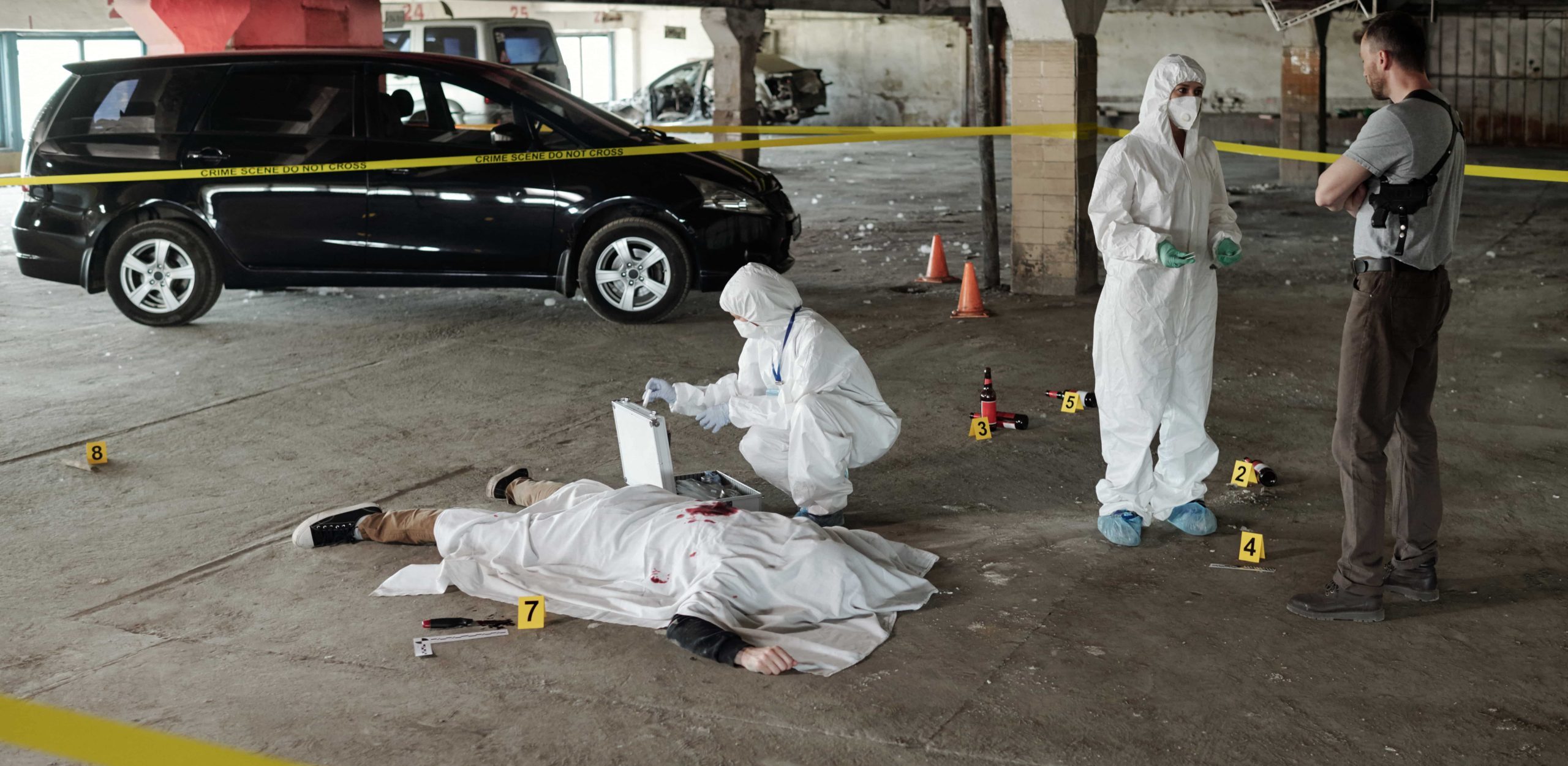
Crash reconstruction is the scientific process of analyzing a collision to determine how it occurred, the speeds, movements, and points of impact. Experts with engineering or law-enforcement backgrounds combine scene evidence, vehicle data, and physics to recreate the sequence of events.
The Car’s Black Box (Event Data Recorder)
Most modern vehicles contain an event data recorder, or EDR. As NHTSA’s guidance on event data recorders reflects, these devices can capture speed, braking, accelerator position, steering, and seatbelt use in the seconds before impact. That is powerful, objective evidence of what each driver did.
What the Scene Itself Reveals
The scene tells a story. The final resting positions of the vehicles, the location and pattern of debris, gouges on the roadway, and the crush damage on each vehicle all help an expert determine how the crash unfolded and at what speed.
Skid Marks, Speed, and Crush Analysis
Skid and yaw marks can show how fast a vehicle was going and whether the driver braked. Crush analysis, measuring how far a vehicle’s structure deformed, helps estimate the force and speed of impact. Together, these calculations can confirm or refute a driver’s account.
When Reconstruction Is Worth It
Reconstruction matters most when fault is contested, when a crash involves serious injury or death, when several vehicles are involved, or when the only witnesses are the drivers. Our overview of the role of forensic evidence in car accident investigations explains what lawyers look for.
What Our Attorneys Do First
In the disputed-fault cases the firm handles, the first move is to lock down the evidence before it disappears. That means preserving the vehicles, arranging to download the EDR data through the proper process, photographing the scene, and securing any traffic-camera or business video. Waiting is the enemy, because much of this proof is gone within days.
How It Establishes Fault
By combining black-box data, scene evidence, and physics, a reconstruction expert can show which driver was speeding, who had the right of way, whether a driver braked in time, and how the impact occurred. This objective analysis often carries far more weight than conflicting testimony.
Reconstruction and Shared Fault
 Under §768.81, Florida’s comparative negligence rule reduces a recovery by the injured person’s share of fault and bars recovery above 50 percent. Reconstruction evidence is one of the best ways to rebut an insurer’s attempt to shift blame and to establish each party’s true share.
Key Evidence in a Crash Reconstruction
| Evidence Source | What It Can Reveal |
| Event data recorder (black box) | Speed, braking, throttle, steering, and seatbelt use before impact |
| Skid and yaw marks | Vehicle speed and whether the driver braked or lost control |
| Vehicle crush damage | Force and speed of the impact and the direction of collision |
| Final positions & debris | Sequence of events and points of impact |
| Traffic-camera / surveillance video | Independent confirmation of how the crash occurred |
Why Evidence Must Be Preserved Fast
Black-box data can be overwritten, vehicles are repaired or scrapped, skid marks fade, and footage is erased, often within days. The sooner this evidence is preserved, the stronger the reconstruction and the claim.
Putting It All Together
In a serious or disputed crash, the science can be the difference between a denied claim and a fair recovery. If fault is in question in your case, you can talk to our team for a free review.
Who Performs a Crash Reconstruction
A credible reconstruction usually comes from a qualified expert, often an engineer or a former crash investigator with training in the physics of collisions. They download and interpret the event data recorder, measure skid marks and crush damage, and use physics to calculate speeds and movements. Their independence and credentials matter, because an insurer will challenge their conclusions. A well-qualified expert who can explain a crash clearly, and hold up under cross-examination, can turn a disputed claim into a clear showing of fault.
How the Evidence Is Used
Reconstruction evidence works in two settings. In negotiations, a clear, expert-backed account of how the crash happened pressures an insurer to offer fair value, because it knows the same evidence would persuade a jury. If the case goes to trial, the expert can testify, using diagrams and data to show exactly what occurred. In both settings, objective evidence carries weight that conflicting eyewitness accounts cannot match.
Why Calling a Lawyer Early Matters
The value of reconstruction depends on whether the evidence still exists when an expert is retained, and that window is short. Vehicles are repaired or sold, data is overwritten, skid marks fade, and footage is erased within days. By the time a fault dispute becomes obvious, key evidence may be gone. Calling a lawyer early lets the firm preserve the vehicles, send legal hold notices, secure footage, and line up an expert while the proof is still intact, protecting your ability to show what really happened.
When the Other Driver Blames You
One of the most common reasons reconstruction matters is that the other driver, or their insurer, points the finger at you. In a rear-end case, they may claim you stopped suddenly; at an intersection, that you ran the light; on the highway, that you changed lanes unsafely. Without objective proof, these disputes come down to one person’s word against another’s, and the insurer will side with its own driver. Black-box data, skid marks, and damage patterns can settle the question and show who was really at fault.
More Than Just Cars
Reconstruction is not only for two-car crashes. It is often decisive in truck, motorcycle, bicycle, and pedestrian cases, where the injuries are severe and the stakes are high. Commercial trucks carry their own electronic data, and crashes involving vulnerable road users frequently turn on speed and right-of-way, exactly the questions reconstruction answers. Whatever the type of crash, the same principle holds: the physical evidence, properly analyzed, tells the truth more reliably than memory, and preserving it early is what makes that truth usable.
What This Means for Your Claim
For an injured person, the practical takeaway is simple. If fault is disputed, do not assume it is your word against the other driver’s. The evidence to prove what happened may exist, in a black box, on a nearby camera, or in the marks on the road, but only for a short time. Reporting the crash, getting medical care, and contacting an attorney quickly are the steps that keep that evidence available. From there, a skilled investigation and, where needed, a qualified expert can turn a contested claim into a clear account of who was responsible, which is often the difference between a denied claim and a fair recovery. The cost of an expert is usually well worth it in a serious case, and on a contingency arrangement those costs are typically advanced by the firm and repaid only out of a recovery, so an injured person is not asked to fund the investigation out of pocket.
Disputed Fault? Put the Evidence to Work for You
If fault is disputed after your crash, the evidence may be on your side, but only if it is preserved in time. The trial team behind our Florida accident attorneys page works with reconstruction experts to prove how crashes happened. Call 954-522-5800 or 844-643-7200 for a free case evaluation, 24/7. The case review is free, and you owe a fee only if we recover.
Sources: FDOT — Florida Transportation Fast Facts (2022 data); NHTSA — Event Data Recorders
FAQs
Q1. What is crash reconstruction?
The scientific process of analyzing a collision, using vehicle data, scene evidence, and physics, to determine how it occurred, including speeds and points of impact.
Q2. What is a car’s black box?
An event data recorder (EDR) in most modern vehicles records data such as speed, braking, throttle, steering, and seatbelt use in the seconds before a crash.
Q3. When is reconstruction used?
When fault is disputed, injuries are serious, multiple vehicles are involved, or the only witnesses are the drivers themselves.
Q4. Can it prove the other driver was speeding?
Often, yes. Skid marks, crush analysis, and black-box data can establish a vehicle’s speed and whether the driver braked.
Q5. How does it affect shared fault?
Reconstruction can rebut an insurer’s attempt to blame you and establish each party’s true share of fault under Florida’s comparative negligence rule.
Q6. How fast must the evidence be preserved?
Quickly. Black-box data can be overwritten and vehicles repaired within days, so prompt action is essential.
Q7. Do I always need an expert?
No. But in disputed-fault or serious-injury cases, a qualified reconstruction expert can be decisive. An attorney can advise whether your case needs one.
Q8. What does a Florida car accident lawyer cost?
There is no cost to start, and our fee comes solely out of a successful recovery, never out of your pocket up front.
About the Firm
Published by the Law Offices of Wolf & Pravato
For nearly three decades, the Law Offices of Wolf & Pravato have represented injured Floridians and their families across South and Southwest Florida, exclusively on the plaintiff’s side. The firm is led by managing partner Richard P. Pravato, a Board-Certified Civil Trial Attorney (Florida Bar No. 86150). To reach the attorney who handles cases in your area, visit our attorneys page, review our recent results, or learn more about our firm.
Law Offices of Wolf & Pravato · 2101 W. Commercial Blvd., Suite 1500, Fort Lauderdale, FL 33309 · 954-522-5800 · Free case evaluation: 844-643-7200
Recent Posts
- Wrong Burial Plot and Grave-Site Errors in Fort Lauderdale

- Rainwater Falls at Fort Lauderdale Store Entrances

- Parking-Lot Backing Crashes in Fort Lauderdale: Who Has the Right of Way?
- Elevator and Escalator Injuries at Fort Lauderdale Shopping Centers
- Delivery Driver Car Accidents in Lakeland: Who Pays?

- Injured as a Passenger in Fort Lauderdale: Whose Insurance Pays?




FLORIDA’S PERSONAL INJURY ATTORNEYS FOR + 20 YEARS