














Underride Accidents: Why They're So Catastrophic
Why underride crashes produce fatalities even at lower speeds
An underride crash happens when a passenger vehicle slides under the body of a commercial truck or trailer. The passenger vehicle’s front crumple zone — which normally absorbs impact force in a collision — is bypassed entirely. Instead, the impact hits the windshield, the roof, and the occupants’ upper bodies directly. The result is often catastrophic even in crashes that would be survivable against a conventional vehicle. A Florida truck accident attorney sees underride cases across the state — and these cases consistently involve severe traumatic brain injuries, spinal cord injuries, and fatalities out of proportion to the closing speed of the crash.
This article walks through the types of underride crashes, the federal safety equipment that’s supposed to prevent them, and how liability is analyzed when it fails.
Featured snippet — 3 types of underride accidents
- Rear underride — passenger vehicle slides under the back of a truck or trailer.
- Side underride — passenger vehicle slides under the side of a trailer, often at intersections.
- Front underride — less common; occurs when a truck overrides a smaller vehicle’s rear.
Type 1: Rear underride
The most recognized underride scenario is rear underride — a passenger vehicle strikes the back of a trailer and slides under it. This commonly happens in several contexts:
- Highway-speed rear-end crashes where the trailing driver fails to see a slow-moving or stopped truck in time.
- Fog or limited-visibility conditions where the truck isn’t visible until too late.
- Poorly-lit trailers at night without adequate reflective markings.
- Disabled trucks stopped on highway shoulders without adequate warning.
Rear underride is the scenario rear underride guards (the “ICC bumper” on the back of trailers) are designed to prevent. When the guards fail or are missing, rear underride crashes that should have been survivable turn fatal.
Type 2: Side underride
Side underride is the most dangerous category and the least protected by current federal regulations. It occurs when a passenger vehicle strikes the side of a trailer — typically when a truck is making a slow turn across traffic, when a truck is crossing an intersection at low speed, or when a truck has jackknifed and the trailer is blocking lanes. Side underride crashes can be almost uniformly fatal to vehicle occupants because the trailer’s underside has no designed impact protection for the striking vehicle.
Common scenarios include T-bone impacts at rural intersections where a truck is crossing or turning and a car fails to stop in time, and interstate scenarios where a truck has rolled onto its side across travel lanes.
Type 3: Front underride
Front underride — where a truck strikes the rear of a smaller vehicle and overrides it — is less common but still occurs. The closest analog to side-impact protection, this scenario often involves commercial trucks with inadequate front-mounted protection striking smaller passenger vehicles. Injuries from front underride tend to be severe.
Rear underride guards — and their limits
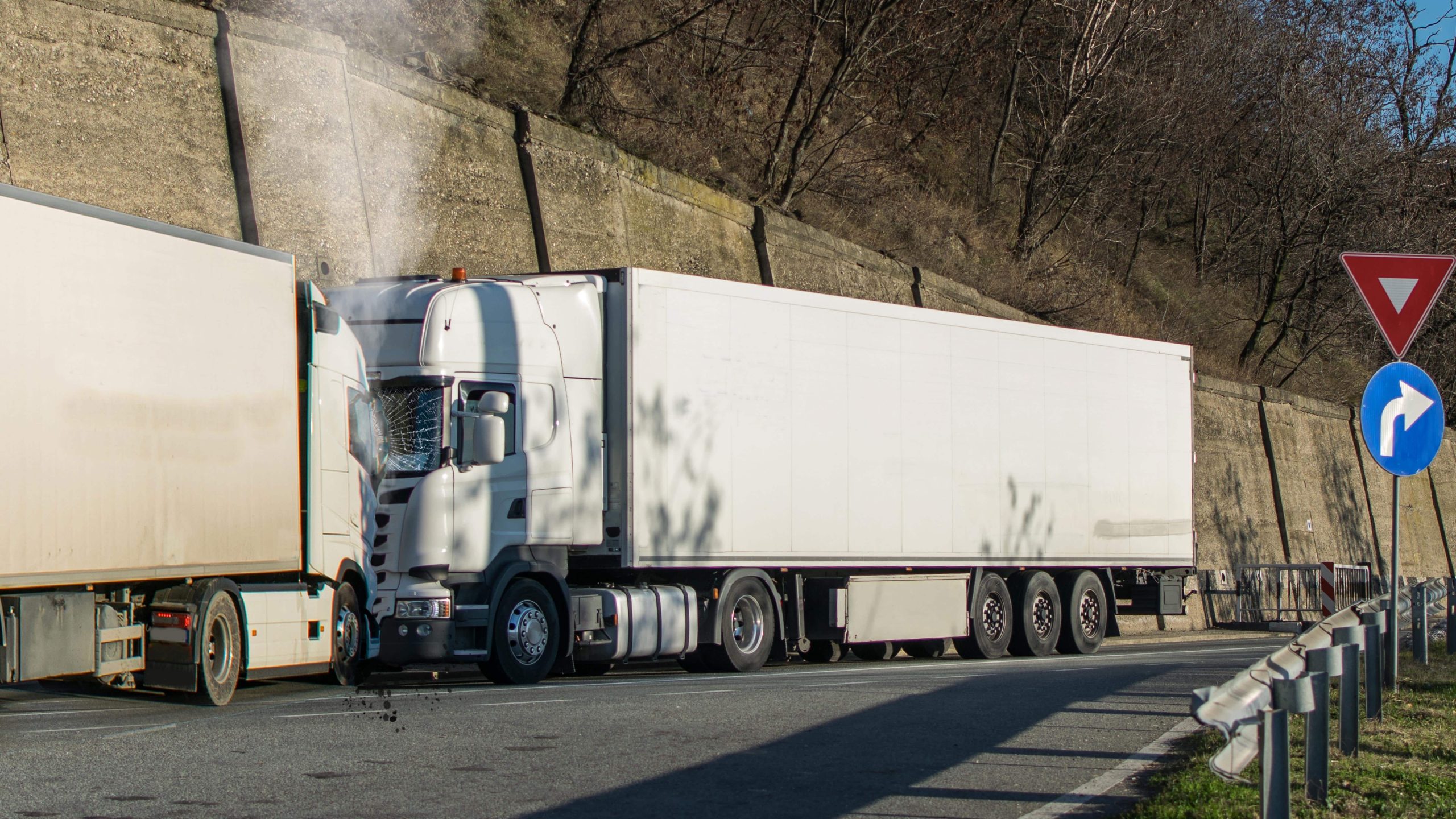 The NHTSA vehicle safety standards include requirements for rear impact protection on certain trailers — what most people know as rear underride guards. These guards are designed to keep a passenger vehicle from sliding under the back of a trailer in a rear-end collision. In theory, the guard absorbs impact and keeps the vehicle’s crumple zones in play; in practice, older guards can fail under real-world collision forces, and newer, stronger designs have been debated and improved over time.
Side underride guards are not federally required on most trailers, which is one reason side underride crashes are so consistently fatal. Some manufacturers have developed side underride protection, but deployment isn’t universal.
How carrier maintenance failures fit in
Even where rear underride guards exist, they have to be maintained. Under FMCSA vehicle maintenance rules, carriers must maintain safety equipment on their commercial motor vehicles. When an underride guard is missing, damaged, corroded, or inadequately secured, and the guard’s failure contributed to the crash, the motor carrier and maintenance provider may bear liability for the worsened outcome.
Inspection records, maintenance logs, and pre-trip inspection documentation become central evidence in these cases. A guard that’s obviously deteriorated should have been caught on routine inspection; the absence of maintenance records often supports the inference that inspections weren’t performed or weren’t performed adequately.
Who may be liable for an underride
Underride cases often involve multiple potentially liable parties:
- The truck driver — for inadequate warning signals, blocking lanes, or otherwise placing the truck in a position where an underride became foreseeable.
- The motor carrier — for failure to maintain underride guards, for driver training failures, for dispatch practices that contributed.
- The truck or trailer manufacturer — where the underride guard design was defective or inadequate for foreseeable use.
- The maintenance provider — for inadequate inspection or failure to replace deteriorated guards.
- Other parties — depending on specific facts, including shippers or brokers in some scenarios.
Under Florida’s comparative fault statute, a claimant more than 50% at fault for their own harm generally cannot recover damages in a negligence action to which the statute applies. Below that bar, damages are reduced in proportion to the claimant’s fault percentage. In underride cases, the passenger vehicle driver’s fault is typically contested — did they have time to stop, were they following at safe distance, were they distracted. Strong evidence of truck-side failures (missing guards, inadequate warning signals, lane blocking) usually keeps claimant fault low.
When underride crashes are fatal
Underride crashes produce fatalities at a disproportionately high rate because the design of the passenger vehicle’s crumple zones is simply bypassed. When families lose a loved one in an underride crash, the civil claim becomes a wrongful death case. Our Florida wrongful death lawyer resource covers how Florida handles wrongful death claims, including who can serve as personal representative, what damages are recoverable, and the specific procedural rules for wrongful death actions.
The timing question for families and survivors
Underride crashes that produce catastrophic injuries or fatalities run against Florida’s two-year filing deadline under § 95.11, as amended by HB 837 effective March 24, 2023. Claims that arose before the effective date may be governed by the prior four-year rule. For surviving family members, the grief and recovery period often takes months; starting the civil process while still processing a loss is difficult but often necessary to preserve evidence. Preservation-of-evidence letters for the truck, trailer, and maintenance records are typically urgent. For local context, see our Miami truck accident context.
When to retain counsel
Underride cases are almost never DIY. The regulatory analysis, multi-defendant coordination, and — in fatal cases — the wrongful death framework all require specialized counsel. Many underride cases also involve product liability claims against the truck or trailer manufacturer, which add additional technical and procedural layers.
Wolf & Pravato has recovered over $200 million for injury clients across Florida, with more than 75 years of combined experience. We work on a contingency basis — you pay nothing unless we win. To discuss a Florida underride truck crash, call 844-643-7200 or request a free case evaluation.
FAQs
What is an underride accident?
A crash where a passenger vehicle slides under the body of a commercial truck or trailer. The passenger vehicle’s crumple zones are bypassed, and impact hits the windshield, roof, and occupants’ upper bodies directly — producing catastrophic injuries even at lower speeds.
What are the types of underride accidents?
Rear underride (vehicle slides under the back of a truck), side underride (vehicle slides under the side of a trailer), and front underride (truck overrides a smaller vehicle’s rear). Rear and side are the most common; side is generally the most dangerous due to limited protection.
Why are underride accidents often fatal?
Because the passenger vehicle’s designed impact protection — front, side, and rear crumple zones — is bypassed when the vehicle slides under the truck. The impact strikes the windshield, roof, and upper occupant area directly, often producing severe traumatic brain injuries and fatalities.
Do trucks have to have underride guards?
Rear impact protection is required on certain trailers under NHTSA safety standards. Side underride guards are not federally required on most trailers — one reason side underride crashes are so consistently fatal. Guard design, strength, and maintenance vary widely.
Who is liable for an underride accident?
Potentially the truck driver, motor carrier, truck or trailer manufacturer, maintenance provider, and other parties depending on specific facts. Cases often involve failed or absent underride guards, inadequate warning signals, or trucks blocking lanes after prior crashes or breakdowns.
Can a truck manufacturer be sued for an underride crash?
Yes, in product liability theory where the underride guard design was defective or inadequate for foreseeable use. Product liability cases against manufacturers are technically complex and often require expert reconstruction, but can support substantial recoveries.
How long do I have to file a Florida underride lawsuit?
Florida’s statute of limitations for most negligence actions is two years under § 95.11, as amended by HB 837 effective March 24, 2023. Wrongful death actions are also typically governed by a two-year deadline. Claims that arose before the effective date may be governed by prior rules.
Recent Posts
- Wrong Burial Plot and Grave-Site Errors in Fort Lauderdale

- Rainwater Falls at Fort Lauderdale Store Entrances

- Parking-Lot Backing Crashes in Fort Lauderdale: Who Has the Right of Way?
- Elevator and Escalator Injuries at Fort Lauderdale Shopping Centers
- Delivery Driver Car Accidents in Lakeland: Who Pays?

- Injured as a Passenger in Fort Lauderdale: Whose Insurance Pays?





FLORIDA’S PERSONAL INJURY ATTORNEYS FOR + 20 YEARS