















What to Do Immediately After a Truck Accident in Fort Myers
Why the first 72 hours after a truck crash shape the whole case
If you’ve been in a truck crash on I-75, US-41, or anywhere in Lee County, the decisions you make in the first 72 hours will affect the rest of the case. Evidence disappears fast — surveillance overwrites, witnesses forget, truck electronic data gets overwritten, and motor carriers repair or return vehicles to service. Medical windows close. Insurers call with “quick” questions that turn into statements used against you. A Fort Myers truck accident lawyer sees this over and over: the cases that come together are the ones where early steps were taken correctly, and the cases that unravel are the ones where they weren’t.
This article walks through the step-by-step priorities for the first days after a Fort Myers truck crash, with a specific focus on actions that are different — or more urgent — than in a standard car crash.
Featured snippet — 7-step checklist
- Call 911, ensure safety, and document the scene.
- Get medical care within 14 days — same day or next day is strongest.
- Preserve scene evidence — photos, witness info, dashcam.
- Request the Florida Traffic Crash Report (available ~10 days).
- Notify your own insurer; be cautious about recorded statements.
- Identify the motor carrier using the truck’s DOT number.
- Send preservation-of-evidence letters immediately.
Step 1: Safety, 911, and documentation at the scene
The priorities at the scene:
- Ensure everyone’s safety and call 911 for any injuries.
- If vehicles are drivable and safe to move, get them out of active lanes.
- Don’t leave the scene — wait for law enforcement.
- Photograph everything you safely can — vehicles, positions, damage, the scene, road conditions, the truck’s exterior including DOT number and trailer markings.
- Get witness contact information before anyone leaves.
Truck crashes often involve commercial vehicles blocking multiple lanes, so scene preservation is harder than in a car crash — law enforcement, fire, and tow services clear scenes quickly. Photos taken in the first 30 minutes are often the only record of original positions and conditions.
Step 2: Get medical care within 14 days
Under Florida’s PIP statute, PIP medical benefits are conditioned on receiving initial services and care within 14 days after the crash. Inside that window, PIP generally pays 80% of reasonable and necessary medical expenses up to $10,000 if a qualified provider determines an Emergency Medical Condition, or $2,500 if no EMC is determined. Miss the window and PIP medical benefits may be denied entirely.
Truck crashes often produce injuries that develop over days — whiplash, concussion symptoms, soft-tissue injuries, and internal injuries can all present late. Waiting for symptoms to “show up fully” is a common mistake that costs PIP coverage. Same-day or next-day evaluation is the safe path.
Step 3: Preserve what you can from the scene
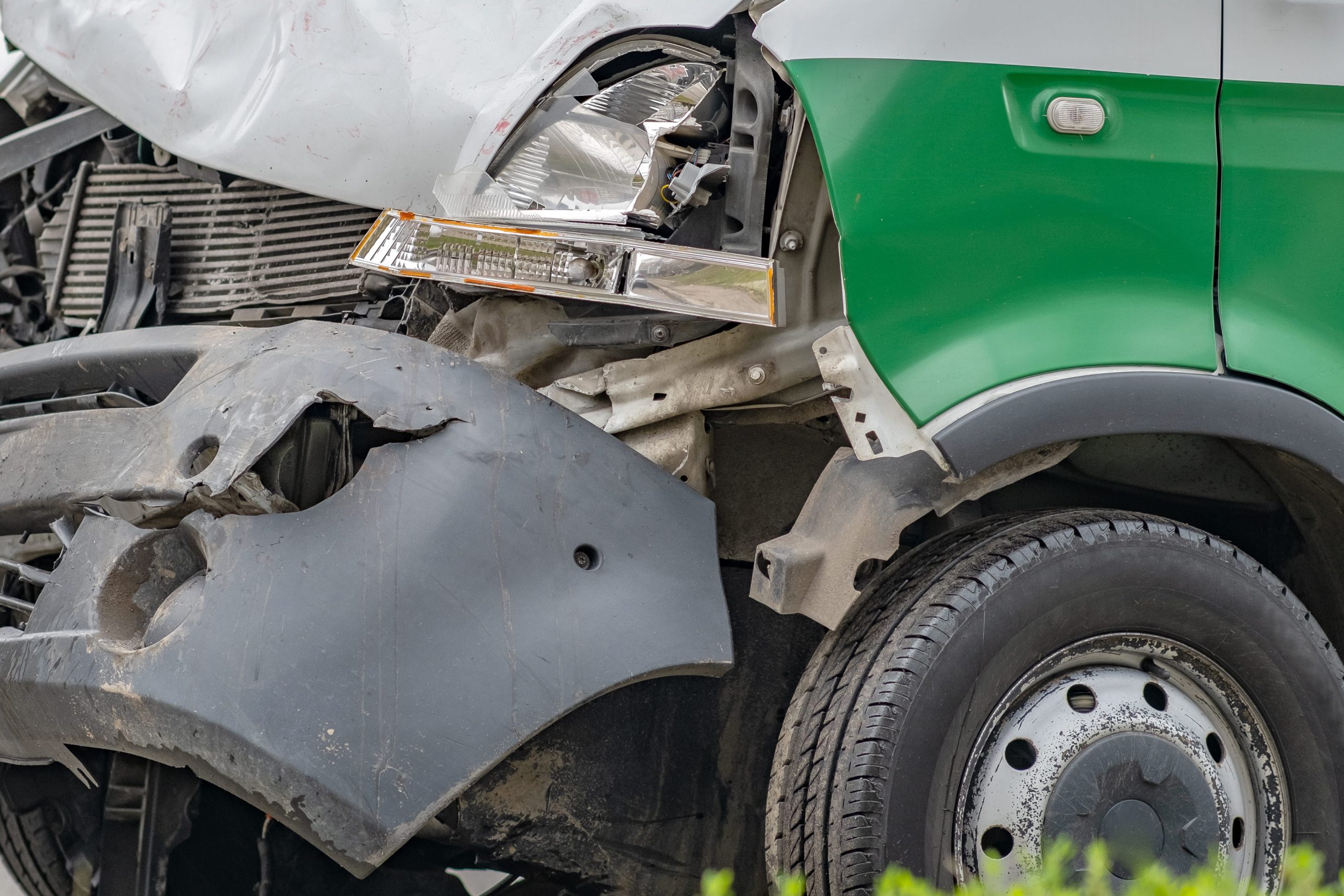
Beyond photos at the immediate scene, the evidence to look for includes:
- Dashcam footage from your own vehicle — save it to a separate device immediately; dashcams typically overwrite on short cycles.
- Nearby surveillance — gas stations, truck stops, businesses, and residences along US-41 and I-75 corridors often have cameras.
- The other vehicles’ damage, positions, and identifying information including license plates.
- Debris patterns and skid marks before tow operations clean the scene.
- Photos showing the truck’s DOT number, motor carrier name, and trailer markings.
A DOT number is especially important because it lets you identify the motor carrier — essential for preservation letters later.
Step 4: Request the crash report
Florida Traffic Crash Reports are typically available about 10 days after the crash through the FLHSMV crash report portal. The report documents the responding officer’s observations, vehicle positions, statements, and the officer’s assessment of contributing factors. Review it carefully — errors in the report are easier to correct early than late. For truck crashes specifically, the crash report often has supplemental detail about the commercial vehicle that becomes important later.
Step 5: Notify your insurer — but be careful what you say
You need to open your PIP claim promptly with your own auto insurer. But the other driver’s insurer — or the motor carrier’s insurer — will also call, usually within days. Rules for those calls:
- For your own insurer’s PIP intake: cooperate as required by your policy, answer factual questions, but don’t speculate about fault or injuries.
- For the other side’s insurer: you are generally not required to give a recorded statement to the at-fault driver’s insurer. Politely decline early recorded statements; offer to respond in writing or after counsel is involved.
- Don’t downplay injuries — statements like “I’m fine” or “it’s just a little sore” become impeachment material.
- Don’t guess at facts — if you don’t know, say you don’t know.
Step 6: Identify the motor carrier
The DOT number on the truck identifies the motor carrier. The carrier is usually the most important defendant in a commercial truck case — they carry substantially more insurance than the driver personally, and they face direct liability theories (negligent hiring, training, supervision, regulatory violations). FMCSA carrier safety information databases are publicly searchable and can provide basic information about the carrier, including safety ratings and inspection history.
Step 7: Send preservation-of-evidence letters quickly
This is the step that often determines whether a commercial truck case holds together. A preservation-of-evidence letter to the motor carrier puts them on notice to hold the truck aside, preserve Electronic Control Module (ECM) data, preserve Electronic Logging Device (ELD) data, preserve dashcam footage, and preserve relevant business records (driver qualification file, dispatch records, maintenance logs). Without that letter, the carrier is free to repair the truck, return it to service, and rotate data out of retention. See our Florida truck accident attorney resource for broader framing on truck case evidence.
Why you can’t afford to wait
Florida’s negligence SOL is governed by Florida’s two-year filing deadline under § 95.11, as amended by HB 837 effective March 24, 2023. Claims that arose before the effective date may be governed by the prior four-year rule. But the practical deadlines matter more. Truck ECM data can be overwritten in days to weeks. ELD records have minimum retention periods but can be purged beyond those. Dashcam footage overwrites on short cycles. Business records can be rotated out of retention on ordinary schedules. The SOL sets the outer boundary; evidence preservation is the real time-pressure driver.
When to retain counsel
For truck crashes — especially commercial truck crashes — counsel should usually be involved in the first week, ideally the first days. The preservation work required isn’t something DIY claimants can typically execute effectively. Our Fort Myers personal injury team handles commercial truck crashes in Lee County.
Wolf & Pravato has recovered over $200 million for injury clients across Florida, with more than 75 years of combined experience. We work on a contingency basis — you pay nothing unless we win. To discuss the next steps after your Fort Myers truck crash, call 844-643-7200 or contact our team.
FAQs
What’s the first thing I should do after a truck accident in Fort Myers?
Ensure safety and call 911. Once safe, document the scene with photos, collect witness contact information, exchange information with the driver, and note the truck’s DOT number. Get medical evaluation promptly, ideally same day or next day.
How long do I have to see a doctor for PIP coverage?
Within 14 days of the crash. Florida’s PIP statute conditions medical benefits on initial services received inside that window. Waiting longer — even for symptoms to “fully develop” — can cost PIP coverage entirely.
Should I talk to the trucking company’s insurance?
You can, but you’re generally not required to give a recorded statement to the at-fault party’s insurer. Politely decline early recorded statements and offer to respond after counsel is involved. Your own insurer’s PIP intake is different — cooperation there is typically required by policy.
What is a preservation-of-evidence letter?
A formal written notice to the motor carrier (and other potentially liable parties) requiring them to hold relevant evidence — the truck itself, ECM and ELD data, dashcam footage, driver qualification file, dispatch records, maintenance logs — and not dispose of it. Sent early, it preserves data that might otherwise be overwritten or destroyed.
How do I find out who owns the truck?
The DOT number on the truck’s cab identifies the motor carrier. FMCSA maintains publicly searchable databases with carrier information, safety ratings, and inspection history. The truck’s insurance information is typically available through the crash report.
How quickly can truck evidence be lost?
Fast. ECM data on the truck can be lost when the truck is repaired or returned to service — sometimes within weeks. ELD data has minimum federal retention periods but can be purged beyond those. Dashcam footage typically overwrites on short cycles. Surveillance footage from nearby businesses overwrites in 14-30 days typically.
How long do I have to file a Fort Myers truck accident lawsuit?
Florida’s statute of limitations for most negligence actions is two years under § 95.11, as amended by HB 837 effective March 24, 2023. Claims that arose before the effective date may be governed by prior rules. Evidence preservation deadlines are much shorter than the statutory deadline.
Recent Posts
- Wrong Burial Plot and Grave-Site Errors in Fort Lauderdale

- Rainwater Falls at Fort Lauderdale Store Entrances

- Parking-Lot Backing Crashes in Fort Lauderdale: Who Has the Right of Way?
- Elevator and Escalator Injuries at Fort Lauderdale Shopping Centers
- Delivery Driver Car Accidents in Lakeland: Who Pays?

- Injured as a Passenger in Fort Lauderdale: Whose Insurance Pays?





FLORIDA’S PERSONAL INJURY ATTORNEYS FOR + 20 YEARS