

Florida Uber and Lyft Accident Lawyer
You were a passenger with no control over any of it, and now nobody will say who pays. We can take it from here. Call 954-522-5800 for a free consultation. You pay us nothing unless we win. We have won these claims for Floridians from the Keys to the Panhandle, and we work them from five offices between Fort Lauderdale and Fort Myers.
Fla. Stat. § 627.748 requires at least $1 million in primary liability coverage while a driver is engaged in a prearranged ride, and $50,000 per person, $100,000 per incident and $25,000 property damage while logged on but not yet carrying a passenger. Establishing which period applied is the first thing that has to be nailed down.
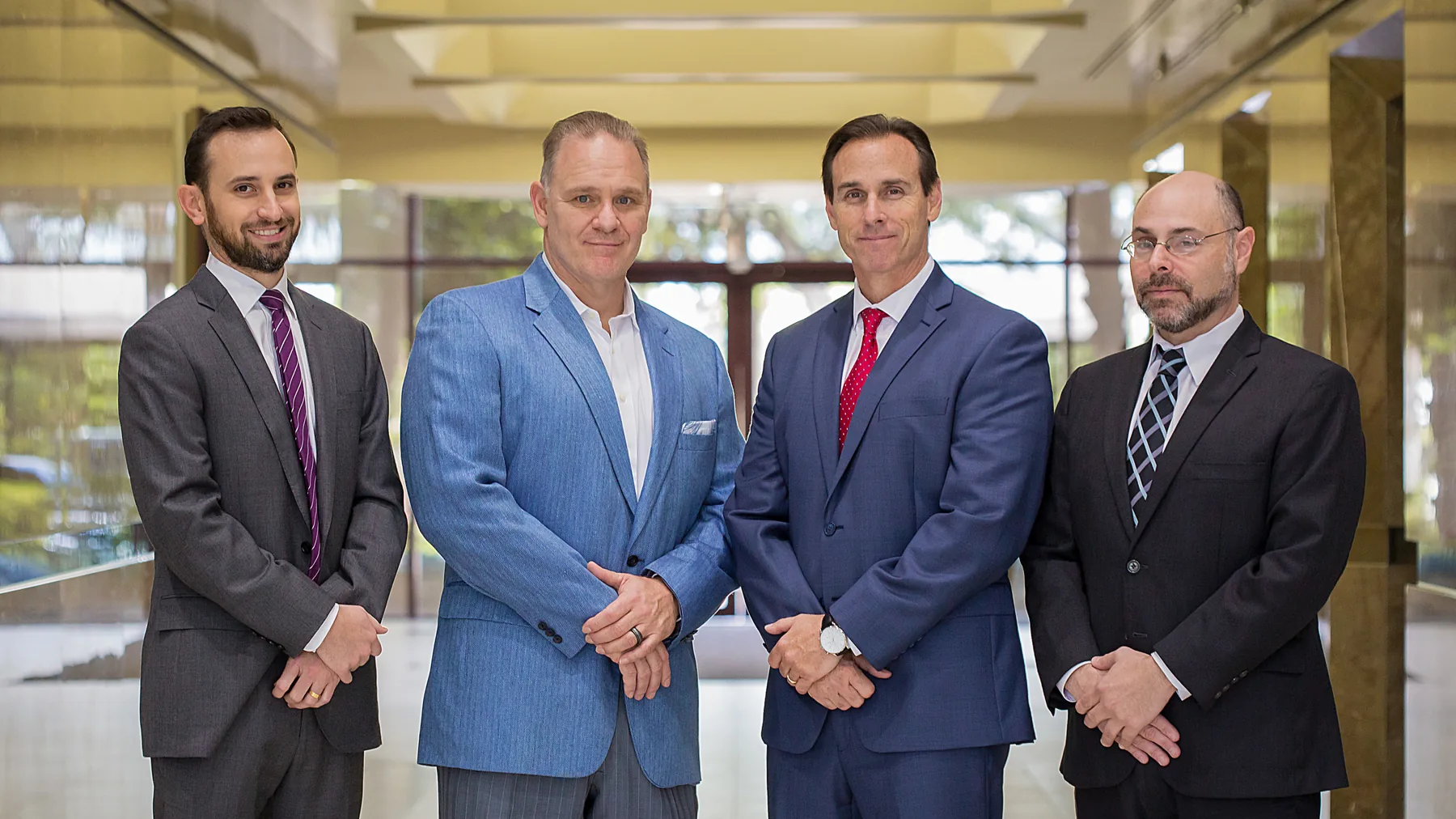
Our team will not let you go through a uber and lyft accident claim alone
Being hurt in a rideshare is hard enough without three companies arguing over whose insurance pays. Nothing undoes the crash, and we will not pretend otherwise. What we can do is find the policy that covers you and make it answer, and we will take the case as far as it has to go.
Our trial attorneys have won uber and lyft accident cases across Florida since 1993, from the Keys to the Panhandle, and one of them will handle yours from the first call to the last check. Call 954-522-5800 for a free consult and a trial lawyer will tell you today whether you have a case. You pay us nothing unless we win, and we work from five offices between Fort Lauderdale and Fort Myers.
Meet the attorneys →What Florida law does with a uber and lyft accident claim
The rideshare company points at the driver, the driver points at their own insurer, and that insurer points back at the app. Meanwhile you are covering the treatment, missing work, and getting a different answer from everyone you call. Working out which policy was live at the moment of the crash is our job, and it starts the day you call.
Everything about a rideshare claim turns on a fact nobody at the scene records: what the driver's app status was at that exact moment. Florida wrote the coverage tiers into statute, and the difference between them is the difference between $1 million and $50,000. Below is how those tiers work and how the status gets established.
Florida sets rideshare insurance by what the driver's app was doing at the moment of the crash. On a trip, or on the way to collect a passenger, $1 million of liability coverage applies. Logged in but waiting for a request, the figures drop to $50,000 per person and $100,000 per incident.
The deadline that ends a Florida rideshare claim
The filing deadline is ordinary. What is not ordinary is that the evidence proving which coverage applies is held entirely by a technology company.
Two years to file
Most claims from an accident on or after March 24, 2023 have to be filed within two years. An older accident keeps the four years that applied when it happened. The period is in Fla. Stat. § 95.11, and a death claim runs two years from the date of death.
Where a government vehicle was involved, Fla. Stat. § 768.28 adds written notice to the agency and, in most cases, to the Department of Financial Services, a waiting period before suit, and caps of $200,000 per person and $300,000 per incident.
Minutes, for what is on your own phone
The trip in the app carries the driver's name, the vehicle, the plate, the route and the times, and it is the cleanest proof that a ride was in progress. Screenshot all of it now, including the receipt and the trip map. Accounts get closed, apps get reinstalled and trips scroll out of easy reach.
Where you were a pedestrian, a cyclist or another driver, you have none of that, which is exactly why the app status has to be established from the company instead.
The company's own records, which have to be asked for
The platform holds the driver's status second by second, the trip record, the location data and frequently telematics from the phone showing speed and braking. It is the best evidence in the case and none of it arrives without a formal request, which is a reason not to spend six months negotiating with an adjuster first.
The ordinary crash clocks, which still run
Camera footage from the businesses on the corner, the vehicles before they are repaired, and the event data recorders inside them. Days and weeks, not years, and a preservation letter has to reach the right party before each schedule runs out.
Who can be held answerable
A rideshare crash usually has two drivers in it, and which of them was at fault decides which insurance answers before any question about the app arises.
- The rideshare driver. Where they caused it, the coverage that responds is decided by app status, set out further down this page. Their personal auto policy will almost certainly exclude what they were doing, which is why the statutory tiers exist at all.
- The other driver, and their employer. A great many rideshare passengers are hurt by somebody else entirely. That is an ordinary claim against that driver, the owner of their vehicle and their employer where they were working, and the rideshare coverage may still add to it.
- The owner of the vehicle. Florida treats a motor vehicle as a dangerous instrumentality, so an owner answers for how the person they lent it to drove it. Rideshare drivers regularly use vehicles that are not theirs, including rented and leased ones.
- The platform itself, within limits. Fla. Stat. § 627.748 sets out what a transportation network company must do, including the insurance it has to carry or arrange, and treats drivers as independent contractors where the statutory conditions are met. That shapes what can be claimed against the company directly, and the practical route to the money is normally the coverage the statute requires rather than a claim against the platform.
- A public body, where the road caused it. A dead signal, a missing sign, a road defect. Those claims run under Fla. Stat. § 768.28 with its notice requirements and its caps.
How a Florida rideshare case actually runs
Two questions decide a rideshare case, and everything below serves them: who caused the crash, and what the app was doing.
- Fix the app status before anything else. Passenger, other driver or pedestrian, this is the fact worth establishing first. A passenger has it on their own phone. Everybody else needs it from the company, and the company produces it on request rather than volunteering it.
- Report it through the app as well as to the police. The in-app report creates a record inside the company's own system with a timestamp, which is useful later precisely because nobody can go back and adjust it.
- Identify the driver, the vehicle and the plate. The app has all three for a passenger. For anybody else the crash report is the starting point, and it frequently does not record that the vehicle was working for a platform at all.
- Preserve the ordinary evidence too. Camera footage from the corner, both vehicles before repair, and the event data recorders. A rideshare case is still a crash case and it is proved the same way.
- Treatment runs its course. Passengers are hurt in the back seat with no forward visibility and no chance to brace, which produces neck, back and head injuries that take months to settle. Valuing the case before the physicians can say what is permanent means valuing it low.
- The demand goes to the right carrier. Which one that is depends on the status and on who was at fault, and getting it wrong wastes months. Fla. Stat. § 627.4137 requires the limits of each known policy to be disclosed in a sworn statement within 30 days of a written request, which is how the tower behind a claim is confirmed rather than assumed.
- Suit, discovery and mediation. Fla. Stat. § 47.011 puts the case where the crash happened or where the defendant is. Discovery reaches the platform's records, which is frequently where the case is decided. Most Florida courts require mediation, and Fla. Stat. § 768.79 lets either side serve a formal offer with fees running from a refusal the judgment beats by at least 25 percent.
What the claim is worth, and how that number is built
These claims are valued like any crash claim. What differs is that the ceiling is set by a statute rather than by whatever the at-fault driver happened to buy.
The medical care, past and future
Everything billed and what the treating physicians say is still ahead. The second half is the one an early offer leaves out, and it is the larger one wherever surgery is a possibility rather than a certainty.
Income, and the capacity to earn it
Wages missed, and separately the earning capacity that has gone. The second is proved with an economist and the treating physicians and it dominates the case wherever physical work is involved.
Pain, suffering and what stopped
The head of loss with no invoice attached, which is exactly why an early offer prices it lowest.
The fault split, and the line at 50 percent
Fault is divided under Fla. Stat. § 768.81, so an award drops by whatever share is placed on you, and since March 2023 anybody found more than 50 percent responsible for their own harm recovers nothing. A back-seat passenger is rarely at fault for anything, which is one of the few structural advantages in these cases.
Where several passengers share one limit
The $1 million tier is a per-incident figure. Where four people in one vehicle are seriously hurt, they are drawing on the same amount, and how it is divided becomes its own dispute. It is a reason to act early rather than to wait and see how everybody else does.
What is repaid out of the recovery
Health insurance, Medicare and Medicaid are repaid, and Fla. Stat. § 768.76 keeps those payments from being deducted from the award because the repayment right already exists. Reducing those claims is real money and it never appears in the headline number.
What changes from one part of Florida to another
Rideshare volume in Florida is not spread evenly, and where it concentrates changes the kind of case it produces.
Airports, hotels and nightlife districts
Rideshare density is highest where visitors are, which means a large share of these claims involve somebody who lives in another state, treats at home and has no local witnesses. The claim proceeds in Florida where it arose, and what exists locally has to be gathered while it exists.
Delivery apps are not the same thing
Fla. Stat. § 627.748 is written about carrying passengers. A driver delivering food or packages is in a different arrangement, frequently with different coverage and sometimes with none of the statutory tiers applying at all. Establishing which kind of work the driver was doing is a separate question from establishing that an app was involved.
Drivers running more than one app
It is common to be logged into two platforms at once, which makes the status question genuinely contested rather than a formality: one company's records may show waiting while another shows a trip in progress. Both sets get requested.
A proven record, anywhere in Florida
Our five offices run from Fort Lauderdale to Fort Myers, and we act statewide on rideshare claims.
The insurance behind a Florida rideshare claim
This is the part worth reading twice, because a single fact about the driver's phone moves the available coverage by a factor of twenty.
On a trip, or on the way to collect somebody
Fla. Stat. § 627.748 requires primary coverage of $1 million for death, bodily injury and property damage while a driver is engaged in a prearranged ride, which includes the leg driving to pick a passenger up. Personal injury protection and uninsured and underinsured motorist coverage are required alongside it.
Logged in, but waiting for a request
The same section drops the figures to $50,000 for death and bodily injury per person, $100,000 per incident, and $25,000 for property damage, again with personal injury protection and uninsured motorist coverage. A driver circling with the app on and no ride booked sits in this tier, and it is where most disputes about status arise.
App off, which is an ordinary crash
Nothing from the platform applies. The driver's own policy responds, subject to whatever it covers, and the ordinary Florida position holds: Fla. Stat. § 627.733 requires personal injury protection, Fla. Stat. § 324.022 requires $10,000 of property damage liability, and no coverage at all is required for injuring somebody else.
The driver's personal policy usually excludes the work
Standard personal auto policies exclude carrying passengers for hire, which is precisely the gap the statutory tiers were written to fill. It also means a driver who never told their insurer what they were doing may find their own coverage disputed, and that is a real problem for the driver rather than for a passenger.
Your own coverage still matters
Fla. Stat. § 627.736 follows the person, so a passenger's own auto policy, or one in their household, pays 80 percent of reasonable medical expenses and 60 percent of lost wages up to $10,000, provided a qualifying provider is seen within 14 days and, for the full amount, finds an emergency medical condition. Uninsured motorist coverage under Fla. Stat. § 627.727 sits behind that where the at-fault driver had too little.
Three different periods, three different answers
Where the coverage line falls
A prearranged ride begins when the driver accepts a request and ends when the last rider gets out. Within that window the statutory $1 million applies. Before acceptance, while the driver is logged on and waiting, the much lower minimums apply. With the app off entirely, it is an ordinary personal auto claim.
The difference between those periods can be the difference between a claim that covers a catastrophic injury and one that does not come close, which is why the platform’s own trip data matters so much and why it should be requested before anyone gives a statement.
It applies whether you were the passenger or not
Passengers, other drivers, cyclists and pedestrians can all claim against the rideshare coverage. As a passenger you were almost certainly not at fault, which usually simplifies liability considerably and moves the dispute onto the extent of the injuries instead.
Your own PIP still pays first under Florida’s no-fault system, and your own uninsured motorist coverage may also come into play.
Taxis, black cars and airport pickups
A taxi is not a rideshare and the insurance behind it is different, but the position you are in as an injured passenger is close to identical: you hired a vehicle, somebody else drove it, and the fault is almost never yours. A licensed taxi or limousine company carries commercial auto liability coverage, usually written at higher limits than a private policy, and the company answers for its driver where the driver was working at the time.
The wrinkle is who the driver actually worked for. Many cab and black car drivers lease the vehicle and the medallion rather than being employed, and the company will say so early. That argument has been run against injured passengers for decades and it does not end a claim: the lease terms, the dispatch records and the way the company controlled the work are what settle it. Airport and port pickups add a further layer, because the operator holds a concession and its conditions are on record.

Who would handle your case
Your case is handled by one of the trial lawyers below, and you will know which of them has it from the first conversation. They do uber and lyft accident work week in and week out, they will tell you what your case is worth and why, and they will be straight with you about the parts that are hard.
-
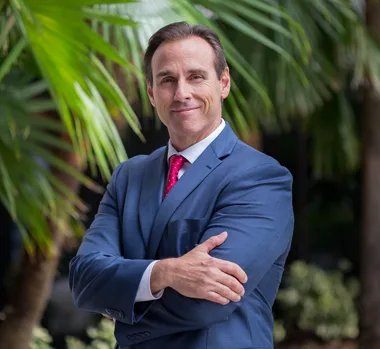 Richard P. Pravato Founding & Managing Attorney Board Certified in Civil Trial Law by The Florida Bar since 2004, and by the National Board of Trial Advocacy. Injury cases exclusively since 1996. Full profile →
 -
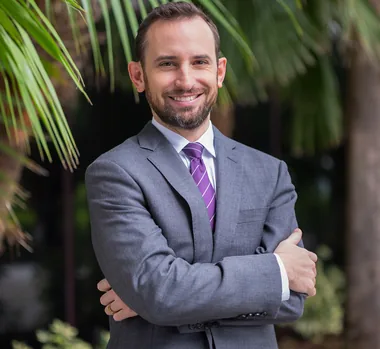 Brett J. Yonon Senior Trial Attorney Selected to Florida Super Lawyers in 2024 and 2025. Brett Yonon is who this firm puts on a catastrophic injury or a death in the family, and he has tried those cases to verdict. Full profile →
Uber and Lyft Accident questions we are asked
I was a passenger in an Uber. Who do I claim against?
Usually the rideshare company’s policy, which Florida requires to be at least $1 million while a prearranged ride is in progress, and potentially the at-fault driver if that was someone else. As a passenger you are rarely at fault, which removes most of the argument. Your own PIP still pays your first medical bills.
The driver says the app was off. Can that be checked?
Yes. The platform holds trip and app-status data showing exactly when a driver was logged on and when a ride was accepted. It we can get and it is not a matter of anyone’s word. Because it decides which coverage applies, it is one of the first things we request.
Does this apply to Lyft as well?
Yes. Fla. Stat. § 627.748 governs transportation network companies generally rather than any single brand, so the same coverage tiers apply to Lyft and to other platforms operating in Florida.
Questions that apply to any Florida injury claim, fees, deadlines, recorded statements and shared fault, are answered on our injury claim FAQ. What we have recovered is on recent case results.
Five Florida offices
We take uber and lyft accident claims statewide. Each market below has its own page on this claim, with that office's address, its direct number and the court a case there is filed in.
Fort Lauderdale uber and lyft accident claims
2101 W Commercial Blvd, Fort Lauderdale. Serving Broward County.
View →Miami uber and lyft accident claims
1111 Brickell Avenue, Miami. Serving Miami-Dade County.
View →West Palm Beach uber and lyft accident claims
2101 Vista Parkway, West Palm Beach. Serving Palm Beach County.
View →Boynton Beach uber and lyft accident claims
1375 E Gateway Blvd, Boynton Beach. Serving Palm Beach County.
View →Fort Myers uber and lyft accident claims
1825 Colonial Blvd, Fort Myers. Serving Lee County.
View →Other claims we handle
Three of the closest to this one. The full list is on our Florida practice areas page.
Tell us what happened
A lawyer will listen, tell you what Florida law does with those facts, and be straight with you about whether it is worth bringing. If it is not, we will say so.
We take cases anywhere in Florida.