

Boynton Beach Uber and Lyft Accident Lawyer
You got into a car you did not own, driven by somebody you had never met, and now you are hurt and nobody will say whose insurance pays. We can take it from here. Call 833-370-8692 for a free consultation. You pay us nothing unless we win. Our Boynton Beach personal injury lawyers have taken these cases across Palm Beach County since 1993.
Uber and Lyft Accident claims in Boynton Beach
The rideshare company points at the driver, the driver points at their own insurer, and that insurer points back at the app. Meanwhile you are covering the treatment, missing work, and getting a different answer from everyone you call. Working out which policy was live at the moment of the crash is our job, and it starts the day you call.
Boynton rideshare runs on long airport and station trips north and south on I-95, short fares along Congress Avenue, Federal Highway and Boynton Beach Boulevard, and a great many trips for older residents who no longer drive. That last group is the local difference: passengers whose injuries are worse for the same collision, frequently traveling to a medical appointment, and whose ride was regularly ordered by a relative in another state. Where that happens the trip record sits on the relative’s account rather than the passenger’s, and it is that record which establishes the trip was in progress and decides which layer of coverage responds.
Boynton Beach rideshare claims are filed in the Fifteenth Judicial Circuit, generally at the South County Courthouse in Delray Beach. Which insurance applies turns on what the driver’s app was doing at the moment of the crash, and that data sits with the company rather than with either driver.
What to do after a uber and lyft accident in Boynton Beach
- Screenshot the trip in your own app, now. The receipt, the driver name and photograph, the vehicle and plate, the map of the route and every timestamp on it. In this practice the passenger is frequently holding the best evidence in the case on their own phone, and accounts get archived, apps get reinstalled and phones get replaced. It takes a minute and it is the one record nobody else controls.
- Report it through the platform, and keep what comes back. Reporting inside the app creates a record with a reference, and the reply usually confirms the trip, the driver and the times. That correspondence is useful precisely because it comes from the company rather than from the driver. Keep it, along with any email or notification, rather than relying on being able to find it later.
- Ask in writing that the trip and app-status data be preserved. The platform holds a record of when the driver was logged on, when a request was accepted, when the passenger was collected and when the trip ended, to the second. It is not kept indefinitely and a request has to identify the driver and the time window. Sent early it is routine. Sent late it becomes an argument about a dataset that decides which policy applies.
- Do not rely on the crash report for the app state. Officers record what they are told at the scene, and a driver in the middle of a collision is not always accurate about whether a request had been accepted. Reports in these cases frequently record the wrong period or say nothing about it at all. The report is not the evidence of which coverage applies, and treating it as though it were is how a claim gets valued against the wrong policy.
- See a doctor, and say you were in a rideshare. A passenger has no view of the road, no warning and nothing to brace against, and the injuries that matter often present two or three days later. Say in the medical record that you were a passenger in a prearranged ride, because that single line connects the treatment to the claim that will eventually be made against a commercial policy rather than a personal one.
Where these happen in Boynton Beach
Rideshare here runs on a particular set of trips, and each produces its own kind of collision.
-
Airport and station runs
Long trips north and south, which put rideshare drivers on the interstate for most of a fare.
- I-95 at speed, where a rideshare crash becomes a serious injury case
- Drivers working long shifts to make airport runs pay
- Passengers who never learn the driver’s full name unless they save the receipt
- App status across a long trip, which decides which coverage layer applies
-
The main roads and the pickup points
Congress Avenue, Federal Highway and Boynton Beach Boulevard, where most short fares happen.
- Pickups and drop-offs made in traffic lanes rather than at the curb
- Passengers opening doors into cyclists and traffic
- Drivers on the app looking at a phone rather than the road
- Left turns across multi-lane roads
-
Older passengers who do not drive
A large local population using rideshare as their main transport.
- Passengers whose injuries are worse for the same collision
- Trips to medical appointments, which document the passenger already
- Family members ordering the ride from another state, whose account holds the record
- Nobody having photographed anything at the scene
-
Bar and restaurant trips
Evening and late-night fares along the coastal strip.
- Late-night collisions, where impairment on either side becomes an issue
- Multiple passengers, which multiplies the claims against one coverage layer
- Drivers taking a second app fare while already carrying one
- Trip records that settle what was actually happening

What causes them
- Passengers stepping out into traffic on the road side of the vehicle
- Following navigation on unfamiliar roads, including sudden turns and stops at the last moment
- Long hours across two platforms at once, which no single company record shows
- Surge and late night periods, when the pressure to take another request is highest
- Speed while running empty between requests, which no passenger ever sees
The injuries we see, and what each one turns on
Knees, wrists and lower legs
The injuries of somebody who was sitting forward, holding a phone or luggage, and was not expecting anything. Several need hardware and then a second operation to remove or revise it, which is the part an early offer never includes.
The driver who was working
A rideshare driver hurt by somebody else is in the most awkward position in this practice. There is generally no compensation claim, because they are not treated as an employee. Their personal policy may exclude the exact use they were making of the car. What is available to them depends heavily on which period they were in, and it is worth having read rather than assumed.
Catastrophic injury and death
Where the coverage question matters most, because the difference between two of the three periods is roughly a million dollars. Where somebody is killed, the claim is brought by the personal representative of the estate and Florida decides by statute which survivors may recover.
What Florida law requires you to prove
Three periods, and roughly a million dollars between two of them
Fla. Stat. § 627.748 sets what a transportation network company has to carry, and it changes three times. With the app off there is nothing from the company at all and only the driver’s personal policy. While a driver is logged on and waiting for a request, a lower contingent tier applies: $50,000 per person, $100,000 per incident and $25,000 in property damage. Once a request is accepted and until the last rider gets out, at least $1 million in primary liability coverage applies. Nothing else about the collision changes as much as which of those three it was.
Who can claim against it, which is more people than expect to
The coverage is not limited to the passenger. Another driver, a cyclist and a pedestrian struck during a prearranged ride all reach the same policy, and for somebody on foot it is frequently the largest policy available to them by an order of magnitude. A passenger is also rarely at fault for anything, which removes most of the argument and moves the dispute onto the extent of the injury rather than onto responsibility.
The driver’s own position, and the deadlines
A rideshare driver injured by somebody else is generally not an employee, so there is no compensation claim behind them. Many personal auto policies exclude use while logged on to a platform, which is a gap most drivers do not know they have until it matters, and what uninsured motorist coverage is available can depend on the period. Most claims arising on or after March 24, 2023 carry a two-year deadline under Fla. Stat. § 95.11, and fault is shared under Fla. Stat. § 768.81.
The full statutory detail, and the parts that differ by claim type, sit on our statewide uber and lyft accident page rather than being restated in every market.
How we prove it in Palm Beach County
A rideshare case is unusual in that the decisive evidence belongs to a company that is not a party yet.
- The trip receipt and the ride record from the app, saved immediately
- The driver’s full name, plate and the vehicle, photographed at the scene where possible
- The app status at the moment of impact, which decides which coverage layer responds
- The crash report, and the exchange of insurance between both drivers
- Photographs of both vehicles, the lane positions and the pickup point
- Names and numbers for other passengers, who are witnesses and claimants at once
- Medical records from the first visit, made before leaving the area where possible
- Where a relative booked the ride, the record on their account
Screenshot the trip in the app before anything else. Ride records are the thing that settles which insurance applies, and a passenger who deletes the app or changes phones loses the clearest proof that the trip was even happening.
Who would handle your case
Being hurt in Boynton Beach is hard enough without working out the legal side on your own. The trial lawyers below have handled uber and lyft accident claims across Florida since 1993, and one of them will take yours from the first call to the last check. They will tell you what your case is worth and why, and they will be straight with you about the parts that are hard.
-
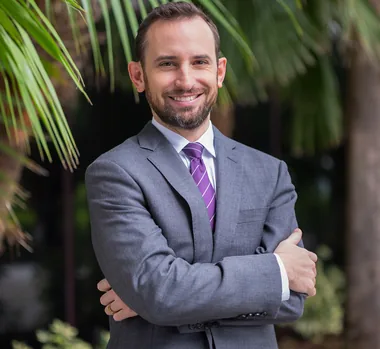 Brett J. Yonon Senior Trial Attorney Selected to Florida Super Lawyers in 2024 and 2025. Brett Yonon is who this firm puts on a catastrophic injury or a death in the family, and he has tried those cases to verdict. Full profile →
 -
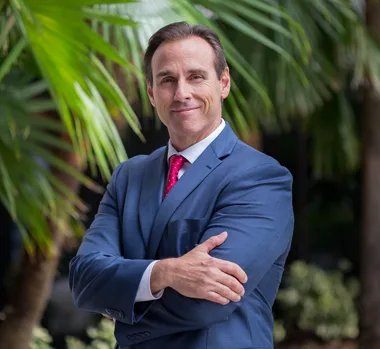 Richard P. Pravato Founding & Managing Attorney Board Certified in Civil Trial Law by The Florida Bar since 2004, and by the National Board of Trial Advocacy. Injury cases exclusively since 1996. Full profile →
How insurance companies handle these claims
Almost every move in a rideshare claim is aimed at the same thing: establishing that the collision happened in a cheaper period than it did. Knowing that in advance explains most of what follows.
- The data is no longer available
- Retention is not indefinite and the request has to identify the driver and the time window, which is exactly why it is sent early rather than after a position has hardened. A preservation letter in the first weeks costs nothing. The same letter in the sixth month becomes an argument about what a company chose to keep.
- Your personal policy excludes it
- Aimed at drivers rather than passengers, and frequently accurate on the wording. Many personal auto policies exclude use while logged on to a platform. That is not the end of the analysis: what the company carries in the period you were in, what uninsured motorist coverage exists and whether any rideshare endorsement was in force all have to be read from the actual policies rather than summarized on a call.
- Nobody is paying the first medical bills
- More coverage usually exists than people expect. If you own a car, your own PIP pays the first bills even though you were a passenger in somebody else’s vehicle, because Florida’s no-fault coverage follows the person. Beyond that there is the statutory tier, the at-fault driver’s policy and your own uninsured motorist coverage. It is worth checking every policy in the household before assuming there is nothing.
What a claim can include
The vehicle and what was in it
Repair or actual cash value, the rental while it is sorted out, and personal property destroyed in the collision. For a driver, also the earnings lost while the car is off the road.
Life care costs after a catastrophic injury
Equipment, home modification, attendant care and the replacement schedule for all of it, set out by a professional so that it is a number rather than an argument. This is where the period question decides everything.
What a family may recover after a death
Funeral and medical expenses, lost support and services, and the losses the statute assigns to particular survivors, brought by the personal representative of the estate.

Why Wolf & Pravato in Boynton Beach
A Boynton Beach rideshare claim is filed in the Fifteenth Judicial Circuit, generally at the South County Courthouse in Delray Beach, and the firm has an office on East Gateway Boulevard rather than a mailing address here. Where the decisive record is held by a company in another state, getting it is work that starts immediately.
Fewer than one percent of Florida lawyers are Board Certified in Civil Trial law: 861 of them, against a Bar membership over 109,000. Richard Pravato is one, and has been since 2004. Carriers price a claim partly on who is holding it, which is the practical reason that matters to somebody deciding who to call.
A consultation costs nothing, and neither does the case unless we recover money for you. Where we do not believe a claim is worth bringing, we will tell you plainly rather than take it on and let it drift.
Boynton Beach uber and lyft accident questions
My daughter ordered the ride for me from out of state.
Then the trip record is on her account rather than yours, and it is worth her saving it today: the receipt, the driver, the vehicle and the times. That record is what establishes the trip was in progress, which is what decides which layer of insurance responds. It is straightforward to get now and considerably harder months later.
The driver said he was between fares.
That is exactly the question, and it is answered by data rather than by either driver. Coverage differs depending on whether the app was off, on and waiting, or carrying a passenger, and the company holds the record of which it was. It gets requested rather than argued about, and it is one of the first things done in a rideshare file.
I was a passenger in an Uber. Who do I claim against?
Usually the rideshare company’s policy, which Florida requires to be at least $1 million while a prearranged ride is in progress, and potentially the at-fault driver if that was someone else. As a passenger you are rarely at fault, which removes most of the argument. Your own PIP still pays your first medical bills.
The driver says the app was off. Can that be checked?
Yes. The platform holds trip and app-status data showing exactly when a driver was logged on and when a ride was accepted. It we can get and it is not a matter of anyone’s word. Because it decides which coverage applies, it is one of the first things we request.
The questions that come up on every kind of claim, deadlines, fees, recorded statements and fault, are answered on our Florida injury claim FAQ.
More in Boynton Beach
Boynton Beach Personal Injury Lawyer
Everything we handle in Palm Beach County, and where our office is.
View →Boynton Beach Wrongful Death Lawyer
Florida wrongful death lawyers.
View →Boynton Beach Medical Malpractice Lawyer
Florida medical malpractice lawyers.
View →Boynton Beach Workers Compensation Lawyer
Florida workers compensation lawyers.
View →
Tell us what happened
A lawyer will listen, tell you what Florida law does with those facts, and be straight with you about whether it is worth bringing. We are at 1375 E Gateway Blvd, Boynton Beach, FL 33426.