

Boynton Beach Medical Malpractice Lawyer
A medical malpractice claim has to clear a formal notice process before any suit is filed. We run it properly from the first week. We can take it from here. Call 833-370-8692 for a free consultation. You pay us nothing unless we win. Our Boynton Beach personal injury lawyers have taken these cases across Palm Beach County since 1993.
Medical Malpractice claims in Boynton Beach
Hospitals investigate their own mistakes internally, usually before the patient is told anything went wrong, and the records that would prove what happened are held by the very people a claim would be brought against. Meanwhile you are paying for the care that was supposed to fix the problem, and for the care it now takes to put it right. Finding out what actually happened is our job, and it starts the day you call.
A patient injured in Boynton Beach is often stabilized locally and then transferred, frequently to the trauma center at Delray Medical Center or to a specialist facility further north, which means the records that decide the case are held by two or three institutions rather than one. Reconstructing the sequence across those handoffs is usually where the negligence becomes visible, because the failure is often in what was not communicated at transfer. Chapter 766 requires all of that to be reviewed by an expert before suit can be filed, and the same $200,000 cap applies if any of the entities involved turns out to be a public one.
A Boynton Beach medical negligence claim runs through the Chapter 766 presuit steps: complete records from every provider involved, a corroborating written opinion from a physician in the relevant specialty, then 90 days notice before suit. Cases arising here are generally filed at the South County Courthouse in Delray Beach, and the records that decide them are usually held by more than one institution.
What to do after a medical malpractice in Boynton Beach
- Ask for your complete records, in writing, now. Not the discharge summary and not a portal printout, which is a fraction of the chart. Ask in writing for the complete record: physician and nursing notes, medication administration, vital signs and monitoring, orders, imaging and the reports on it, and laboratory results. You are entitled to it, it is the foundation of any review, and requesting it commits you to nothing.
- Write down the sequence while you still remember it. Who you saw and when, what you told them, what you were told, how long you waited and what changed. Names where you have them. Memory for this fades fast and it fades first for the timings, which is exactly what a review turns on. A family member’s notes made at the bedside are frequently the most useful document in the file.
- Do not sign anything broad. Requests for records are routine and usually fine. Broad authorizations, arbitration agreements and anything resembling a release are not, and they are sometimes presented alongside ordinary paperwork. Bring the document to somebody before signing it. Reading it costs nothing, and an arbitration agreement signed at a bedside can decide the case before it starts.
- Keep getting care, from somebody else if you need to. Nothing about a potential claim requires you to stay with a provider you no longer trust, and nothing about changing doctors damages a claim. What does damage one is a gap in treatment, because it becomes the argument that the harm resolved. Get the problem addressed and let the records of that treatment be made.
- Ask early, because this claim cannot be started late. A medical case cannot simply be filed. The records have to be gathered and reviewed by a qualified physician who is willing to corroborate the claim in writing, and only then does the formal notice go out. That work takes months and costs real money before anything is filed. The practical deadline is therefore a long way ahead of the legal one.
Where these happen in Boynton Beach
A great deal of the medicine in south Palm Beach County happens outside a hospital: in a physician’s office, at an outpatient center, or in a facility somebody moved to after a discharge. That is where these claims come from.
-
The result nobody called about
The most common claim we see here begins in an office rather than a hospital, with a test that was done correctly.
- A finding noted in a report and never communicated to the patient
- Follow-up recommended in writing and never scheduled by anybody
- A symptom raised at several visits and attributed to something else each time
- The results communication record, which either shows the call was made or shows that it was not
-
Emergency department discharge
Patients here are frequently assessed, treated and sent home, and the harm is in the discharge rather than in the treatment.
- The workup that was and was not done before a decision to discharge
- Discharge instructions and return precautions, and whether they were actually given
- The return visit, which is where the picture becomes clear and which is a second record
- Timing between the two, measurable to the hour and difficult to explain away
-
Medication across several prescribers
An older patient here may be under four physicians who are not speaking to one another, and the prescribing record is where that shows.
- Interactions that were checkable and were not checked
- Dosing that was never adjusted for kidney function or for age
- An allergy already recorded in the chart and prescribed against
- Pharmacy records, which we can get and give an independent view of what was actually dispensed
-
Rehabilitation and skilled nursing after a discharge
The facility a patient moves to after a hospital stay is delivering medicine, and it documents it daily.
- Deterioration charted by staff and not escalated to a physician
- Pressure injuries and infections, which are recorded daily and hard to argue about later
- Staffing records for the shift, which answer whether anybody was available
- Regulator inspection and complaint history for the facility, which is public and worth reading first

What causes them
- A deteriorating patient whose observations were charted and not escalated to anybody who could act
- Surgery on the wrong site or the wrong side, and instruments or sponges left behind
- Anesthesia errors, including airway management and monitoring during and after a procedure
- Medication and dosing errors, including interactions nobody checked and allergies already in the chart
- Laboratory or imaging results that were produced correctly and never communicated to the patient
The injuries we see, and what each one turns on
Surgical injury and the operations that follow it
A perforation, a nerve injury or a failed repair generally means a further operation, sometimes several, and a recovery far longer than the one that was described beforehand. The second surgeon’s records are frequently where the picture becomes clear, because they document what was actually found.
Permanent loss of function
Nerve damage, loss of a limb, loss of sight, incontinence and chronic pain, which change what somebody can work at and how they live rather than simply costing money. These are proved with treating records and with the account of the people who see somebody every day.
Death
Where a patient dies, the claim is brought by the personal representative of the estate rather than by the family directly, and Florida decides by statute which survivors may recover and for what. Opening the estate is a probate step with its own timetable, and it is worth starting early because it is frequently the thing that holds everything else up.
What Florida law requires you to prove
The presuit process, in order
A medical negligence suit cannot be filed in Florida until the presuit requirements of Chapter 766 have been met. The records are gathered and reviewed, and a qualified medical expert in the relevant specialty has to provide a verified written opinion corroborating that there are reasonable grounds, under Fla. Stat. § 766.203. Only then does written notice of intent go to each prospective defendant, and under Fla. Stat. § 766.106 no suit may be filed for 90 days after that. The limitations period is tolled during the window, and both sides investigate informally within it.
The deadlines, which run differently here
Medical negligence has its own limitations rules under Fla. Stat. § 95.11: generally two years from when the injury was discovered or should have been discovered with due diligence, and in no event more than four years from the incident itself, with narrow exceptions including concealment and a separate provision for young children. Because the investigation and the corroborating opinion have to be completed before notice can even be sent, the working deadline sits well inside the statutory one.
Two things that surprise people
The modified comparative negligence bar Florida adopted in 2023, which stops anybody more than 50 percent responsible from recovering, expressly does not apply to medical negligence claims under Chapter 766. Separately, Article X, Section 25 of the Florida Constitution gives patients a right of access to records of adverse medical incidents made or received by a health care facility or provider. It is an unusually powerful right, it is underused, and it is one of the first requests we make.
The full statutory detail, and the parts that differ by claim type, sit on our statewide medical malpractice page rather than being restated in every market.
How we prove it in Palm Beach County
The difficulty in a south county case is rarely that a record is missing. It is that the records sit in four places and no single one of them shows the sequence.
- The complete chart from every physician, facility and center involved, in each case requested by name
- Results communication records, which decide most of the delayed diagnosis claims in this area
- The actual imaging files rather than the reports on them, including prior studies for comparison
- The electronic record audit trail, showing access, timing and anything added after the fact
- Pharmacy records, which give an independent account of what was prescribed and dispensed
- Records of adverse medical incidents, which patients have a constitutional right of access to in Florida
- Staffing rosters, assignment sheets and the policies in force on the date in question
- Regulator inspection and complaint history where a licensed facility was involved
Once that sequence is assembled it goes to a physician in the relevant specialty for a written review, at the firm’s expense, before anything is filed. Where the review does not support a claim, we say so.
Who would handle your case
Being hurt in Boynton Beach is hard enough without working out the legal side on your own. The trial lawyers below have handled medical malpractice claims across Florida since 1993, and one of them will take yours from the first call to the last check. They will tell you what your case is worth and why, and they will be straight with you about the parts that are hard.
-
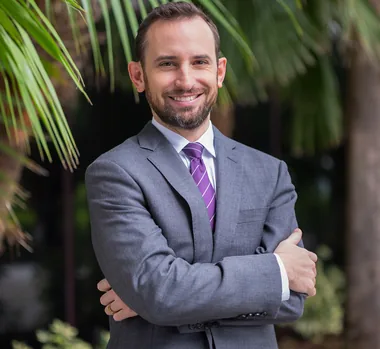 Brett J. Yonon Senior Trial Attorney Selected to Florida Super Lawyers in 2024 and 2025. Brett Yonon is who this firm puts on a catastrophic injury or a death in the family, and he has tried those cases to verdict. Full profile →
 -
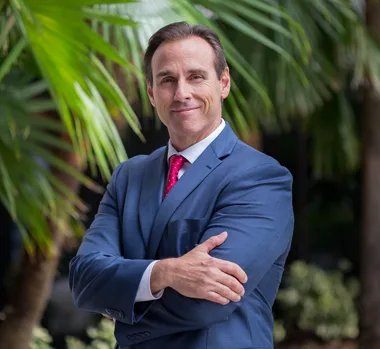 Richard P. Pravato Founding & Managing Attorney Board Certified in Civil Trial Law by The Florida Bar since 2004, and by the National Board of Trial Advocacy. Injury cases exclusively since 1996. Full profile →
How insurance companies handle these claims
Medical files are not handled by an ordinary adjuster. There is generally a risk manager involved from the day the incident is reported internally, frequently before the patient has any idea something went wrong, and counsel is assigned early.
- You signed a consent form
- A consent form documents that risks were discussed. It is not a waiver of negligent care and it never has been. Consenting to the recognized risks of an operation is not consenting to it being performed on the wrong side, or to a complication going unrecognized for two days afterward.
- The blame is moved onto the patient
- You did not follow instructions, you missed appointments, your own condition explains the outcome. It is worth knowing that the 50 percent bar which ends ordinary negligence claims does not apply to medical negligence, so this argument reduces a claim rather than ending it. It is answered from the chart, which usually records what the patient was actually told and when.
- An early offer, before the review is finished
- It arrives priced on what is known in month two, which in a medical case is very little. Where a child or a catastrophically injured adult is involved, the future care costs are the entire claim and they take a professional to quantify. A release cannot be reopened when the life care plan is finally written.
What a claim can include
Pain, and what daily life has become
What was lost in function, independence and time, proved with treating records and with the account of the people around the injured person.
Life care costs after a catastrophic injury
Attendant care, equipment, home modification, therapy and the replacement schedule for all of it, set out in a life care plan so that it is a number rather than an argument.
What a family may recover after a death
The claim is brought by the personal representative of the estate, and Florida decides by statute which survivors may recover and for what. It is worth asking about early, because the answer is narrower than most families expect.
Why Wolf & Pravato in Boynton Beach
A case arising in Boynton Beach is normally heard at the South County Courthouse in Delray Beach rather than downtown West Palm Beach, and the firm’s office on East Gateway Boulevard is a short drive from it. In a practice where a family is gathering records from several institutions, having somebody local doing that work is a practical difference.
Fewer than one percent of Florida lawyers are Board Certified in Civil Trial law: 861 of them, against a Bar membership over 109,000. Richard Pravato is one, and has been since 2004. Carriers price a claim partly on who is holding it, which is the practical reason that matters to somebody deciding who to call.
A consultation costs nothing, and neither does the case unless we recover money for you. Where we do not believe a claim is worth bringing, we will tell you plainly rather than take it on and let it drift.
Boynton Beach medical malpractice questions
The hospital transferred me. Who is responsible for what went wrong?
Potentially either institution or both, and frequently an individual physician rather than a hospital at all. Responsibility follows the decision that fell below the standard of care, which may have been the decision to transfer, the timing of it, or what was communicated when it happened. That is why we obtain the complete record from every facility involved rather than only the one a family assumes is at fault.
Nobody ever called my mother about her results.
If that is right, it is a documented failure rather than a matter of recollection. Results communication is recorded, and the record either shows a call was made or shows that it was not. What has to be established alongside it is what difference the delay made, which is answered from the imaging and the pathology by comparing the stage at which the problem should have been found with the stage at which it was.
Is it too late if this happened a few years ago?
Possibly not, and it is worth asking rather than assuming. The general rule is two years from when the injury was discovered or should have been discovered, and in no event more than four years from the incident, with narrow exceptions. Because the investigation and the physician review have to be completed before the formal notice can be sent, the working deadline is well inside the legal one. Ask early rather than late.
How long do I have to bring a medical malpractice claim in Florida?
Medical negligence runs on its own limitations rules, separate from ordinary negligence, and the presuit notice period tolls them. Because the investigation and expert review have to be completed before notice can even be sent, the practical deadline is much earlier than the statutory one. Ask early rather than assuming you have years.
Do I need a medical expert before I can sue?
Yes. Chapter 766 requires a corroborating written opinion from a qualified medical expert that there are reasonable grounds to believe negligence occurred. That review happens at our expense during the presuit investigation, and if the expert does not support the claim, we tell you so.
The questions that come up on every kind of claim, deadlines, fees, recorded statements and fault, are answered on our Florida injury claim FAQ.
More in Boynton Beach
Boynton Beach Personal Injury Lawyer
Everything we handle in Palm Beach County, and where our office is.
View →Boynton Beach Pedestrian and Bicycle Lawyer
Florida pedestrian and bicycle accident lawyers.
View →Boynton Beach Premises Liability Lawyer
Florida premises liability and negligent security lawyers.
View →Boynton Beach Wrongful Death Lawyer
Florida wrongful death lawyers.
View →
Tell us what happened
A lawyer will listen, tell you what Florida law does with those facts, and be straight with you about whether it is worth bringing. We are at 1375 E Gateway Blvd, Boynton Beach, FL 33426.