
Florida Boat Accident Lawyer
The boat or the jet ski is back on its trailer and the witnesses have gone home, and you are the one in a hospital bed. We can take it from here. Call 954-522-5800 for a free consultation. You pay us nothing unless we win. We have won these claims for Floridians from the Keys to the Panhandle, and we work them from five offices between Fort Lauderdale and Fort Myers.
If it happened on the water, this is the page. Boats, jet skis and waverunners, parasails, ferries and water taxis, party and dive boats, kayaks, canoes and paddleboards, and anybody towed behind a boat on skis, a wakeboard, a tube or a raft. Rentals included, which is most of what we see. They all run on the same law and we take all of it.

Our team will not let you go through a boat accident claim alone
A day on the water that ends in an ambulance is hard enough without the boat being trailered away before anybody examines it. Nothing undoes what happened out there, and we will not pretend otherwise. What we can do is make the operator and the owner answer for it, and we will take the case as far as it has to go.
Our trial attorneys have won boat accident cases across Florida since 1993, from the Keys to the Panhandle, and one of them will handle yours from the first call to the last check. Call 954-522-5800 for a free consult and a trial lawyer will tell you today whether you have a case. You pay us nothing unless we win, and we work from five offices between Fort Lauderdale and Fort Myers.
Meet the attorneys →What Florida law does with a boat accident claim
There is no police report the way there is on a road, and by evening the witnesses have scattered to five different marinas. Meanwhile you are dealing with the injury, the lost work, and an owner whose story is settling into something convenient. Finding those witnesses while they can still be found is our job, and it starts the day you call.
A boating claim differs from a road claim in three structural ways: which body of law applies, who the accident gets reported to, and the fact that no coverage pays your first medical bills. Below is how each of those works and who can be made to answer when somebody is hurt on the water.
A Florida boating claim generally has to be filed within two years under state law, and a maritime tort claim carries a three-year federal deadline. Nothing on the water pays your medical bills automatically the way a car policy does, and boating accidents are reported to the state rather than to a local police department.
The deadline that ends a Florida boat accident claim
Two limitation periods can apply to the same incident, and which one governs depends on where it happened and what was being done there.
Two years under Florida law
Most claims from an accident on or after March 24, 2023 have to be filed within two years. An older accident keeps the four years that applied when it happened. The period is in Fla. Stat. § 95.11, and a death claim runs two years from the date of death.
Three years where the claim is a maritime tort
46 U.S.C. § 30106 requires a civil action for damages for personal injury or death arising out of a maritime tort to be brought within three years after the cause of action arose. Whether an incident is a maritime tort turns on where it happened and whether it bears a relationship to traditional maritime activity, which is a real legal question rather than a formality.
Because both periods can be argued, the safe course is to work to the shorter one. Nobody has ever lost a case by preparing it too early.
Immediately, for the report that may never be made
Fla. Stat. § 327.30 requires the operator to report without delay, by the quickest means available, where there is a death, a disappearance, an injury needing treatment beyond immediate first aid, or apparent damage of at least $2,000. The report goes to the Fish and Wildlife Conservation Commission's law enforcement division, the sheriff or the municipal police rather than to a local traffic unit.
The same section requires an operator to render practicable assistance and to give their name, address and vessel identification. Plenty of these incidents are never reported at all, which changes what the case is built from rather than whether there is one.
Days, for the vessels and the people
A boat gets repaired, repainted, renamed or sold, and unlike a car it does not sit in a yard waiting for anyone. Everybody who saw it motors off in a different direction within twenty minutes and there is no exchange of licenses by the roadside. Names and numbers taken on the water are worth more here than in any other kind of accident.
Who can be held answerable
The operator is the obvious defendant and frequently carries nothing. Everybody else on this list is worth establishing early.
- The operator of the vessel. Answerable for how the boat was handled: speed for the conditions, keeping a proper lookout, how a wake was taken, and warning people before a maneuver. An injury with no collision at all is still an ordinary negligence claim, which surprises most people.
- The owner of the vessel. Where somebody else was at the helm, the owner is regularly answerable as well, and an owner's marine policy is frequently the only meaningful coverage in the case.
- A livery, where the boat was rented. Fla. Stat. § 327.54 puts real duties on a rental business, set out in full further down this page. The instruction record, the rental agreement and the maintenance log decide these claims, and the statute also requires the livery to carry substantial coverage.
- A charter or tour operator. A business carrying passengers for money owes them a high standard of care, and it carries commercial coverage. Crew qualifications, the safety briefing and the vessel's maintenance and inspection history are all documented.
- A marina or boatyard. Where a vessel was serviced badly, fuel was handled wrongly, or a dock, lift or walkway failed. These are ordinary negligence and premises claims with ordinary business insurance behind them.
- The manufacturer of the vessel or a component. Steering, fuel systems, engine installations and safety equipment appear in these cases regularly. Proved from the item itself, which means the vessel cannot be released for repair before somebody qualified has examined it.
- An employer, where somebody was working. Crew, dive operators, delivery captains and commercial fishermen fall under federal schemes rather than Florida workers compensation, with different rights and different deadlines. Where somebody's job involves a vessel, that question is asked before anything is filed.
How a Florida boat accident case actually runs
Which body of law applies is settled first, because it changes the deadline, the court and in some cases the damages available.
- Work out whether it is a maritime claim. A claim arising on navigable water and bearing a relationship to traditional maritime activity can fall under general maritime law rather than, or alongside, Florida law. That decides the deadline under 46 U.S.C. § 30106, whether the case can be brought in federal court, and occasionally what can be recovered. It is answered at the start rather than after a year of work.
- Find out whether it was reported, and to whom. Under Fla. Stat. § 327.30 the report goes to a state agency, the sheriff or municipal police. Get the incident number and the investigating agency. Where nothing was reported, the case gets built from the vessels, the marina, the charter paperwork and the people who were aboard instead.
- Preserve both vessels. In writing, to the owners and their insurers. Damage patterns, hull and registration numbers, the console and the condition of the safety equipment all establish what happened and all disappear at the first haul-out.
- Collect the paperwork the day generated. The charter agreement, the rental contract, the safety briefing sheet, the receipt, the listing and any waiver. Where a rental or charter is involved these documents decide who is answerable, and they exist in one copy on a phone that gets replaced.
- Deal with the waiver early. Charters and liveries hand these out routinely and their reach is narrower than the language suggests. Enforceability depends on the wording, on what exactly is being excused and on the circumstances, and Florida limits how far a business can contract out of its own negligence. Have the actual document read rather than accepting a summary over the phone.
- Treatment runs its course. There are no seat belts, no crumple zones and nothing to brace against, and help is a boat ride away rather than an ambulance ride. That gap makes some injuries considerably worse than they began, and it takes months for the picture to settle.
- Demand, suit and mediation. Fla. Stat. § 627.4137 produces the policy limits in a sworn statement within 30 days of a written request. Fla. Stat. § 47.011 puts a state law claim where it happened or where the defendant is, most Florida courts require mediation, and Fla. Stat. § 768.79 lets either side serve a formal offer with fees running from a refusal the judgment beats by at least 25 percent.
What the claim is worth, and how that number is built
These claims are valued like other serious injury cases, and two heads of loss come up here far more than elsewhere.
The medical care, past and future
Everything billed and what the treating physicians say is still ahead, including the surgery that follows an injury treated conservatively at first.
Scarring and disfigurement
A separate claim after a propeller injury or a fire aboard, and among the most severe injuries in this practice. Photograph the healing as it happens, because a record of what it looked like at three weeks does not exist unless somebody made it.
The long-term effect of oxygen deprivation
Where somebody went into the water, the brain injury from partial drowning shows up later as difficulty with attention, memory, behavior or mood rather than on any scan. Somebody resuscitated and discharged looking well should still have a neurological baseline taken, and it is evidence as well as good medicine.
Income, and the capacity to earn it
Wages missed, and separately what somebody can no longer earn. Where a hand, a leg or the ability to concentrate is affected, the second figure is usually much larger and it is proved with an economist and the treating physicians.
The fault split, and the line at 50 percent
Fault is divided under Fla. Stat. § 768.81 and, since March 2023, a person found more than 50 percent responsible for their own harm recovers nothing in a state law claim. The defense in these cases is nearly always some version of assumption of risk, and accepting the ordinary risks of being on the water is not accepting that an operator will run at an unsafe speed or keep no lookout.
What is repaid out of the recovery
Health insurance, Medicare and Medicaid are repaid, with Fla. Stat. § 768.76 keeping those payments from being deducted from the award because the repayment right already exists.
What changes from one part of Florida to another
Florida has more registered vessels than any other state, and the kind of boating differs sharply between one coast and another.
Inlets, passes and the intracoastal
Traffic converges where the water gets narrow, and the serious collisions follow. Those cases involve local knowledge of tides, traffic patterns and channel markers, and they are argued with charts and conditions rather than with skid marks.
Rental and personal watercraft markets
Beach and resort areas rent large numbers of boats and personal watercraft to visitors with no local knowledge and no instruction beyond what the statute requires. Those claims turn on Fla. Stat. § 327.54 and on paperwork the operator holds.
Commercial and working waters
Port traffic, dive and fishing charters and commercial operations produce a different kind of case, frequently under federal schemes for the crew and under ordinary law for the passengers on the same vessel.
A proven record, anywhere in Florida
Our five offices run from Fort Lauderdale to Fort Myers, on both coasts, and we act statewide on water claims.
The insurance behind a Florida boat accident claim
This is the part that catches injured people hardest on the water, and it is the opposite of the position after a car crash.
Nothing pays your first medical bills
After a car crash your own policy pays the first bills whoever caused it, because Fla. Stat. § 627.736 attaches to a motor vehicle. Nothing equivalent attaches to a boat, and Florida does not require a recreational vessel to carry liability coverage at all.
So people delay treatment, and the delay becomes the argument about how badly they were hurt. Go anyway, on health insurance, and let the coverage question be worked out afterward.
A livery has to carry real coverage, by statute
Fla. Stat. § 327.54 requires a livery to carry liability coverage of at least $500,000 per person and $1 million per event, and either to provide renter coverage or to offer it and take a signed waiver where it is declined. It also requires pre-rental or pre-ride instruction covering the vessel's handling, safe operation, local waterway hazards and emergency procedures, with the renter attesting in writing that they received it.
The same section bars renting a motorized vessel to anybody under 18, and bars renting to somebody who has not produced the boating safety identification the law requires of them. Whether each of those happened is documented, and a briefing nobody can evidence is a briefing that is hard to prove.
Private marine policies, where one exists
A boat owner's policy may carry liability coverage, a limited medical payments benefit and occasionally an uninsured boater endorsement. All three are worth finding early, and none of them is volunteered.
Homeowners and umbrella coverage
Smaller vessels are sometimes covered under a homeowners policy, and an umbrella policy above it frequently carries a million dollars or more. Fla. Stat. § 627.4137 requires the limits of each known policy including excess and umbrella coverage to be disclosed in a sworn statement within 30 days of a written request.
Why the water changes the claim
What these cases involve
- Operator inexperience, and rentals handed over with minimal instruction
- Boating under the influence, which is investigated differently from a road DUI
- Collisions and wake injuries in crowded channels and inlets
- Passengers thrown or struck by propellers
- Charter and rental operators, and whether their agreements are enforceable
- Defective equipment aboard the vessel
Everything else on the water, and it is all the same claim
Nothing on this list has a page of its own and none of them needs one. They run on the rules a boat claim runs on, and what changes between them is who you are claiming against and which paperwork decides it, not the law underneath. If what you were on is not named here, it is still covered: call and describe it.
- Jet skis, waverunners and every other personal watercraft, most of them rented to visitors
- Parasailing, which Florida regulates by its own statute after several deaths, with weather, equipment and licensing rules a boat does not have
- Tubes, rafts, water skis, wakeboards and anything else towed behind a boat, including injuries caused by the operator towing you
- Kayaks, canoes, paddleboards and rowing shells struck by a powered vessel
- Ferries, water taxis, party boats and dinner or booze cruises, where the operator owes a passenger-carrier duty higher than ordinary care
- Dive and snorkel charters, and passengers hurt getting into or out of the water
- Airboats and swamp tours, which carry their own operator rules
- Marina, dock, gangway and boat ramp injuries, which can be a premises claim against the property rather than a claim against a vessel
What pays for treatment while the claim runs
Florida’s no-fault PIP system applies to motor vehicles, not vessels. An injured passenger on a boat has no equivalent automatic benefit, so the first medical bills fall to health insurance or to whatever liability coverage the vessel carries, and marine policies vary enormously in what they include.
That gap is why treatment often stalls in the first weeks, and it is one of the first things we work on rather than something we leave you to sort out. Bring us the marine policy and your own health cover and we will tell you what order they go in.
Who would handle your case
Your case is handled by one of the trial lawyers below, and you will know which of them has it from the first conversation. They do boat accident work week in and week out, they will tell you what your case is worth and why, and they will be straight with you about the parts that are hard.
-
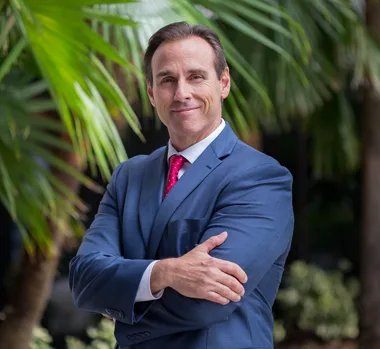 Richard P. Pravato Founding & Managing Attorney Board Certified in Civil Trial Law by The Florida Bar since 2004, and by the National Board of Trial Advocacy. Injury cases exclusively since 1996. Full profile →
 -
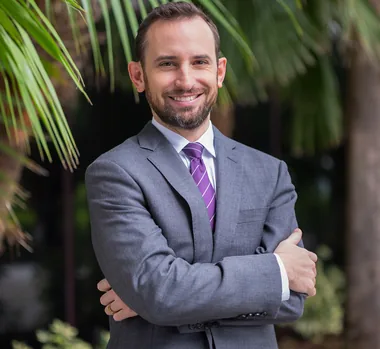 Brett J. Yonon Senior Trial Attorney Selected to Florida Super Lawyers in 2024 and 2025. Brett Yonon is who this firm puts on a catastrophic injury or a death in the family, and he has tried those cases to verdict. Full profile →
Boat Accident questions we are asked
Does my car insurance cover a boating accident?
Generally not. Florida PIP applies to motor vehicles rather than vessels, so there is usually no automatic no-fault benefit after a boating injury. Your health insurance, any medical payments coverage on a marine policy, and the vessel owner’s liability coverage are the usual sources.
I signed a waiver when I rented the boat. Is my claim over?
Not necessarily. Waivers are common and they are frequently narrower than they appear, and their enforceability depends on the wording, the circumstances and the conduct being excused. Bring us the agreement rather than assuming it ends the matter.
Does maritime law mean I cannot sue in Florida?
No, but it can change which rules apply, what damages are available and which deadlines govern. Whether maritime law applies turns on the location and the vessel. Establishing that early is what stops a claim being brought on the wrong footing.
Questions that apply to any Florida injury claim, fees, deadlines, recorded statements and shared fault, are answered on our injury claim FAQ. What we have recovered is on recent case results.
Five Florida offices
We take boat accident claims statewide. Each market below has its own page on this claim, with that office's address, its direct number and the court a case there is filed in.
Fort Lauderdale boat accident claims
2101 W Commercial Blvd, Fort Lauderdale. Serving Broward County.
View →Miami boat accident claims
1111 Brickell Avenue, Miami. Serving Miami-Dade County.
View →West Palm Beach boat accident claims
2101 Vista Parkway, West Palm Beach. Serving Palm Beach County.
View →Boynton Beach boat accident claims
1375 E Gateway Blvd, Boynton Beach. Serving Palm Beach County.
View →Fort Myers boat accident claims
1825 Colonial Blvd, Fort Myers. Serving Lee County.
View →Other claims we handle
Three of the closest to this one. The full list is on our Florida practice areas page.
Tell us what happened
A lawyer will listen, tell you what Florida law does with those facts, and be straight with you about whether it is worth bringing. If it is not, we will say so.
We take cases anywhere in Florida.