

Florida Bad Faith Insurance Lawyer
An insurer that will not pay has a file explaining why, and has not shown it to anyone. We make it answer in writing. We can take it from here. Call 954-522-5800 for a free consultation. You pay us nothing unless we win. We have won these claims for Floridians from the Keys to the Panhandle, and we work them from five offices between Fort Lauderdale and Fort Myers.
A bad faith claim is built almost entirely from how the insurer behaved, in writing, over time. Keep every letter, email and claim number, and note the date of every call and who you spoke to. That record is the case. It cannot be reconstructed afterward from memory.
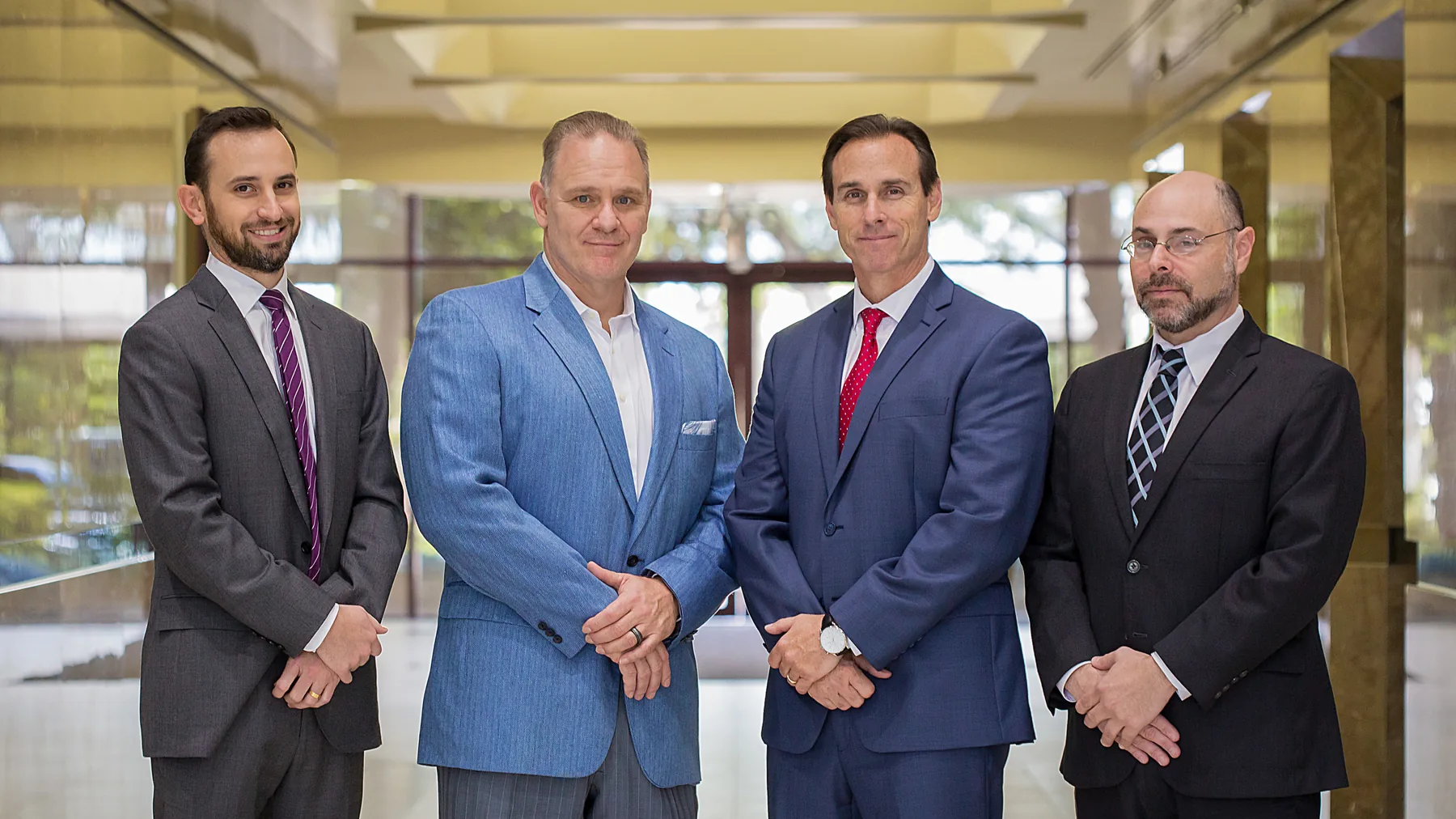
Our team will not let you go through a bad faith insurance claim alone
Paying premiums for years and getting nothing back when you finally need the policy is hard enough without your own insurer going quiet. Nothing undoes the months they left you waiting, and we will not pretend otherwise. What we can do is make the insurer answer for it, and we will take the case as far as it has to go.
Our trial attorneys have won bad faith insurance cases across Florida since 1993, from the Keys to the Panhandle, and one of them will handle yours from the first call to the last check. Call 954-522-5800 for a free consult and a trial lawyer will tell you today whether you have a case. You pay us nothing unless we win, and we work from five offices between Fort Lauderdale and Fort Myers.
Meet the attorneys →What Florida law does with a bad faith insurance claim
The carrier has a file, a timeline and a written reason for what it did, and none of it has been shown to you. Meanwhile the repair is not happening, the money is not arriving, and the letters keep asking for documents you have already sent twice. Making them answer in writing is our job, and it starts the day you call.
A bad faith case is not an argument about whether damage happened. It is an argument about how an insurance company behaved once it knew, and Florida puts a specific procedure and a specific standard in front of it. Below is what that procedure requires, what has to be shown, and what a bad faith claim is actually worth beyond the policy.
A Florida bad faith claim is against an insurer for how it handled a claim rather than for the underlying loss. Before suing, you have to file a civil remedy notice with the state and the insurer and give them 60 days to fix it. Mere negligence by the insurer is not enough.
The deadline that ends a Florida bad faith insurance claim
Bad faith runs on a sequence rather than on a single date, and the first step in that sequence is a form most people have never heard of.
The underlying claim has to be resolved first
A bad faith claim generally cannot be brought until the question of coverage and the amount of the loss has been determined, whether by judgment, by an appraisal award or by agreement. That is why these cases run behind the claim they arise from rather than alongside it.
It is also why the underlying claim has to be handled with a bad faith case in mind from the beginning. What gets written down, what gets asked for and what the insurer is told is the evidence in the second case.
The civil remedy notice, and the 60 days it buys the insurer
Fla. Stat. § 624.155 requires that the department and the insurer be given 60 days' written notice of the violation before any action lies. The notice has to specify the statutory provision alleged to have been violated, the facts relied on, the people involved and the policy language that applies.
The same section then provides that no action lies if, within 60 days of receiving the notice, the damages are paid or the circumstances giving rise to the violation are corrected. So a properly drafted notice frequently gets a claim paid without any lawsuit, which is a good outcome rather than a failed one.
Property claims carry their own presuit step
Fla. Stat. § 627.70152 requires at least 10 business days' notice before filing suit under a property insurance policy, setting out the acts or omissions relied on, whether an attorney is giving the notice, and an itemized presuit settlement demand covering damages, fees and costs. The insurer has to respond in writing within 10 business days.
The deadline on the claim itself
Fla. Stat. § 627.70132 requires notice of a property claim to be given to the insurer within one year of the date of loss, and notice of a supplemental claim within 18 months. Those are short, they are strictly applied, and a claim reported late is frequently over before any question of bad faith arises.
Which insurer answers, and on what theory
There are two quite different bad faith claims in Florida, and which one you have depends entirely on whether the insurer was on your side of the argument or the other.
- Your own insurer, on a first-party claim. Where you claimed under your own policy and the company underpaid, delayed or denied it. Fla. Stat. § 624.155 creates the statutory route for that, and it covers homeowners, property, health, disability and auto claims alike.
- A liability insurer, on a third-party claim. Where an insurer defending somebody who injured you refused a reasonable chance to settle within the policy limits and exposed its own insured to a judgment above them. That claim historically belongs to the insured, and it is regularly assigned to the injured person as part of resolving the case.
- The adjuster, and the company behind the adjuster. Claims handling is frequently contracted out, particularly after a storm, and the file shows who actually made each decision. Establishing that is worth doing early, because it changes who has to explain themselves under oath.
- The insurer, on the underlying coverage claim as well. The breach of contract case and the bad faith case are separate. The first asks whether the policy covers the loss and what it is worth; the second asks how the company behaved about it. Both are usually pleaded, and the first has to be resolved before the second proceeds.
How a Florida bad faith insurance case actually runs
The standard is higher than carelessness, and the case is built out of the insurer's own file rather than out of how the claim felt.
- Understand what has to be shown. Fla. Stat. § 624.155 covers, among other things, an insurer not attempting in good faith to settle a claim when under all the circumstances it could and should have done so. The same section says plainly that mere negligence alone is insufficient to constitute bad faith. A slow, disorganized or unhelpful claim is not automatically a bad faith claim.
- Build the record while the claim is live. Every request in writing, every response kept, every deadline noted. An insurer that ignored three written requests has a problem it does not have if the requests were phone calls nobody logged. This is the single most useful thing a policyholder can do and it costs nothing.
- Establish the loss properly. Independent estimates, engineers where causation is in issue, photographs and documentation of what was actually damaged. The bad faith case rests on the gap between what was owed and what was offered, and the first half of that has to be proved to a number.
- Serve the civil remedy notice. Filed with the department and served on the insurer under Fla. Stat. § 624.155, specifying the provision violated, the facts, the people and the policy language. It is drafted carefully rather than filed as a formality, because a vague notice gives the insurer 60 days to do nothing and an argument later that it was never properly told.
- See what the 60 days produce. A meaningful number of claims are paid in this window, which is the statute working as intended. Where the insurer pays or corrects the position, the bad faith action does not lie, and the client has the money.
- The underlying case, then the bad faith case. The coverage and amount question is resolved first, by suit, appraisal or agreement. Only then does the bad faith claim proceed, at which point the insurer's own claim file, its notes, its internal guidelines and its reserve decisions come into discovery.
- The claim file is the case. Adjuster notes, supervisor reviews, the reports it commissioned and the ones it ignored, and what the company knew and when. Insurers resist producing it and the fight over it is normal rather than a sign anything has gone wrong.
What the claim is worth, and how that number is built
The point of a bad faith claim is that it reaches beyond the policy limit, which is why insurers defend them as hard as they do.
The amount that should have been paid
The starting point, and on a first-party claim it is the difference between what the policy owed and what the company actually paid.
The judgment above the limit, on a third-party claim
Where an insurer refused a chance to settle within limits and a judgment came in above them, the exposure is the whole judgment rather than the policy. That is the mechanism by which a $50,000 policy becomes a seven-figure problem for the carrier.
The consequences of not being paid
Interest, and on a property claim the further damage that happened while the company delayed: a roof left open through another storm, mold that spread, a business that could not reopen. These are frequently larger than the original loss and they are routinely left out of an early offer.
Emotional distress, in the right case
Available in some bad faith claims and not in others, depending on what happened and what was foreseeable. It is assessed on the specific facts rather than assumed, and it is not what most of these cases are worth.
Attorney fees, which depend on the kind of claim
Florida has changed its insurance fee statutes significantly in recent years, and whether fees are recoverable now depends on the type of policy, the type of claim and when it arose. It is one of the first things established on a new matter, because it changes what a case is worth pursuing.
Punitive damages, in the rare case
Fla. Stat. § 768.72 requires a court to see evidence before punitive damages may be pleaded, and then intentional misconduct or gross negligence proved by clear and convincing evidence. An insurer following a written policy of underpaying a class of claims can reach that line. An insurer that handled one claim badly does not.
What changes from one part of Florida to another
Bad faith is a statewide statute, and what varies is what Florida insures and how those markets behave.
Uninsured motorist claims, which are most of this work
Florida does not require a driver to carry any coverage for injuring somebody else, so the policy that actually pays a serious injury is frequently the injured person's own. That puts them in a claim against their own insurer, which owes them duties it does not owe a stranger, and it is where most of the first-party bad faith claims in this state come from.
Auto claims, which are a different animal
Uninsured motorist and liability claims produce the third-party bad faith cases, where the question is whether a carrier had a fair chance to settle within limits and did not take it. Those turn on the timing of demands and responses, in days rather than months.
Which county the case is filed in
Fla. Stat. § 47.011 allows the action where the defendant resides or where the cause of action accrued, and the choice matters. Court schedules differ between circuits, and a filed case carries leverage in proportion to how quickly it will actually be heard.
A proven record, anywhere in Florida
Our five offices run from Fort Lauderdale to Fort Myers, and we act statewide on claims against insurers.
What your policy and the statute each require of the insurer
Two documents govern every one of these cases: the policy you bought, and the statutes that say what an insurer must do with it.
Get the complete policy, not the declarations page
The declarations page shows limits. The policy shows exclusions, conditions, duties after loss, deadlines for proof of loss, appraisal provisions and time limits for suit. Insurers frequently rely on a condition the policyholder was never told about, and the answer is to read the whole document early.
The duties the policy puts on you
Prompt notice, cooperation, an examination under oath, a sworn proof of loss, mitigation of further damage, and access to the property. Failing one of these gives an insurer a defense that has nothing to do with the merits, so they are met carefully rather than resented.
What the statute requires of the insurer
Fla. Stat. § 624.155 covers, among other things, failing to attempt in good faith to settle when it could and should have, failing to provide a reasonable explanation with a payment, and delaying settlement to influence settlements under other coverage. The unfair claim settlement practices provisions of the insurance code sit behind it and are what the notice usually cites.
On an auto claim, what your own coverage does first
Fla. Stat. § 627.736 pays $10,000 in benefits, being 80 percent of reasonable medical expenses and 60 percent of lost wages regardless of fault, provided a qualifying provider is seen within 14 days and, for the full amount, finds an emergency medical condition. Disputes about what an insurer paid under that coverage, and about uninsured motorist benefits under Fla. Stat. § 627.727, are among the most common first-party bad faith claims in Florida.
Appraisal, which is not the same as giving up
Many property policies contain an appraisal clause allowing the amount of the loss to be decided by appraisers and an umpire rather than by a court. It resolves the number and does not resolve coverage, and whether to invoke it is a real strategic decision rather than an administrative one.

What bad faith actually means
It is about the handling, not the disagreement
An insurer and a policyholder disagreeing about value is not bad faith. Bad faith concerns how the claim was handled: unreasonable delay, failure to investigate properly, failure to communicate a settlement opportunity, or refusing to settle within limits where a reasonable insurer would have.
The consequence is significant. Where bad faith is established, the insurer’s exposure is not confined to the policy limit, which is what makes these claims meaningful in cases where the coverage was far too small for the injury.
The procedural step people miss
Florida requires a civil remedy notice to be filed and gives the insurer a period to cure the alleged conduct before a statutory bad faith action can proceed. That step has requirements of its own, and getting it wrong can defeat an otherwise sound claim.
It is also strategically important, because a properly framed notice sometimes produces the payment that should have been made in the first place.

Who would handle your case
Your case is handled by one of the trial lawyers below, and you will know which of them has it from the first conversation. They do bad faith insurance work week in and week out, they will tell you what your case is worth and why, and they will be straight with you about the parts that are hard.
-
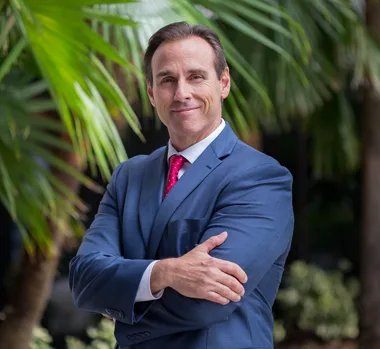 Richard P. Pravato Founding & Managing Attorney Board Certified in Civil Trial Law by The Florida Bar since 2004, and by the National Board of Trial Advocacy. Injury cases exclusively since 1996. Full profile →
 -
 Brett J. Yonon Senior Trial Attorney Selected to Florida Super Lawyers in 2024 and 2025. Brett Yonon is who this firm puts on a catastrophic injury or a death in the family, and he has tried those cases to verdict. Full profile →
Bad Faith Insurance questions we are asked
My insurer is delaying. Is that bad faith?
It might be, and delay alone usually is not. What matters is whether the handling was reasonable: whether the insurer investigated properly, communicated, and responded to settlement opportunities. The pattern in the correspondence is what establishes it, which is why keeping the paper trail matters so much.
The policy limit is far too low for my injuries. Is anything possible?
Sometimes, and this is where bad faith becomes important. If the insurer had a reasonable opportunity to settle within the limit and failed to take it, its exposure may extend beyond that limit. It depends heavily on what was offered, when, and how the insurer responded.
Can I bring this against the other driver’s insurer?
Third party bad faith is recognized in Florida but it is different from a claim against your own insurer, and it typically arises after a judgment exceeds the available coverage. Which route applies depends on the posture of the underlying case, which is worth working through early.
Questions that apply to any Florida injury claim, fees, deadlines, recorded statements and shared fault, are answered on our injury claim FAQ. What we have recovered is on recent case results.
Five Florida offices
We take bad faith insurance claims statewide. Each market below has its own page on this claim, with that office's address, its direct number and the court a case there is filed in.
Fort Lauderdale bad faith insurance claims
2101 W Commercial Blvd, Fort Lauderdale. Serving Broward County.
View →Miami bad faith insurance claims
1111 Brickell Avenue, Miami. Serving Miami-Dade County.
View →West Palm Beach bad faith insurance claims
2101 Vista Parkway, West Palm Beach. Serving Palm Beach County.
View →Boynton Beach bad faith insurance claims
1375 E Gateway Blvd, Boynton Beach. Serving Palm Beach County.
View →Fort Myers bad faith insurance claims
1825 Colonial Blvd, Fort Myers. Serving Lee County.
View →Other claims we handle
Three of the closest to this one. The full list is on our Florida practice areas page.
Tell us what happened
A lawyer will listen, tell you what Florida law does with those facts, and be straight with you about whether it is worth bringing. If it is not, we will say so.
We take cases anywhere in Florida.