

Boynton Beach Bad Faith Insurance Lawyer
A bad faith insurance claim starts by putting the insurer formally on notice, which starts a clock. We serve it and run it. We can take it from here. Call 833-370-8692 for a free consultation. You pay us nothing unless we win. Our Boynton Beach personal injury lawyers have taken these cases across Palm Beach County since 1993.
Bad Faith Insurance claims in Boynton Beach
The carrier has a file, a timeline and a written reason for what it did, and none of it has been shown to you. Meanwhile the repair is not happening, the money is not arriving, and the letters keep asking for documents you have already sent twice. Making them answer in writing is our job, and it starts the day you call.
Uninsured and underinsured motorist coverage is the policy that actually pays in a serious Palm Beach County crash, because Florida does not require drivers to carry bodily injury liability coverage at all. That puts the injured person in a claim against their own insurer, which is a different relationship from a claim against a stranger's carrier and carries its own duties of good faith. A carrier that drags out its own policyholder's claim, demands documents it already has or values an injury against a template rather than the record, is doing something the statute addresses.
Most Boynton Beach bad faith claims are against the injured person’s own uninsured motorist carrier, because Florida does not require drivers to carry bodily injury liability coverage. That puts you in a claim against your own insurer, which owes you duties of good faith it does not owe a stranger, and those duties are enforceable.
What to do when an insurer will not pay
- Ask for the complete claim file in writing. Adjuster notes, the activity log, every report the carrier commissioned and the internal valuation. Ask by letter or email so there is a record of the request and the date. What is in that file, and what is missing from it, is most of a bad faith case. A carrier that investigated properly has a file that shows it, and a carrier that did not has one that shows that instead.
- Move the whole conversation into writing. Phone calls leave the carrier’s note and nothing of yours. From here on, confirm every call by email the same day: who you spoke to, what they said, what they asked for and what they promised. It takes four lines. Six months later, that sequence of emails is the timeline, and the timeline is what makes a delay look like a decision rather than an accident.
- Send what they ask for, and keep proof you sent it. Requests for documents already supplied are one of the recurring patterns here, and the answer is not to refuse. Send it again, note that it was previously provided on a date, and keep the transmission record. A carrier repeatedly asking for what it already has builds your file rather than yours falling apart.
- Know which clock you are on. An injury claim, an uninsured motorist claim and a statutory bad faith claim each run on different deadlines, and the bad faith claim generally cannot even be brought until the underlying coverage and amount have been settled. Establishing which applies is the first hour of work, because a strong claim that missed a notice deadline is not a claim.
- Do not wait for the carrier to reconsider. Waiting is the one approach that only helps the insurer. Nothing about a file sitting open improves with time: the deadlines shorten, the memories go, the adjuster changes and the loss gets harder to document. If a claim has been open for months without a decision, or with a decision that does not match what the loss actually cost, that is the point to have it looked at.
Where these disputes come from in Boynton Beach
The reason so many of these are claims against your own company is structural. In a serious crash here, your uninsured motorist coverage is very often the only policy large enough to matter.
-
What uninsured motorist coverage actually is
It is the coverage most people did not know they were relying on until the day they needed it, and it changes who you are arguing with.
- Florida requires no bodily injury liability coverage, so the at-fault driver may carry none at all
- Underinsured coverage, which fills the gap where a policy exists but is far too small
- Stacking across household vehicles, which multiplies the available limit and is regularly missed
- Household members and passengers who may be covered under a policy that is not theirs
-
How the relationship changes
A claim against your own carrier is adjusted like any other claim against its money, which surprises people who assumed otherwise.
- Examinations under oath and document demands that go well beyond a liability claim
- Independent medical examinations arranged and paid for by the carrier
- Duties of good faith the carrier owes you as its policyholder
- A claim log that records what was done, and what was not, between the calls
-
What tips it into the statute
Slow is not automatically bad faith. What the section addresses is conduct rather than pace.
- Valuing an injury against a template rather than the treating records
- Demanding documents the carrier already has, repeatedly
- Delay with nothing in the file to explain it
- Ignoring the carrier’s own medical review where it supported the claim
-
The notice, and the 60 days
The statutory route is specific, and the first step is the one that decides what the case can later be about.
- A civil remedy notice filed with the Department of Financial Services and served on the carrier
- Identification of the statutory provisions, the facts and the policy language relied on
- 60 days for the carrier to pay or correct, after which no action lies if it did
- A vague notice, which hands the carrier an argument it should never have had
What insurers do that the statute addresses
- Denying a claim without an investigation that could reasonably support the denial
- Ignoring the carrier’s own medical review when it favored the claim
- Failing to acknowledge, investigate or decide within the periods the regulations set
- Paying an amount well below what the treatment actually cost
- Misstating what the policy covers, or relying on an exclusion that does not apply
What an insurer’s delay actually costs
Financial harm that outlasts the claim
Medical debt sent to collection, credit damaged, a mortgage that fell behind while a covered loss went unpaid, work missed for appointments that a carrier’s delay made necessary. These are consequences of the handling rather than of the original loss, and they are pleaded separately because they are proved separately.
The original injury, made worse
Where delayed care allowed a treatable condition to become a permanent one, that deterioration is part of what the conduct caused. It requires medical evidence linking the delay to the outcome rather than an assertion, which is why the treating physicians are asked about it while it is happening rather than years later.
A judgment above the policy limits
The classic consequence, and the one that turns a capped claim into an uncapped one. Where a carrier had a real chance to settle within its insured’s limits and refused, and a judgment then lands above them, the shortfall becomes the carrier’s problem rather than the policyholder’s. It is also the outcome the carrier is trying hardest to avoid, which is what gives an early demand its leverage.
What Florida law requires you to prove
The notice comes first, and the carrier gets 60 days
A statutory bad faith claim runs under Fla. Stat. § 624.155, and it starts with a civil remedy notice filed with the Department of Financial Services and served on the insurer. The notice is a condition precedent: no action lies until 60 days have passed, and none lies at all if the carrier pays or corrects the problem inside that window. Many do, which is the fastest good outcome available. It has to identify the statutory provisions, the facts and the policy language relied on, so a vague one hands the carrier an argument it should never have had.
What has to be shown, and what is not enough
The core ground is an insurer not attempting in good faith to settle a claim when, under all the circumstances, it could and should have done so had it acted fairly and honestly toward its insured and with due regard for their interests. It also reaches the unfair claim settlement practices listed in Fla. Stat. § 626.9541. Since 2023 it says plainly that mere negligence alone is insufficient, which raised the bar and did not remove it. A carrier that ignored its own file rather than mishandled it is still squarely inside the section.
The insurer has a way out, and so do you
Under the same statute a bad faith action does not lie where the insurer tenders the lesser of the policy limits or the amount demanded within 90 days of receiving actual notice of a claim supported by sufficient evidence. That is the safe harbor, and it is why the first demand is written carefully rather than casually. The statute also puts a duty of good faith on the insured and the claimant, and lets the trier of fact reduce damages where it was not met. Both directions matter before the first letter goes out.
The full statutory detail, and the parts that differ by claim type, sit on our statewide bad faith insurance page rather than being restated in every market.
How we prove it in Palm Beach County
A claim against your own insurer is proved from its file rather than from the crash, and the two are collected quite differently.
- The complete claim file, the activity log and the adjuster notes
- Every household policy and endorsement, to establish the real limit including stacking
- Every medical review, examination and report the carrier obtained
- Its internal valuation and the inputs it was given
- Dated proof of everything supplied, and a record of each repeated request
- The treating records the valuation should have been built on
- The transcript of any examination under oath, and what the carrier did after it
- The civil remedy notice, drafted to the provisions, the facts and the policy language
The stacking question is worth asking first. More than one claim here has turned out to have twice the limit somebody assumed, which changes the argument before any of the conduct is examined.

Who would handle your case
Being hurt in Boynton Beach is hard enough without working out the legal side on your own. The trial lawyers below have handled bad faith insurance claims across Florida since 1993, and one of them will take yours from the first call to the last check. They will tell you what your case is worth and why, and they will be straight with you about the parts that are hard.
-
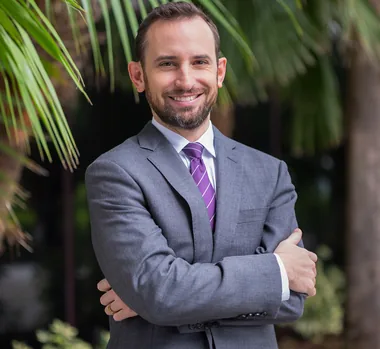 Brett J. Yonon Senior Trial Attorney Selected to Florida Super Lawyers in 2024 and 2025. Brett Yonon is who this firm puts on a catastrophic injury or a death in the family, and he has tried those cases to verdict. Full profile →
 -
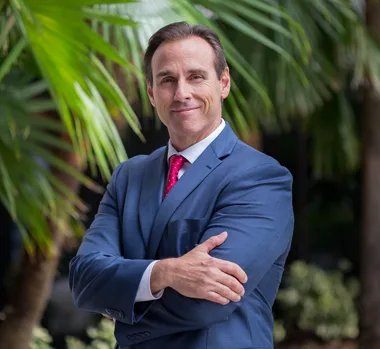 Richard P. Pravato Founding & Managing Attorney Board Certified in Civil Trial Law by The Florida Bar since 2004, and by the National Board of Trial Advocacy. Injury cases exclusively since 1996. Full profile →
What a carrier says once you push back
Everything above describes what a carrier did. This is what it says once somebody stops accepting it, and none of these answers is the end of a conversation.
- That is not covered under the policy
- Ask which provision, in writing, and read it against the policy as issued rather than the summary. Denials rest on exclusions that do not apply, on conditions that were met, and on policy language quoted loosely more often than most people would expect. A denial the carrier cannot tie to specific wording is a different thing from a denial it can.
- The limits are only $10,000, so that is all there is
- Sometimes true and worth testing rather than accepting. Where the carrier had a genuine opportunity to settle inside those limits and did not take it, a judgment above them can be pursued against the carrier itself. There may also be other policies: an umbrella, an employer’s coverage if the driver was working, or uninsured motorist coverage on your own household policy.
- We are paying, but only if you sign this release
- Read what it releases. A release covering the handling of the claim, and not only the loss, ends a bad faith claim you may not have known you had. Carriers paying late sometimes attach exactly that. Asking is not improper. Signing it unread is the expensive part.
What a claim can include
The difference between what was paid and what was owed
Where a carrier valued an injury against a template rather than against the records, the shortfall is the starting point. It is established from the treating physicians and the bills rather than from an argument about the adjuster.
Medical consequences of delayed care
Where treatment stopped because nothing was paying and a condition worsened as a result, that deterioration is part of what the handling caused, proved through the treating physicians.
Attorney fees and costs where the statute allows
Recoverable in defined circumstances, and Florida has changed the rules on insurance fee awards more than once in recent years. Which version applies depends on the policy and the date, and it is checked rather than assumed.

Why Wolf & Pravato in Boynton Beach
A Boynton Beach bad faith case is filed in the Fifteenth Judicial Circuit at the South County Courthouse in Delray Beach, a few minutes from this office. Where a claim runs against your own carrier, the underlying injury case and the coverage fight are the same file, and splitting them between two firms is how the timeline stops making sense.
Fewer than one percent of Florida lawyers are Board Certified in Civil Trial law: 861 of them, against a Bar membership over 109,000. Richard Pravato is one, and has been since 2004. Carriers price a claim partly on who is holding it, which is the practical reason that matters to somebody deciding who to call.
A consultation costs nothing, and neither does the case unless we recover money for you. Where we do not believe a claim is worth bringing, we will tell you plainly rather than take it on and let it drift.
Boynton Beach bad faith insurance questions
Why is my own insurance company fighting me?
Because an uninsured motorist claim is a claim against your insurer’s money, so it adjusts it the way it would any other claim. It still owes you duties of good faith it does not owe a stranger, and those are enforceable. Where the file shows a carrier ignoring its own medical review or delaying without a reason, that becomes the basis for a civil remedy notice.
They want me to sit for an examination under oath. Do I have to?
Usually yes, because the policy requires cooperation and refusing can end the claim outright. That does not mean going in unprepared or alone. The scope of what can be asked has limits, the transcript will be used, and what the carrier does with it afterward is itself part of the record. Attend, prepared, with your own lawyer present.
How do I know how much coverage I actually have?
From the policies themselves rather than from memory, and it is worth checking every vehicle in the household rather than only the one involved. Stacking can multiply the available limit, coverage sometimes extends to household members driving somebody else’s car, and people regularly turn out to have more than they thought. It is one of the first things looked at because it changes everything after it.
My insurer is delaying. Is that bad faith?
It might be, and delay alone usually is not. What matters is whether the handling was reasonable: whether the insurer investigated properly, communicated, and responded to settlement opportunities. The pattern in the correspondence is what establishes it, which is why keeping the paper trail matters so much.
The policy limit is far too low for my injuries. Is anything possible?
Sometimes, and this is where bad faith becomes important. If the insurer had a reasonable opportunity to settle within the limit and failed to take it, its exposure may extend beyond that limit. It depends heavily on what was offered, when, and how the insurer responded.
The questions that come up on every kind of claim, deadlines, fees, recorded statements and fault, are answered on our Florida injury claim FAQ.
More in Boynton Beach
Boynton Beach Personal Injury Lawyer
Everything we handle in Palm Beach County, and where our office is.
View →Boynton Beach Swimming Pool Accident Lawyer
Florida swimming pool drowning and injury lawyers.
View →Boynton Beach Airbnb Injury Lawyer
Hurt at a Florida Airbnb or VRBO.
View →Boynton Beach Boat Accident Lawyer
Florida boat, jet ski, parasailing and watercraft accident lawyers.
View →
Tell us what happened
A lawyer will listen, tell you what Florida law does with those facts, and be straight with you about whether it is worth bringing. We are at 1375 E Gateway Blvd, Boynton Beach, FL 33426.