

Boynton Beach Swimming Pool Accident Lawyer
A gate was open or nobody was watching, and a few minutes at a pool turned into the worst day of your life. We can take it from here. Call 833-370-8692 for a free consultation. You pay us nothing unless we win. Our Boynton Beach personal injury lawyers have taken these cases across Palm Beach County since 1993.
Swimming Pool Accident claims in Boynton Beach
The owner will say somebody should have been supervising, and will mean you. Meanwhile you are at a bedside, being asked about long-term care, and nobody has told you whether the gate, the alarm or the fence met code. Finding out what was required and what was actually there is our job, and we start the day you call.
The pool cases that come out of this part of Palm Beach County are mostly not fatalities. They are children pulled out and resuscitated, who then live with a hypoxic brain injury. Those claims are valued on decades of care rather than on the incident itself, which means they need a life care plan and an economist alongside the liability work. On the liability side the questions are the ordinary ones, whether the barrier met Chapter 515, whether the gate latched, whether anyone was supposed to be watching, but the stakes are considerably higher than the phrase near-drowning suggests.
The pool cases from this part of Palm Beach County are mostly not fatalities. They are children pulled out and resuscitated who then live with a hypoxic brain injury, valued on decades of care rather than on the incident. That needs a life care plan and an economist alongside the liability work.
What to do after a swimming pool accident in Boynton Beach
- Photograph the barrier before anybody fixes it. The fence, the gate, the latch, the gap under it, the door from the house, the alarm if there is one. Photograph from a child’s height as well as your own. A pool that was not enclosed properly gets enclosed properly within days of an incident, and the version that existed on the day stops existing. Include something for scale, because heights and gaps are measured rather than described.
- Test the gate on camera. Film the gate closing and latching, or failing to. A self-closing gate that does not swing shut, or a latch a child can reach, is the whole case in eleven seconds of video, and it is the single most persuasive thing a family can produce. Do it before anybody adjusts the hinge.
- Write down who was there and what they were doing. Who was supposed to be watching, who else was in the water, whether a lifeguard or attendant was on duty and where they were standing. Get names and numbers the same day. At a hotel, community or rental pool these people scatter within hours and are extremely hard to find later.
- Take the whole record of what was promised. The listing, the rules posted at the gate, the association bulletin, the booking confirmation, whatever the property said about supervision, hours and safety. Screenshot rather than bookmark, because listings and websites get edited after an incident and the version that persuaded somebody to book is the one that matters.
- Get the neurological picture even if the child seems fine. A child pulled out and resuscitated frequently looks recovered within days, and oxygen deprivation shows up later as problems with attention, memory, behavior or learning. A baseline assessment now is useful medically and is evidence, the deadline runs whether or not anybody has connected the symptoms yet, and having it done commits you to nothing.
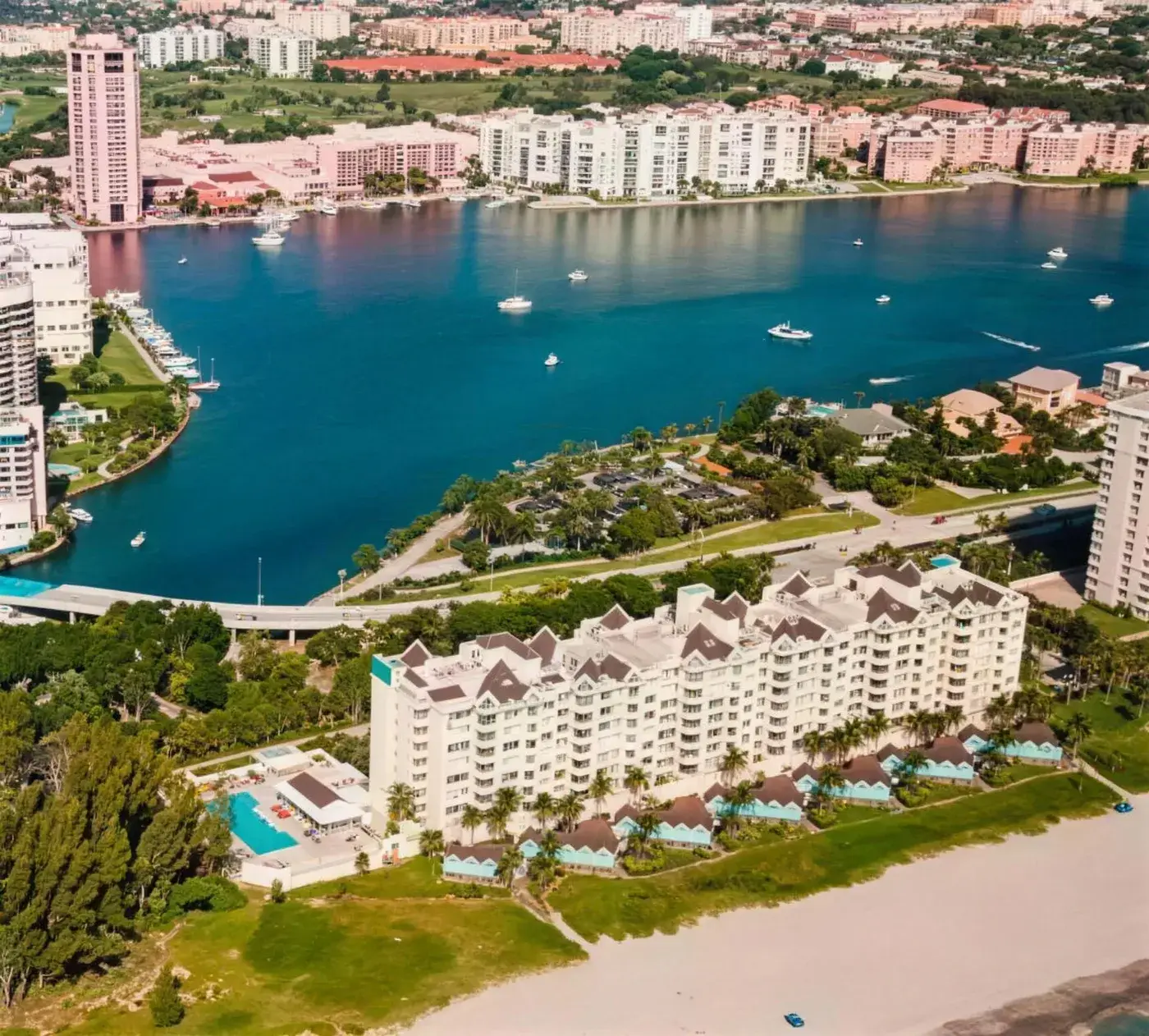
Where these happen in Boynton Beach
The liability questions here are the ordinary ones. What is different is the scale of what follows, and how little of it is visible in the first weeks.
-
What the liability side still turns on
The barrier questions do not change because the outcome is worse. They are simply worth more.
- Whether the barrier met the four-foot requirement with no gap a child could use
- Whether the gate self-closed and self-latched, with the release out of reach
- Where there was no fence, whether an approved cover, door alarms or a pool alarm existed
- Whether anybody had undertaken to be watching, and what they were actually doing
-
What happens in the weeks after
A child is discharged looking recovered and the family is told the worst is over, which is when the case quietly begins.
- A discharge that records a full neurological examination and nothing since
- Attention, memory, behavior and learning problems appearing months later
- School reports that change without anybody linking the two
- A neuropsychological baseline, which is the single most useful thing to do early
-
Building the number
A claim like this is not about the hospital bill, and Florida requires the rest to be proved rather than asserted.
- A life care plan built from the treating physicians rather than from a template
- Therapy, equipment, supervision, schooling support and housing over a lifetime
- Lost earning capacity for a child who has no earnings history to point at
- An economist bringing the schedule to present value on defensible assumptions
-
The family’s own position
A parent who was present is usually carrying more blame than the law puts on them, and it affects how the case is handled as well as how it is valued.
- Comparative fault, which reduces a claim rather than ending it
- The barrier requirements, which exist because supervision lapses in every family
- A parent’s own claim, recognized in defined circumstances and separate from the child’s
- Care being provided at home, which is a real cost even where nobody invoiced for it
What causes them
- Supervision that was promised and not provided, at a hotel, club or camp
- A drain or suction outlet without a compliant cover
- Depth markings missing, worn away or wrong for the actual depth
- A broken or missing underwater light, leaving the bottom invisible after dark
- Water chemistry left unbalanced, which burns skin, eyes and airways
- Slippery decking, broken tile and unlit steps around the edge
What a drowning or near-drowning actually does
Chemical burns and respiratory injury
A system left unbalanced or dosed wrongly burns skin, eyes and airways, and at an indoor pool the airway injury can be the serious one. The chemical log and the service contractor’s records show what was added and when, and they are the evidence rather than the symptoms.
Head, spinal and diving injuries
Entering water that was shallower than the marking said, striking a step or a wall that was not visible, or a slip on wet decking. Depth markings, lighting and the physical layout are measurable facts, and where the marking was wrong the property cannot argue the swimmer should have known.
A death in the family
A death claim is brought by the personal representative of the estate, and Florida decides by statute which survivors may recover and for what. Opening the estate takes time, so it starts early rather than when it becomes urgent.
What Florida law requires you to prove
The barrier the law actually requires
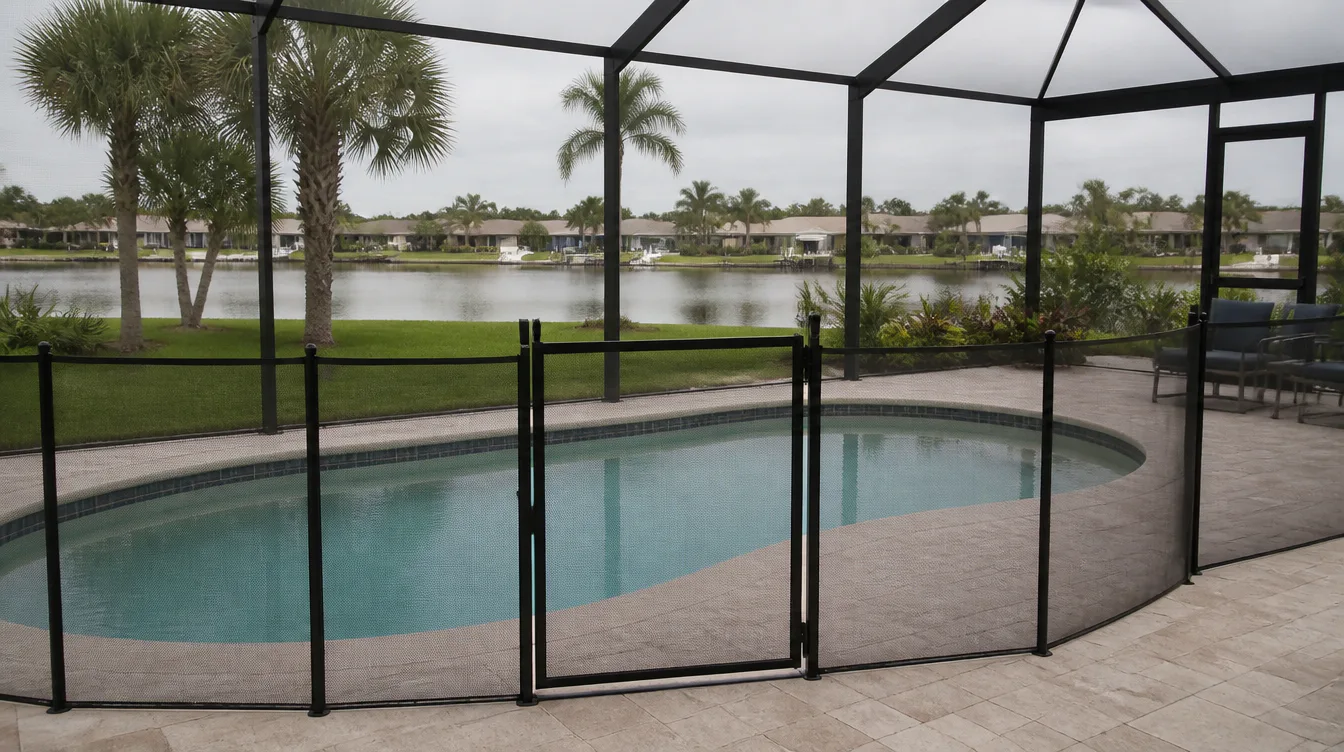
Florida’s Residential Swimming Pool Safety Act sets what a residential pool has to have, and it is specific enough to measure. Under Fla. Stat. § 515.29 a barrier must be at least four feet high on the outside, must have no gap or foothold that lets a young child crawl under, squeeze through or climb over, and must sit far enough back from the water that a child who does get past it does not fall straight in. Gates must open outward, be self-closing and self-latching, with the release on the pool side and out of a child’s reach. Most claims involving a young child start with a tape measure against that list.
The alternatives to a fence, and their numbers
A barrier is not the only option. Under Fla. Stat. § 515.27 a residential pool must have at least one approved safety feature: an approved safety pool cover, exit alarms on every door and window giving direct access to the pool rated at a minimum of 85 decibels at ten feet, self-closing and self-latching devices on those doors with the release no lower than 54 inches above the floor, or a pool alarm that sounds when something enters the water. Each of those is a fact somebody can check on the day, which is why the photographs taken in the first week decide so many of these cases.
A trespassing child is still a claim
Florida recognizes that a swimming pool draws young children who cannot appreciate the danger, so an owner can be liable even where the child had no permission to be there. That is the attractive nuisance doctrine and it exists for exactly this situation. What matters is whether the pool was enclosed as the law requires and whether the owner knew or should have known that children were around. "They should not have been on my property" is the first thing said in these cases and it does not end them.
Commercial and community pools answer to more
A hotel, club, condominium or public pool sits under public pool regulation as well as ordinary premises liability: depth markings, drain covers meeting the federal standard, safety equipment, water quality and whatever the property’s own rules promised about supervision and hours. Most claims arising on or after March 24, 2023 carry a two-year deadline under Fla. Stat. § 95.11, and fault is shared under Fla. Stat. § 768.81. Where the pool belongs to a public body, notice and suit conditions under Fla. Stat. § 768.28 apply instead, along with the damages caps.
The full statutory detail, and the parts that differ by claim type, sit on our statewide swimming pool accident page rather than being restated in every market.
How we prove it in Palm Beach County
Two bodies of evidence are collected at once here, and only one of them is urgent in the way people expect.
- Photographs and video of the barrier, the gate and the latch, taken before anything is fixed
- Permits, inspection records and any code enforcement history for the pool
- Names and numbers of everyone present, and what each was doing
- The full medical record from the resuscitation onward, including the discharge examination
- A neuropsychological baseline, and repeat assessment as the picture develops
- School records before and after, which show change nobody else documented
- A life care plan and an economist’s present value calculation
- A dated account from the family of what daily support actually involves
The liability evidence has a clock measured in days and the damages evidence has one measured in years, and running them in that order is what keeps a claim from being settled for a fraction of what it turns out to be worth.
Who would handle your case
Being hurt in Boynton Beach is hard enough without working out the legal side on your own. The trial lawyers below have handled swimming pool accident claims across Florida since 1993, and one of them will take yours from the first call to the last check. They will tell you what your case is worth and why, and they will be straight with you about the parts that are hard.
-
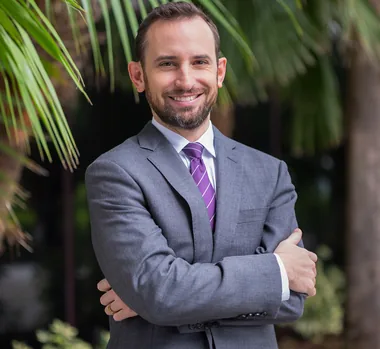 Brett J. Yonon Senior Trial Attorney Selected to Florida Super Lawyers in 2024 and 2025. Brett Yonon is who this firm puts on a catastrophic injury or a death in the family, and he has tried those cases to verdict. Full profile →
 -
 Richard P. Pravato Founding & Managing Attorney Board Certified in Civil Trial Law by The Florida Bar since 2004, and by the National Board of Trial Advocacy. Injury cases exclusively since 1996. Full profile →
What the insurer says about a pool claim
Every argument in a pool case is some version of the same one: that the family should have been watching. It is the most painful thing to hear and it is not the legal question.
- That is the association’s responsibility, not ours
- At a community, hotel or club pool this is usually three parties pointing at each other: the association that owns the amenity, the management company that runs it and the contractor that maintains the water and equipment. Each carries its own policy. Which one controlled the specific failure is answered by the maintenance and inspection records rather than by asking, and those get requested before they cycle out.
- The child made a full recovery
- Often what it looks like at three weeks, and frequently not what it looks like at three years. Oxygen deprivation shows up later as difficulty with attention, memory, behavior or learning, and nobody connects it because the discharge note said the child was fine. A neuropsychological baseline taken now is the answer to an argument that will otherwise be made when it can no longer be met.
- An early offer, before anyone knows the outcome
- Offers in near-drowning cases arrive early and small, while a child still appears to have recovered. The deficits that decide what the claim is worth emerge over years, and a release signed now cannot be reopened when they do. This is the practice where settling quickly most often turns out to have been a fraction of the case.
What a claim can include
Pain, suffering and loss of the ability to enjoy life
The head of loss with no invoice attached, and the one an early offer prices lowest.
A parent’s own claim
Florida recognizes claims belonging to the parents of an injured child in defined circumstances, separate from the child’s own. They are regularly left out of an early offer.
What a family may recover after a death
Funeral and medical expenses, lost support and services, and the losses the statute assigns to particular survivors, brought by the personal representative of the estate.
Why Wolf & Pravato in Boynton Beach
A Boynton Beach pool case is filed in the Fifteenth Judicial Circuit at the South County Courthouse in Delray Beach, a few minutes from this office. A claim valued on a lifetime of care is not one to hand to somebody who will hand it on again, and the medical and vocational work behind it is arranged here rather than referred out.
Fewer than one percent of Florida lawyers are Board Certified in Civil Trial law: 861 of them, against a Bar membership over 109,000. Richard Pravato is one, and has been since 2004. Carriers price a claim partly on who is holding it, which is the practical reason that matters to somebody deciding who to call.
A consultation costs nothing, and neither does the case unless we recover money for you. Where we do not believe a claim is worth bringing, we will tell you plainly rather than take it on and let it drift.
Boynton Beach swimming pool accident questions
My child was resuscitated and seems mostly fine. Should I still have it looked at?
Yes. Oxygen deprivation injuries frequently present later as attention, memory, behavior or learning problems that are not obvious in the weeks afterward, and the deadline runs whether or not anyone has connected them. A neuropsychological baseline taken now is useful both medically and as evidence, and it commits you to nothing.
I was there and I looked away. Is this my fault?
It is the hardest question in this practice and the honest answer is that the law does not place it where you are placing it. The barrier requirements exist precisely because supervision lapses, briefly, in every family, and Florida divides responsibility rather than barring a claim outright. A moment of inattention by a parent does not relieve an owner of a pool that was not enclosed the way the statute requires.
How is a lifetime of care actually costed?
A life care planner works from the treating physicians’ own recommendations and sets out what will be needed year by year: therapy, medication, equipment, supervision, schooling support and housing, and how each changes as a child grows. An economist converts that to present value. The strength of the number depends on how well the medical opinions were documented while treatment was happening, which is another reason to start early.
The gate was broken. Does that decide the case?
It is usually central. Florida requires residential pools to carry specified safety features, and a barrier or self-latching gate that was not functioning goes directly to whether that obligation was met. Photographing it before it is repaired is the most useful thing anyone can do in the first days.
It happened at a holiday rental. Who is responsible?
Potentially the property owner, the management company and in some circumstances the platform, depending on who controlled the property and what they knew. A short-term rental does not escape the residential pool safety requirements, and the guest was lawfully there.
The questions that come up on every kind of claim, deadlines, fees, recorded statements and fault, are answered on our Florida injury claim FAQ.
More in Boynton Beach
Boynton Beach Personal Injury Lawyer
Everything we handle in Palm Beach County, and where our office is.
View →Boynton Beach Drowning Accident Lawyer
Florida drowning and near-drowning lawyers.
View →Boynton Beach Nursing Home Abuse Lawyer
Florida nursing home abuse and neglect lawyers.
View →Boynton Beach Negligent Security Lawyer
Attacked at a Florida apartment, hotel, store or parking lot.
View →
Tell us what happened
A lawyer will listen, tell you what Florida law does with those facts, and be straight with you about whether it is worth bringing. We are at 1375 E Gateway Blvd, Boynton Beach, FL 33426.