
Florida Swimming Pool Accident Lawyer
Nothing lasts longer than the few minutes when nobody was watching the pool. We can take it from here. Call 954-522-5800 for a free consultation. You pay us nothing unless we win. We have won these claims for Floridians from the Keys to the Panhandle, and we work them from five offices between Fort Lauderdale and Fort Myers.
Photograph the fence, gate, latch, alarm and any pool cover exactly as they are, before anything is repaired. A self-closing gate that no longer latches is the single most common finding in these cases, and it is also the easiest thing for an owner to fix quietly in the week afterward.
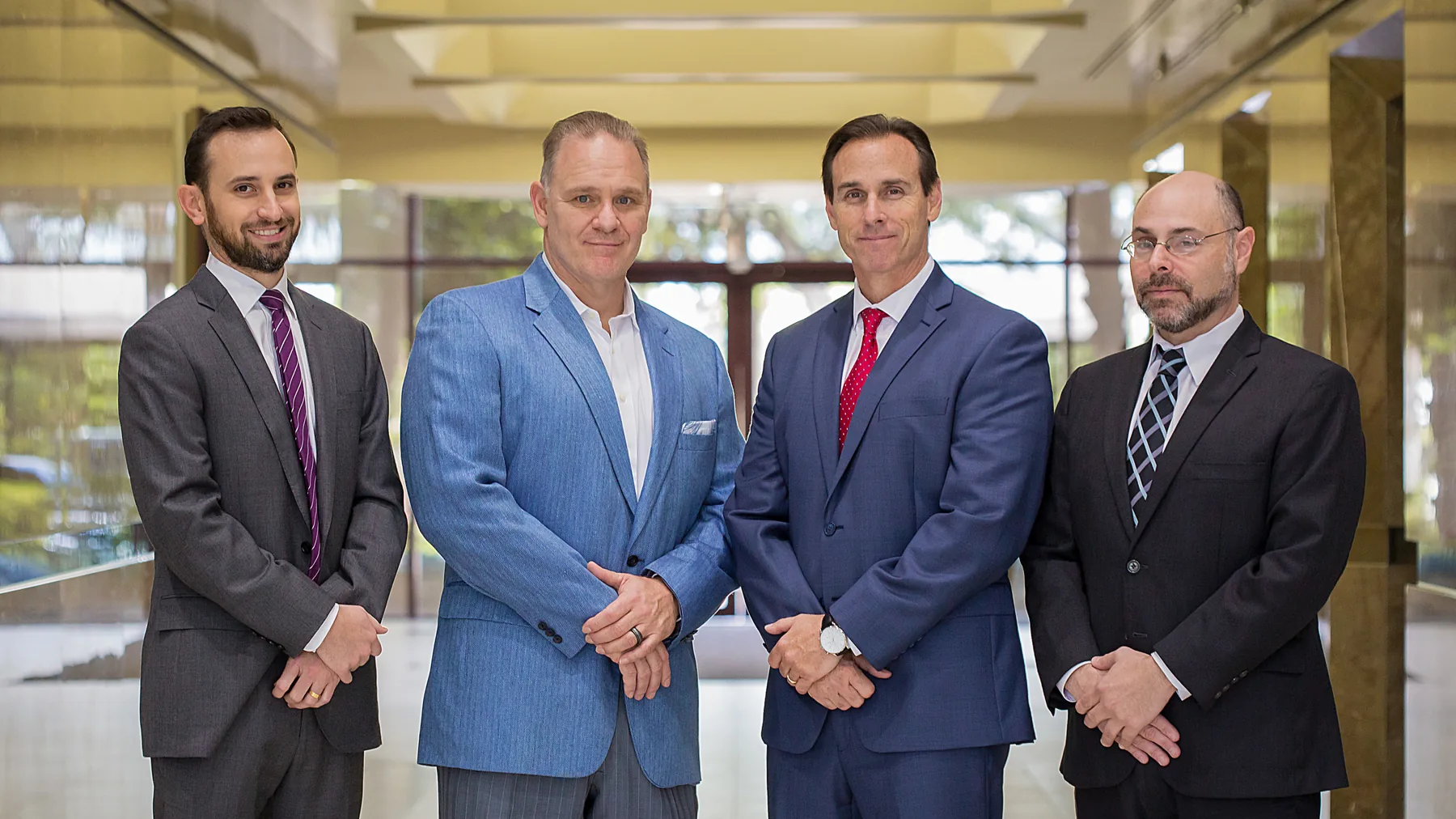
Our team will not let you go through a swimming pool accident claim alone
A few minutes at a pool can change a family for good. Nothing undoes what happened there, and we will not pretend otherwise. What we can do is make the owner answer for an open gate or an empty chair, and we will take the case as far as it has to go.
Our trial attorneys have won swimming pool accident cases across Florida since 1993, from the Keys to the Panhandle, and one of them will handle yours from the first call to the last check. Call 954-522-5800 for a free consult and a trial lawyer will tell you today whether you have a case. You pay us nothing unless we win, and we work from five offices between Fort Lauderdale and Fort Myers.
Meet the attorneys →What Florida law does with a swimming pool accident claim
The owner will say somebody should have been supervising, and will mean you. Meanwhile you are at a bedside, being asked about long-term care, and nobody has told you whether the gate, the alarm or the fence met code. Finding out what was required and what was actually there is our job, and we start the day you call.
Pool claims are decided by measurement rather than by argument. The Legislature wrote down what a residential pool has to have, in feet and inches and decibels, and the case is usually the difference between that list and what existed on the day. Below is the list, who answers for it, and what these claims are actually worth.
Florida law sets specific, measurable requirements for residential pool barriers: a four-foot height, no gaps a child can get through, and self-closing self-latching gates, or one of several approved alternatives. Most claims involving a young child begin with a tape measure against that list, and generally must be filed within two years.
The deadline that ends a Florida swimming pool accident claim
The filing deadline is generous. The physical evidence is not, because a pool that was not enclosed properly gets enclosed properly within days of an incident.
Two years to file
Most claims from an accident on or after March 24, 2023 have to be filed within two years. An older accident keeps the four years that applied when it happened. The period is in Fla. Stat. § 95.11. Where a child died, the claim is a wrongful death action brought by the personal representative of the estate, with two years running from the date of death and with the estate needing to be opened first.
Where the pool belongs to a public body, Fla. Stat. § 768.28 applies instead: written notice to the agency and, in most cases, to the Department of Financial Services, a waiting period before suit, and caps of $200,000 per person and $300,000 per incident.
Days, before the barrier is fixed
The fence, the gate, the latch, the gap underneath, the door from the house and the alarm if there is one. Photograph from a child's height as well as your own, include something for scale, and film the gate closing and latching or failing to. Heights and gaps are measured rather than described, and the version that existed on the day stops existing within the week.
Hours, for the people who were there
Who was supposed to be watching, who else was in the water, whether an attendant was on duty and where they were standing. At a hotel, community or rental pool these people scatter within hours and are extremely hard to find later.
Immediately, for what was promised online
The listing, the posted rules, the association bulletin, the booking confirmation. Screenshot rather than bookmark, because listings and websites get edited after an incident and the version that persuaded somebody to book is the one that matters.
Who can be held answerable
Who answers depends on whose pool it was, and at a community or hotel pool that is usually three companies pointing at each other.
- The homeowner. Where the pool is at a private home, the owner is answerable for whether it was enclosed as the law requires. Their homeowners policy is normally what responds, which is why a claim against a neighbor is not the personal confrontation families fear.
- A landlord or a short-term rental host. A property rented out to vacationers with an unfenced pool, marketed to families, is a recurring situation in Florida. What the listing advertised about the pool, the fencing and supervision is evidence about the duty assumed, and the platform's local operator may be involved as well.
- A hotel, club or attraction. A commercial pool sits under public pool regulation as well as ordinary premises liability: depth markings, drain covers, safety equipment, water quality and whatever the property's own rules promised about supervision and hours.
- A condominium or homeowners association. Community pools belong to the association, run by a management company, maintained by a contractor. Each carries its own policy, and which one controlled the specific failure is answered from the maintenance and inspection records rather than by asking.
- The pool service contractor. Water chemistry, equipment, drain covers and gate hardware are usually maintained under contract. The service records are dated documents that exist whatever anybody says afterward.
- The builder or installer. Where the barrier, the drain or the depth markings were wrong from the start, that is a construction claim with its own defendants and its own records.
- A public body. Municipal and school pools, subject to Fla. Stat. § 768.28 with its notice requirements and its caps.
How a Florida swimming pool accident case actually runs
The whole case is usually the gap between what the statute requires and what was actually there, so the first step is knowing the list.
- Measure against the barrier requirements. Fla. Stat. § 515.29 requires a residential pool barrier to be at least four feet high on the outside, with no gap or foothold letting a young child crawl under, squeeze through or climb over, and set far enough back from the water that a child who does get past it does not fall straight in. Gates must open outward, be self-closing and self-latching, with the release on the pool side and out of a child's reach.
- Check the alternatives, which have their own numbers. Fla. Stat. § 515.27 requires a residential pool to have at least one approved safety feature: an approved safety pool cover, exit alarms on every door and window giving direct access to the pool rated at a minimum of 85 decibels at ten feet, self-closing and self-latching devices on those doors with the release no lower than 54 inches above the floor, or a pool alarm that sounds when something enters the water. Each is a fact somebody can check on the day.
- Understand that a trespassing child is still a claim. Florida recognizes that a pool draws young children who cannot appreciate the danger, so an owner can be liable even where the child had no permission to be there. "They should not have been on my property" is the first thing said in these cases and it does not end them. What matters is whether the pool was enclosed as the law requires and whether the owner knew children were around.
- Get the records at a commercial or community pool. Inspection and maintenance logs, the chemical log, the service contractor's records, prior incidents at the same pool, the staffing roster and what the property's own rules said about supervision and hours. These get requested before they cycle out.
- Get the neurological picture even if the child seems fine. A child pulled out and resuscitated frequently looks recovered within days, and oxygen deprivation shows up later as problems with attention, memory, behavior or learning. A baseline assessment now is useful medically and is evidence, and having it done commits you to nothing.
- Do not settle while the outcome is unknown. Offers in near-drowning cases arrive early and small, while a child still appears to have recovered. The deficits that decide what the claim is worth emerge over years, and a release signed now cannot be reopened when they do. This is the practice where settling quickly most often turns out to have been a fraction of the case.
- Suit, discovery and mediation. Fla. Stat. § 47.011 puts the case where it happened or where the defendant is. Fla. Stat. § 627.4137 produces the policy limits in a sworn statement within 30 days of a written request, most Florida courts require mediation, and Fla. Stat. § 768.79 lets either side serve a formal offer with fees running from a refusal the judgment beats by at least 25 percent.
What the claim is worth, and how that number is built
These claims are valued over decades rather than over a hospital stay, and the word used to describe the better outcome is misleading in a way that matters.
Why a near-drowning is frequently the larger claim
A child pulled out and resuscitated may live for sixty more years with a hypoxic brain injury, which is a larger claim than a fatality and a far harder life. These cases are valued on decades of care rather than on the incident, which means they need a life care plan and an economist alongside the liability work.
A life care plan where the injury is permanent
Therapy, medication, equipment, supervision, schooling support and home modification, costed over a lifetime by a professional working from the treating physicians and brought to present value by an economist.
Lost earning capacity, including a child's
Where a child is injured young there are no wages to point at, so the loss is established from what their working life would reasonably have looked like. It is proved with evidence rather than asserted, and it is frequently the largest number in the case.
A parent's own claim
Florida recognizes claims belonging to the parents of an injured child in defined circumstances, separate from the child's own. They are regularly left out of an early offer.
The supervision argument, and the line at 50 percent
Said in nearly every one of these cases, usually within the first week, and it is not the legal test. The barrier requirements exist precisely because supervision lapses, for a moment, in every family. Fault is divided under Fla. Stat. § 768.81 and, since March 2023, a person found more than 50 percent responsible for their own harm recovers nothing, which is why answering the supervision argument with the measurements matters so much.
How the money is held for a child
A recovery for a child does not go to the parents to spend. It is held under court supervision, and where a child will need means-tested benefits for life the structure has to be built so a settlement does not disqualify them from the programs their care depends on.
What changes from one part of Florida to another
Florida has more residential pools than any other state, and the kind of pool decides which body of rules applies.
Residential pools and the statute written for them
Fla. Stat. § 515.29 and Fla. Stat. § 515.27 are written about residential pools, and most of the young child cases run on them. Whether a particular pool was required to meet the current requirements depends on when it was built, which is checked from permit records rather than assumed.
Community and hotel pools, under more rules
Public pool regulation adds depth markings, drain cover standards, safety equipment and water quality requirements on top of ordinary premises liability, and it comes with inspection records held by a regulator rather than by the property.
Short-term rentals, which sit awkwardly between the two
A private home rented to families by the week has a residential pool and a commercial purpose. What the listing promised, what the host actually provided and who managed the property are the questions, and Florida has an enormous number of these.
Canals, seawalls and waterfront property
Much Florida waterfront housing has unfenced water at the back of it, marketed to families with young children. That is a different claim from a pool claim and it runs on ordinary premises law rather than on the pool statutes.
The insurance behind a Florida swimming pool accident claim
What can be collected depends on whose pool it was, and the range between a homeowner and a hotel group is very wide.
Homeowners and renters insurance
A residential pool claim is normally paid by the homeowner's liability coverage. Limits vary enormously and a serious brain injury exceeds an ordinary policy easily, which makes the next item matter.
Umbrella coverage, which is routinely not mentioned
An umbrella policy sits above the home policy and frequently carries a million dollars or more. Fla. Stat. § 627.4137 requires the limits of each known policy including excess and umbrella coverage to be disclosed in a sworn statement within 30 days of a written request, and that letter is how the umbrella gets found.
Commercial and association coverage
A hotel, club or association carries general liability coverage in commercial amounts, frequently with excess layers, and the management company and the maintenance contractor carry their own. Several policies behind one pool deck is normal.
A public pool, and the cap
Fla. Stat. § 768.28 limits a government defendant to $200,000 per person and $300,000 per incident regardless of the harm, with anything above requiring the Legislature to pass a claim bill. On a lifetime care claim that ceiling is a small fraction of the loss.
What pays for care in the meantime
Health insurance, repaid at the end out of any recovery. Nothing about a pool claim pays automatically, and a child who needs neurological assessment should have it now rather than when a claim resolves.
What Florida requires, and who answers for it
The safety features are not optional
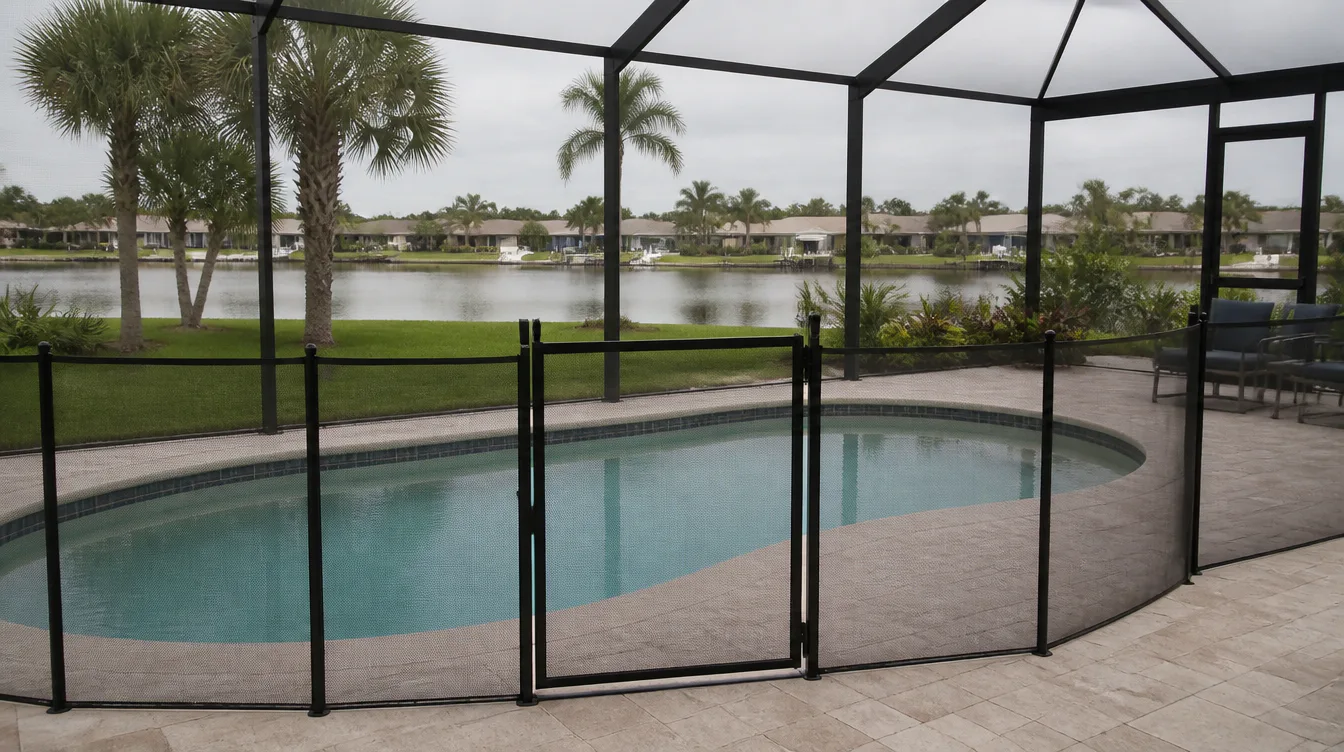
Florida’s residential swimming pool safety legislation requires pools to have at least one specified safety feature, which can include an enclosing barrier meeting defined criteria, approved safety covers, exit alarms on doors giving access to the pool, or self-closing and self-latching devices on those doors.
When a young child reaches a pool unsupervised, the question is nearly always which of those was supposed to be in place and whether it was working. That is a documentary and physical question rather than a matter of opinion.
Different owners, different duties
A hotel, resort or community pool carries obligations around supervision, signage, depth markings, drain covers and rescue equipment that a private home does not. A short-term rental sits somewhere in between and the host is not exempt from the residential requirements.
Establishing which category the pool falls into determines which standards applied on the day.
Who would handle your case
Your case is handled by one of the trial lawyers below, and you will know which of them has it from the first conversation. They do swimming pool accident work week in and week out, they will tell you what your case is worth and why, and they will be straight with you about the parts that are hard.
-
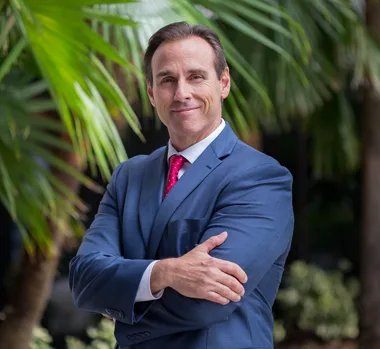 Richard P. Pravato Founding & Managing Attorney Board Certified in Civil Trial Law by The Florida Bar since 2004, and by the National Board of Trial Advocacy. Injury cases exclusively since 1996. Full profile →
 -
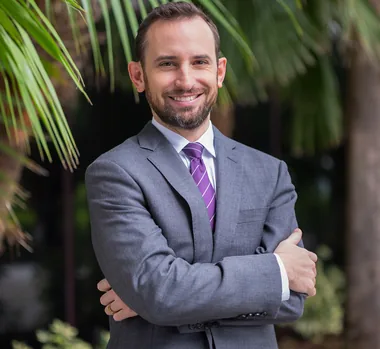 Brett J. Yonon Senior Trial Attorney Selected to Florida Super Lawyers in 2024 and 2025. Brett Yonon is who this firm puts on a catastrophic injury or a death in the family, and he has tried those cases to verdict. Full profile →
Swimming Pool Accident questions we are asked
The gate was broken. Does that decide the case?
It is usually central. Florida requires residential pools to carry specified safety features, and a barrier or self-latching gate that was not functioning goes directly to whether that obligation was met. Photographing it before it is repaired is the most useful thing anyone can do in the first days.
It happened at a holiday rental. Who is responsible?
Potentially the property owner, the management company and in some circumstances the platform, depending on who controlled the property and what they knew. A short-term rental does not escape the residential pool safety requirements, and the guest was lawfully there.
My child survived but was badly hurt. Is that still a claim?
Yes, and often a substantial one. A non-fatal drowning can cause lasting brain injury requiring lifelong care, and those claims are valued on future medical needs and lost capacity rather than on bills already incurred. The evidence about the barrier and supervision is identical.
Questions that apply to any Florida injury claim, fees, deadlines, recorded statements and shared fault, are answered on our injury claim FAQ. What we have recovered is on recent case results.
Five Florida offices
We take swimming pool accident claims statewide. Each market below has its own page on this claim, with that office's address, its direct number and the court a case there is filed in.
Fort Lauderdale swimming pool accident claims
2101 W Commercial Blvd, Fort Lauderdale. Serving Broward County.
View →Miami swimming pool accident claims
1111 Brickell Avenue, Miami. Serving Miami-Dade County.
View →West Palm Beach swimming pool accident claims
2101 Vista Parkway, West Palm Beach. Serving Palm Beach County.
View →Boynton Beach swimming pool accident claims
1375 E Gateway Blvd, Boynton Beach. Serving Palm Beach County.
View →Fort Myers swimming pool accident claims
1825 Colonial Blvd, Fort Myers. Serving Lee County.
View →Other claims we handle
Three of the closest to this one. The full list is on our Florida practice areas page.
Tell us what happened
A lawyer will listen, tell you what Florida law does with those facts, and be straight with you about whether it is worth bringing. If it is not, we will say so.
We take cases anywhere in Florida.