
Florida Nursing Home Abuse Lawyer
Nursing home abuse is proved with the home’s own records. We go after them and have them read properly. We can take it from here. Call 954-522-5800 for a free consultation. You pay us nothing unless we win. We have won these claims for Floridians from the Keys to the Panhandle, and we work them from five offices between Fort Lauderdale and Fort Myers.
If you see a pressure sore, a bruise, or a change in condition nobody can explain, photograph it with a date and ask for it to be recorded in the chart. Facilities are obliged to keep records, but a family photograph taken the same day has settled more of these cases than any internal document.
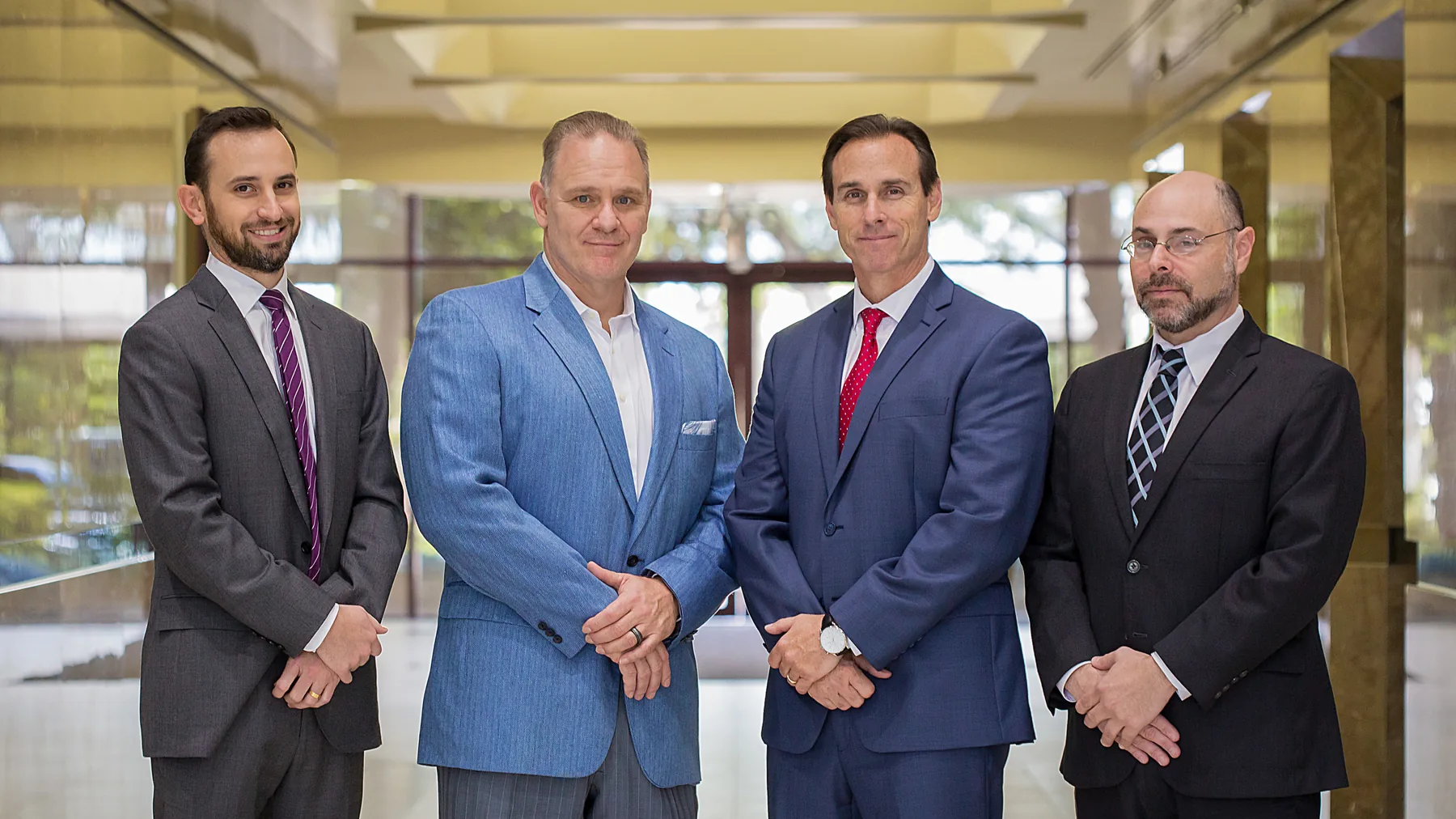
Our team will not let you go through a nursing home abuse claim alone
Finding bruises or bedsores on your mother or your father is hard enough without the home closing ranks. Nothing undoes what was done to them, and we will not pretend otherwise. What we can do is make the home answer for it, and we will take the case as far as it has to go.
Our trial attorneys have won nursing home abuse cases across Florida since 1993, from the Keys to the Panhandle, and one of them will handle yours from the first call to the last check. Call 954-522-5800 for a free consult and a trial lawyer will tell you today whether you have a case. You pay us nothing unless we win, and we work from five offices between Fort Lauderdale and Fort Myers.
Meet the attorneys →What Florida law does with a nursing home abuse claim
A nursing home describes almost every injury as an accident, and the records that would show otherwise are the ones the home keeps itself. Meanwhile you are deciding whether to move them, paying for care you have already paid for once, and getting nothing straight from anyone. Getting those records and an honest account is our job, and it starts the day you call.
Florida law treats a nursing home resident differently from an ordinary injury claimant: it writes down what the facility owes them, and it makes breaking that list actionable in its own right. Below is what those rights are, who answers for them, and the presuit process the law puts in front of a case.
A Florida nursing home claim generally has to be filed within two years, and a formal presuit notice and a 75-day investigation come before any lawsuit. Florida gives residents a statutory bill of rights, and a violation of those rights is itself a claim, separate from proving ordinary negligence.
The deadline that ends a Florida nursing home abuse claim
Two clocks run at once here: the ordinary limitations period, and a presuit process that eats months out of it while pausing part of it.
Two years, and it can be hard to date
Most claims from an accident on or after March 24, 2023 have to be filed within two years. An older accident keeps the four years that applied when it happened. The period is in Fla. Stat. § 95.11. Neglect claims differ from accident claims in that there is rarely one day when it happened: a pressure wound develops over weeks and a decline is noticed after the fact, so establishing when the claim arose is part of the work rather than a formality.
Where the resident died, the claim is a wrongful death action brought by the personal representative of the estate, with two years running from the date of death and with the estate needing to be opened first.
The presuit process pauses part of it
Fla. Stat. § 400.0233 requires a notice of intent to be served on each prospective defendant before suit, with counsel's certification that a good faith investigation was carried out. The limitations period is tolled during the 75-day evaluation period and any agreed extension, and after mediation ends a claimant has 60 days or whatever remains of the limitations period, whichever is longer, in which to file.
Records, before the facility knows a claim is coming
Fla. Stat. § 400.022 gives a resident the right to see and receive their own records, and a family member with authority can request the complete chart: nursing notes, medication administration records, wound care documentation, care plans, fall and incident reports and staffing assignments. Ask early, ask in writing, and ask for everything rather than a summary.
Charts are electronic and audit trails show who entered what and when, which is a reason to request the metadata as well as the pages.
The state inspection record is public and it does not wait
Florida's health care regulator inspects and investigates facilities, and the survey findings, complaint investigations and corrective plans are public. Those documents frequently show the same failing was cited before it reached your family, and they are available without asking the facility for anything.
Who can be held answerable
The name over the door is rarely the company with the money. Facility ownership in Florida is layered on purpose, and unpicking it is part of the case rather than a detail of it.
- The licensee that operates the facility. The entity holding the license and named on the admission paperwork. It is the obvious defendant and it is regularly a company that holds few assets and a modest policy.
- The management company. A separate business running the facility under contract, setting budgets, staffing levels and policies. Where understaffing caused the harm, this is frequently the party that decided it.
- The owner of the real estate, and the parent companies above it. The building, the operating company and the brand are commonly three or more entities. Establishing who controlled the decisions that mattered is done from contracts, budgets and corporate filings, and it is what determines whether a judgment is collectible.
- A staffing agency. Much of the direct care in Florida facilities is provided by agency staff. The agency's own hiring, checking and supervision are separate claims with separate coverage.
- Individual nurses and administrators. Named where the conduct warrants it, which is less often than families expect. Most of these cases are about systems rather than about one person having a bad shift, and a claim aimed at a single aide misses what actually went wrong.
- An assisted living facility, under a different chapter. Assisted living is regulated separately from skilled nursing. Fla. Stat. § 429.28 sets out a resident bill of rights for those facilities and provides that residents may bring civil actions for violations, and a facility may not retaliate against somebody who does. Which kind of facility somebody was in changes which body of law applies, and it is not always obvious from the marketing.
How a Florida nursing home abuse case actually runs
Nothing gets filed for months, and the reason is statutory. Florida puts a full evaluation and a mediation in front of a nursing home lawsuit.
- The complete record is obtained and read. Every page, including the parts that are inconvenient. Wound photographs, weights over time, fluid charts, medication administration records and the care plan against what was actually done. Most of these cases are proved or abandoned at this stage.
- The rights that were breached are identified. Fla. Stat. § 400.022 guarantees, among much else, the right to be free from mental and physical abuse, sexual abuse, neglect, exploitation, corporal punishment, extended involuntary seclusion and physical and chemical restraints except as authorized in writing by a physician, and the right to receive adequate and appropriate health care and protective and support services consistent with the resident care plan. Naming the specific rights is a requirement of the notice, not a rhetorical flourish.
- A notice of intent is served. Under Fla. Stat. § 400.0233 the notice goes by certified mail to each prospective defendant, identifying the rights violated and the negligence alleged, describing the injuries, and carrying counsel's certification of a good faith investigation.
- The 75-day evaluation, with informal discovery. The facility and its insurer evaluate the claim and must respond by rejecting it or making a settlement offer. Both sides can exchange documents and take unsworn statements during this period, which is the one stage where everybody is looking at the same material without a judge.
- Mediation, which is mandatory. Within 30 days of the response the parties meet in mediation on liability and damages. A real number of these cases resolve there, in front of somebody who has just been shown the chart alongside the staffing records.
- Suit, and what has to be proved. Fla. Stat. § 400.023 allows the action to be brought by the resident, by a guardian, by somebody acting with their consent, or by the personal representative of a deceased resident's estate. Four elements are proved by the greater weight of the evidence: a duty owed, a breach of it, that the breach was a legal cause of the loss, injury, death or damage, and that the resident suffered it.
- Discovery, aimed at staffing and at the corporate structure. Punch records against census, agency invoices, budgets, internal quality reports, and depositions of the administrator and of whoever the corporate defendants designate. This is where an individual bad outcome is shown to be a predictable result of how the place was run.
What the claim is worth, and how that number is built
These claims are valued unlike other injury cases, partly because the statute allows something extra and partly because the people harmed are frequently at the end of their lives, which the defense uses.
The harm itself, and the care it took to treat
Wound care, surgery, hospital admissions, rehabilitation and the cost of moving somebody to a facility that would look after them properly. All of it is documented, and it is the part nobody argues about.
Pain, suffering and dignity
The larger part of most of these cases. A pressure wound to the bone, an untreated infection, a fall that nobody wrote down, weeks of being left in a bed: none of it carries an invoice, and all of it is proved from the record and from the people who visited.
Punitive damages, which the statute expressly allows
Fla. Stat. § 400.023 provides for actual and punitive damages for a violation of a resident's rights or for negligence. Fla. Stat. § 768.72 still governs how they are pleaded, requiring a court to see evidence first and then intentional misconduct or gross negligence proved by clear and convincing evidence, but a facility that cut staffing while knowing what was happening on its floors is the situation this exists for.
Where the resident died, a choice has to be made
Fla. Stat. § 400.023 requires the claimant, after the verdict and before judgment is entered, to elect between survival damages and wrongful death damages. Which is worth more depends on the facts, and it is a decision taken with the numbers in front of you rather than at the start.
What the defense will say about age
That the person was old, was ill, and was going to decline anyway. It is said in nearly every one of these cases. The answer is the record: what the facility itself documented about the person's condition on admission and what its own care plan said it would do.
What is repaid out of the recovery
Medicare, Medicaid and health insurance are repaid from what is recovered, and Fla. Stat. § 768.76 keeps those payments from being deducted from the award because the repayment right already exists. Those claims are negotiable and reducing them is a real part of what a family keeps.
What changes from one part of Florida to another
Florida has more of these facilities than almost anywhere, and they are not one kind of thing. Which kind decides which law applies.
Skilled nursing and assisted living are different systems
A skilled nursing facility runs under chapter 400 with the rights in Fla. Stat. § 400.022 and the presuit process in Fla. Stat. § 400.0233. An assisted living facility runs under chapter 429, with its own bill of rights in Fla. Stat. § 429.28. Families frequently do not know which their relative was in, and the answer changes the deadlines, the process and what has to be proved.
Chains behave differently from single facilities
A national or regional operator has budgets set elsewhere, standard policies, internal quality reporting and layers of companies between the floor and the money. A single independent facility has none of that, and usually far less coverage. The case is investigated differently in each.
Where a public hospital or county facility is involved
Some Florida long-term care sits inside public hospital districts or county systems, which puts the claim under Fla. Stat. § 768.28 with its notice requirements and its caps of $200,000 per person and $300,000 per incident. It changes the value of an identical case by an order of magnitude and it is established at the very start.
A proven record, anywhere in Florida
Our five offices run from Fort Lauderdale to Fort Myers, and a facility in a county we hold no office in is still our case. We have litigated in courts across Florida.
The insurance behind a Florida nursing home abuse claim
What can actually be collected in these cases depends on how the business was put together, and in this industry it is put together deliberately.
The operating company's policy is frequently modest
Facility liability coverage varies enormously, and some operators carry very little against the harm a badly run facility can do. Fla. Stat. § 627.4137 requires the limits of each known policy, including excess and umbrella layers, to be disclosed in a sworn statement within 30 days of a written request, and that letter goes early because the answer shapes the whole case.
Some operators insure themselves
Larger groups run self-insurance trusts or carry a substantial retention, paying the first slice from their own funds. The decision-maker is then an in-house risk department rather than a carrier, which changes when a claim moves and what moves it.
The structure is designed to separate the money from the risk
The company holding the license, the company managing the facility and the company owning the real estate are commonly separate, with the assets sitting away from the entity a claimant sues. Reaching them means proving who actually controlled the decisions, from contracts, budgets and corporate records, and it is a real part of the work in a serious case.
What pays for care in the meantime
Medicare, Medicaid or private insurance covers the treatment the harm made necessary, including a move to a better facility, and is repaid at the end out of any recovery. Nobody should be leaving somebody in a place that hurt them while a claim is worked out.
What these claims actually turn on
Statutory rights, not just negligence
Fla. Stat. § 400.023 gives residents an enforceable set of rights, and a violation supports a claim in its own right. That framing matters, because it shifts the argument from whether an individual carer made a mistake to whether the facility delivered the care it was legally required to deliver.
The answer usually sits in staffing rosters, call-light response logs, turn and reposition charts, and incident reports. Those documents are what convert a family’s impression that something was wrong into a provable case.
The injuries that signal a systemic problem
- Pressure sores, which are largely preventable with adequate repositioning
- Repeated falls, particularly after a fall risk assessment was already on file
- Dehydration and malnutrition in a resident who cannot self-feed
- Medication errors, including missed doses and wrong administration
- Unexplained bruising, fractures or sudden withdrawal
- Elopement, where a resident leaves the facility unnoticed
Who would handle your case
Your case is handled by one of the trial lawyers below, and you will know which of them has it from the first conversation. They do nursing home abuse work week in and week out, they will tell you what your case is worth and why, and they will be straight with you about the parts that are hard.
-
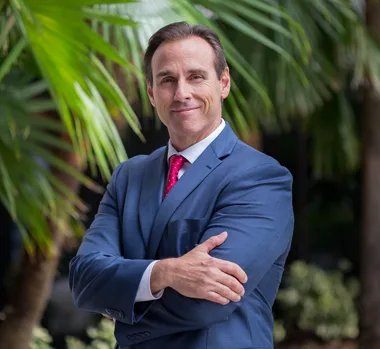 Richard P. Pravato Founding & Managing Attorney Board Certified in Civil Trial Law by The Florida Bar since 2004, and by the National Board of Trial Advocacy. Injury cases exclusively since 1996. Full profile →
 -
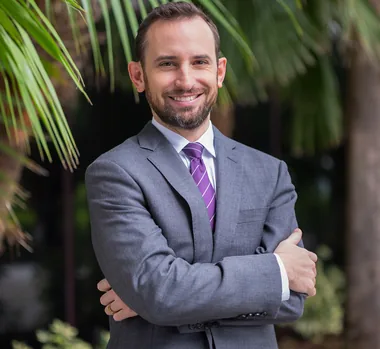 Brett J. Yonon Senior Trial Attorney Selected to Florida Super Lawyers in 2024 and 2025. Brett Yonon is who this firm puts on a catastrophic injury or a death in the family, and he has tried those cases to verdict. Full profile →
Nursing Home Abuse questions we are asked
We signed an arbitration agreement on admission. Is the claim over?
Not necessarily. Arbitration provisions in nursing home admission paperwork are common and they are frequently challenged, on grounds including who signed, whether they had authority, and whether the terms are enforceable. Bring us the admission packet rather than assuming it settles the question.
Should we report it to the state as well?
You can, and it costs nothing. A regulatory complaint triggers an independent investigation and can result in citations against the facility. It does not compensate your family and it does not replace a civil claim, but the findings can be useful and the two run in parallel.
Questions that apply to any Florida injury claim, fees, deadlines, recorded statements and shared fault, are answered on our injury claim FAQ. What we have recovered is on recent case results.
Five Florida offices
We take nursing home abuse claims statewide. Each market below has its own page on this claim, with that office's address, its direct number and the court a case there is filed in.
Fort Lauderdale nursing home abuse claims
2101 W Commercial Blvd, Fort Lauderdale. Serving Broward County.
View →Miami nursing home abuse claims
1111 Brickell Avenue, Miami. Serving Miami-Dade County.
View →West Palm Beach nursing home abuse claims
2101 Vista Parkway, West Palm Beach. Serving Palm Beach County.
View →Boynton Beach nursing home abuse claims
1375 E Gateway Blvd, Boynton Beach. Serving Palm Beach County.
View →Fort Myers nursing home abuse claims
1825 Colonial Blvd, Fort Myers. Serving Lee County.
View →Other claims we handle
Three of the closest to this one. The full list is on our Florida practice areas page.
Tell us what happened
A lawyer will listen, tell you what Florida law does with those facts, and be straight with you about whether it is worth bringing. If it is not, we will say so.
We take cases anywhere in Florida.