
Miami Motorcycle Accident Lawyer
A rider walks away with road rash and a wrecked bike on a good day, and with surgery and months off work on a bad one. We can take it from here. Call 844-643-7200 for a free consultation. You pay us nothing unless we win. Our Miami personal injury lawyers have taken these cases across Miami-Dade County since 1993.
Motorcycle Accident claims in Miami
The driver who turned across your lane will say they never saw you, and their insurer will start from the idea that you were going too fast. Meanwhile you are counting up the surgery, the shifts you cannot work and a bike nobody has offered to replace. Taking that assumption apart is what we do, from the first call.
The collisions we handle here bunch up on the wide surface streets and the approaches to the Palmetto, where a driver turns across a rider’s path. Serious riders go to Ryder Trauma Center, and the record it produces in the first hours is usually the strongest evidence in the file: the imaging, the scores and the how the injury happened described while it is still fresh. Finding what coverage actually sits behind the driver who turned across you is the other thing we start on immediately, and it is rarely what anyone assumes.
A Miami-Dade motorcycle claim usually starts with the driver saying they never saw the bike and the insurer saying the rider was speeding. Both are answered from physical evidence rather than from accounts. Nothing pays a rider’s first medical bills automatically, which makes finding the available coverage urgent in the first week. Most claims carry a two-year filing deadline.
What to do after a motorcycle accident in Miami
- Keep the motorcycle, and keep the gear. Do not let the bike be repaired, sold for salvage or released to an insurer until somebody has photographed and measured it. The damage pattern on the fairing, the forks and the pegs is what an engineer reads approach speed and impact angle from. The same is true of a helmet and a jacket, which are physical evidence of what happened to your body and of what you were wearing.
- See a doctor the same day, even if you got up and walked. Adrenaline hides a great deal, and the injuries that matter most on a bike frequently present a day or two later as numbness, a headache that will not clear or a shoulder that will not lift. A gap between the crash and the first medical visit is the most common argument made about how badly somebody was actually hurt, and it is a hard one to answer after the fact.
- Photograph the road, not just the vehicles. The gouge in the asphalt, the scrape line, where the debris field starts and ends, and where each vehicle finished. Those marks tell a reconstruction where the impact happened and at what angle, and they are washed away or paved over within weeks. Photograph the intersection from the driver’s approach as well as your own.
- Write down what the driver said at the scene. Riders hear the same sentence constantly: I never saw you. Said to an officer or a bystander in the first minutes, that is a driver describing a failure to look, which is the negligence itself. It is worth more than most people realize, and it is frequently softened by the time a statement gets written down weeks later.
- Give no recorded statement to the other side. The call comes early and it is friendly, and the questions are about speed, about what gear you had on and about whether you had ridden that road before. You are not obliged to be recorded by the other driver’s carrier, and the answers given by somebody on pain medication in the first week get quoted back months later as though they were considered testimony.
Where these happen in Miami
Miami-Dade rides all year and rides at night, and the roads that produce the serious collisions here are not the ones people expect. The causeways and the wide main roads do more damage than the expressways.
-
The causeways
MacArthur, Julia Tuttle, Venetian and Rickenbacker, which carry riders, cyclists, tourists and commuters over the same surfaces.
- Expansion joints, metal sections and repaved seams that move a bike sideways without warning
- Drivers unfamiliar with the route making sudden lane decisions near exits
- Toll gantry and camera records, which timestamp vehicles precisely and are worth requesting early
- Limited shoulder, so a rider who goes down has nowhere to go
-
Downtown, Brickell and the beach
Dense blocks with constant pickup and drop-off activity, which creates a hazard that barely exists elsewhere.
- Doors opened into a traffic lane, including rideshare pickups where the passenger is not the one at fault
- Rideshare and delivery drivers stopping in the lane and pulling out without warning
- Trip and app data from a rideshare company, which we can get and shows exactly what the driver was doing
- Valet and garage cameras that cover the street better than any public camera does
-
The wide surface streets
The multi-lane roads feeding the Palmetto and the Dolphin, where left-turn collisions dominate.
- A driver turning across a rider’s path, then telling the officer the bike came out of nowhere
- Sight lines blocked by turn lanes, medians and landscaping, which are measurable at the scene
- Long distances between signals, which changes closing speeds at every driveway in between
- Serious injuries routed to Ryder Trauma Center, whose first-hours record is usually the strongest document in the file
-
Scooters, mopeds and the coverage trap
Miami-Dade has a large population riding something that is not quite a motorcycle, and the paperwork treats them differently.
- A moped or motorized scooter that may be excluded from a policy the rider assumed covered them
- Rental and share scooters, where an operating agreement and its insurance become part of the claim
- Registration and classification questions that decide which coverage responds
- The same left-turn collision pattern, with a smaller vehicle and the same injuries
What causes them
- Lane changes into a rider who was in the mirror the whole time and never looked like a vehicle
- Cars pulling out of side streets, driveways and plaza exits into traffic they only checked for other cars
- Following too closely, where the rider brakes for something and the car behind has nowhere to go
- Doors opened into traffic alongside parked cars and rideshare pickups
- Debris and unsecured loads that a car drives over and a motorcycle does not
The injuries we see, and what each one turns on
Road rash, degloving and scarring
Sliding on asphalt takes skin off in layers, and the serious version requires debridement, grafting and a long series of procedures. Two things get undervalued in an early offer: the infection risk that keeps somebody in the hospital far longer than the injury suggests, and permanent scarring, which is its own recoverable loss and needs to be documented photographically as it heals rather than described afterward.
Legs, feet and ankles
The lower body takes the impact in most motorcycle collisions: tibia and femur fractures, crushed ankles and open fractures that need hardware and then a second operation to remove or revise it. The first settlement offer usually arrives before anybody has said out loud that a second operation is coming, and it is priced on the bills that exist rather than the ones that will.
Spine and spinal cord
Herniations, fractures and cord injuries from the impact and from the landing. The standard defense is age, because nearly every adult spine shows wear on imaging and the argument is that the crash found it rather than caused it. What answers that is a clear picture of function before and after, which is why the earliest medical record matters more than the last one.
What Florida law requires you to prove
What the helmet law actually says
Under Fla. Stat. § 316.211, a rider aged 21 or older may lawfully ride without protective headgear while covered by an insurance policy providing at least $10,000 in medical benefits for injuries sustained in a motorcycle crash. Riders under 21 must wear a compliant helmet, and eye protection is required regardless of age. Riding lawfully without a helmet does not bar recovery, whatever an adjuster implies on the first call.
Who had to yield, and how fault gets split
A driver turning left has to yield to oncoming traffic that is close enough to be an immediate hazard, under Fla. Stat. § 316.122, and a motorcycle is oncoming traffic. Fault is then shared under Fla. Stat. § 768.81, where a rider found more than 50 percent responsible recovers nothing. Most Florida negligence claims arising on or after March 24, 2023 have to be filed within two years under Fla. Stat. § 95.11.
Lane position, and the license endorsement
Florida gives a motorcycle full use of a lane and prohibits a driver from crowding a rider out of it. Passing another vehicle within the same lane is not permitted under Fla. Stat. § 316.209, though two motorcycles may ride abreast in one lane. Riding without the endorsement on your license is a separate traffic matter and it does not decide who caused a collision, which is not how it will be presented.
The full statutory detail, and the parts that differ by claim type, sit on our statewide motorcycle accident page rather than being restated in every market.
How we prove it in Miami-Dade County
Miami-Dade produces more electronic evidence than anywhere else on this list, and almost none of it survives being asked for late. The list below is worked in parallel rather than in sequence.
- The motorcycle or scooter itself, examined before it is repaired, released or sold
- The car’s event data recorder, which holds the seconds before impact whether or not anybody agrees about them
- Rideshare and delivery trip data, which shows what a driver was doing at the moment of a collision
- Toll gantry, garage and valet camera records, which are far denser here than public street cameras
- Gouge marks, scrape lines and the debris field, photographed before the road is cleaned or resurfaced
- The trauma center record from the first hours, including the imaging and the described how the injury happened
- The declarations pages for every policy in play, since the coverage picture here is rarely what anybody assumes
- The crash report, the officer’s notes and any body camera footage from the responding units
The coverage search runs alongside the evidence work rather than after it. In Miami-Dade the vehicle that caused a collision is frequently insured somewhere other than where anybody expects, and establishing that early is what keeps treatment from stopping.
Who would handle your case
Being hurt in Miami is hard enough without working out the legal side on your own. The trial lawyers below have handled motorcycle accident claims across Florida since 1993, and one of them will take yours from the first call to the last check. They will tell you what your case is worth and why, and they will be straight with you about the parts that are hard.
-
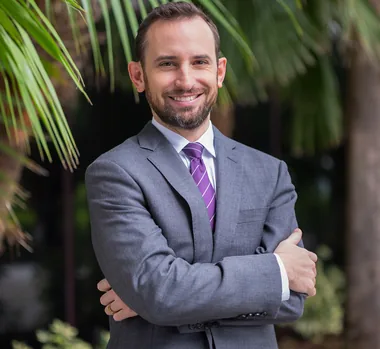 Brett J. Yonon Senior Trial Attorney Selected to Florida Super Lawyers in 2024 and 2025. Brett Yonon is who this firm puts on a catastrophic injury or a death in the family, and he has tried those cases to verdict. Full profile →
 -
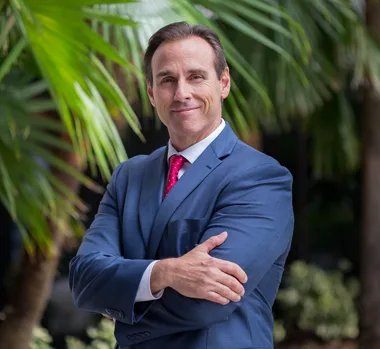 Richard P. Pravato Founding & Managing Attorney Board Certified in Civil Trial Law by The Florida Bar since 2004, and by the National Board of Trial Advocacy. Injury cases exclusively since 1996. Full profile →
How insurance companies handle these claims
Motorcycle files are worked differently from car files, because the other side starts from an assumption about riders and knows that jurors sometimes share it.
- The helmet question, asked early and asked often
- A rider 21 or older carrying the required medical benefits may lawfully ride without one, and doing so does not bar recovery. What a carrier may properly argue is that it affected the severity of a head injury specifically. It says nothing at all about who caused the collision, and it is raised early because it makes people feel they have already lost.
- You were between lanes, or you came out of nowhere
- The claim that a rider was lane splitting appears in files where the physical evidence puts the motorcycle squarely in its own lane. Where the vehicles ended, the angle of the damage and any camera along the road answer it. So does the driver’s own first account, which frequently begins with not having seen the bike at all.
- The motorcycle is released, repaired or scrapped
- Once the bike is gone the strongest evidence in the case is gone with it, because the damage pattern is what an engineer reads speed and angle from. A written request that it be held costs nothing and can go out in the first week. After a salvage sale it becomes an argument about what was destroyed rather than a measurement.
What a claim can include
Lost income and lost earning capacity
Wages missed, and separately what somebody can no longer earn. A rider who goes back to lighter work at less money has a loss that a pay stub does not show on its own.
Pain, and what daily life has become
Sleep, mobility and the things somebody used to do without thinking about them, including riding. It is proved with the account of the people around the injured person as much as with records.
Scarring and disfigurement
A separate and frequently undervalued head of loss after road rash or grafting. Photograph the healing rather than describing it later, because the record of what it looked like at three weeks does not exist unless somebody made it.
What we have recovered
Verified matters this firm has handled on motorcycle accident claims. Figures are gross recoveries, before attorney fees, costs and medical liens come out of them.
Law enforcement first put fault for this fatal Miami-Dade motorcycle crash on the rider who died.
Confidential settlementOur client was riding east on Atlantic Boulevard in Coconut Creek, in the center lane and under the speed limit, when an oncoming driver made a U-turn across his path near Lyons Road.
Full policy limits settlementEvery verdict and settlement we publish, with the press coverage for the ones that were reported. No result predicts another case: every claim turns on its own facts, its own evidence and the insurance actually available.
Why Wolf & Pravato in Miami
A Miami-Dade motorcycle case is filed in the Eleventh Judicial Circuit, and the firm has an office on Brickell Avenue rather than a mailing address in the county. These cases run on evidence that has to be collected locally and quickly, and on records requests to companies here.
The firm is led by a Board Certified Civil Trial lawyer, a certification held by 861 attorneys in Florida against a membership over 109,000. Insurance companies keep their own records of which firms in a county actually try cases, and that record moves an offer further than anything a firm can say about itself.
There is no charge to ask. Our fee comes out of what we recover and nowhere else, and if the answer is that you do not have a case, that is the answer you will get.
Miami motorcycle accident questions
I have no PIP on my bike. Who pays for treatment in Miami?
Usually a combination, and working out the order is the first week’s job. Florida’s no-fault PIP requirement applies to vehicles with four or more wheels, so a motorcycle carries no automatic benefit. What responds instead is your health insurance, any MedPay on your policy, your uninsured or underinsured motorist coverage, and eventually the at-fault driver’s bodily injury policy. Since Florida does not require drivers to carry bodily injury coverage, uninsured motorist coverage is frequently the largest policy available.
A rideshare driver hit me. Is that different from an ordinary driver?
It usually is, and generally in your favor. A driver logged into an app may be covered by a commercial policy that is considerably larger than a personal one, and what applies depends on whether they were waiting, en route or carrying a passenger at that moment. The trip data answers that question and it we can get. It is the reason the app status at the time of the crash is worth establishing immediately.
I was on a scooter rather than a motorcycle. Does the same apply?
Frequently not, and the difference matters more than it should. A moped or motorized scooter is often excluded from a policy the rider assumed covered them, or treated as a motorcycle requiring separate coverage. The answer comes from reading the actual policy and the registration rather than from what an agent said at the time, because it decides who pays the first medical bills.
Does PIP cover a motorcycle accident in Florida?
Generally no. Florida’s no-fault PIP requirement applies to motor vehicles with four or more wheels, so motorcycles fall outside it. That means no automatic $10,000 medical benefit. Your health insurance, any MedPay, your uninsured motorist coverage and the at-fault driver’s policy have to carry it instead.
The driver says they never saw me. Does that help or hurt?
It usually helps. A driver who did not see a motorcycle before turning across its path is describing a failure to keep a proper lookout, which is the negligence itself. The statement is far more damaging to them than most drivers realize when they make it at the scene.
The questions that come up on every kind of claim, deadlines, fees, recorded statements and fault, are answered on our Florida injury claim FAQ.
More in Miami
Miami Personal Injury Lawyer
Everything we handle in Miami-Dade County, and where our office is.
View →Miami Premises Liability Lawyer
Florida premises liability and negligent security lawyers.
View →Miami Product Liability Lawyer
Florida product liability lawyers.
View →Miami Scooter Accident Lawyer
Florida scooter and e-scooter accident lawyers.
View →
Tell us what happened
A lawyer will listen, tell you what Florida law does with those facts, and be straight with you about whether it is worth bringing. We are at 1111 Brickell Avenue, 11th Floor, Miami, FL 33131.