
Florida Train Accident Lawyer
A railroad investigates its own crashes with its own people. We go after the signal and recorder data ourselves. We can take it from here. Call 954-522-5800 for a free consultation. You pay us nothing unless we win. We have won these claims for Floridians from the Keys to the Panhandle, and we work them from five offices between Fort Lauderdale and Fort Myers.
Railroads dispatch their own investigators within hours and they secure the physical evidence at the crossing before anyone else reaches it. A preservation demand needs to go out immediately, covering the locomotive event recorder, forward-facing camera, dispatch recordings, and the signal and gate maintenance history for that crossing.
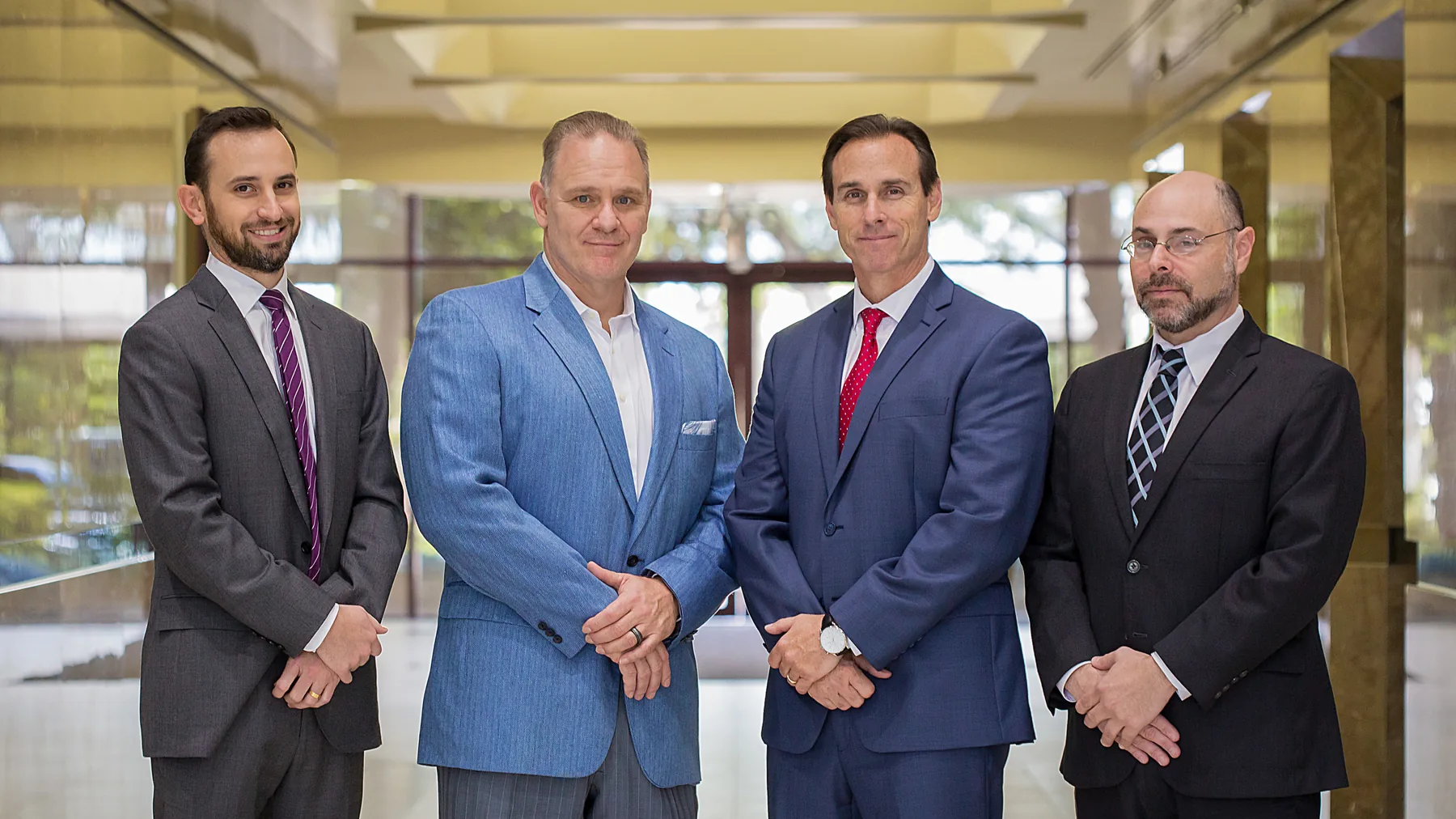
Our team will not let you go through a train accident claim alone
A train crash is hard enough without a railroad's investigators reaching the scene before anybody on your side does. Nothing undoes what happened at that crossing, and we will not pretend otherwise. What we can do is make the railroad answer for it, and we will take the case as far as it has to go.
Our trial attorneys have won train accident cases across Florida since 1993, from the Keys to the Panhandle, and one of them will handle yours from the first call to the last check. Call 954-522-5800 for a free consult and a trial lawyer will tell you today whether you have a case. You pay us nothing unless we win, and we work from five offices between Fort Lauderdale and Fort Myers.
Meet the attorneys →What Florida law does with a train accident claim
A railroad has its own police force, its own investigators and its own event recorders, and all three are at work on a crash long before anybody contacts the people who were hurt. Meanwhile you are dealing with the hospital, the time off, and an account of events built entirely by the company involved. Getting at the signal and recorder data is our job, and we start the day you call.
A train case is the most federal of the claims on this site. What the railroad was required to do, what it recorded, and which claims a state court can even hear are all set by federal law, and the evidence is data the railroad holds. Below is how that works and who can be made to answer.
Railroad claims run on federal rules as well as Florida law. Federal regulations govern horns, crossing warning systems and event recorders, and federal law limits which state claims can be brought at all. A railroad worker's claim runs under a separate federal statute with a three-year deadline and no bar for being partly at fault.
The deadline that ends a Florida train accident claim
Three different periods can apply depending on who was hurt and how, and the shortest of them governs the largest category of these cases.
Two years for an ordinary claim
Most claims from an accident on or after March 24, 2023 have to be filed within two years. An older accident keeps the four years that applied when it happened. The period is in Fla. Stat. § 95.11, and a death claim runs two years from the date of death. That covers a driver or a pedestrian struck at a crossing and a passenger hurt on board a private service.
Three years for a railroad worker
Railroad employees do not use workers compensation. Their claims run under the Federal Employers Liability Act, and 45 U.S.C. § 56 gives three years from the day the cause of action accrued. That is longer than a Florida injury claim and it is a different system in every other respect too.
A public rail operator, and its own notice period
Commuter and municipal rail services are frequently run by public bodies, which brings Fla. Stat. § 768.28: written notice to the agency and, in most cases, to the Department of Financial Services, a waiting period before suit, and caps of $200,000 per person and $300,000 per incident.
One year, for the data that decides the case
49 C.F.R. § 229.135 requires a railroad whose locomotive event recorder was involved in a reportable accident to preserve the recorded data for analysis, and provides that the preservation requirement expires one year after the date of the accident unless the regulator or the safety board notifies the railroad in writing that the data are wanted.
That recorder holds speed, direction, throttle and brake positions, horn activation and headlight status. It is the best evidence in most of these cases and its protection has an expiry date, so a preservation demand goes out immediately rather than when the file is ready.
Who can be held answerable
A crossing collision usually involves a railroad, a road authority and a vehicle, and responsibility is frequently divided between all three.
- The railroad. Answerable for how the train was operated, for whether the required warnings were given, and for the condition and maintenance of the crossing warning system it is responsible for. Its own recorded data and maintenance records are where that is established.
- The signal and crossing maintainer. Warning systems are inspected and maintained on schedules with records behind them, and the work is frequently contracted out. Where a system failed to activate, those records answer whether it was known about.
- The public body responsible for the road approach. Sightlines, signage, road markings, the angle of the approach and vegetation obscuring the view are road authority responsibilities rather than railroad ones. Those claims run through Fla. Stat. § 768.28, and Fla. Stat. § 316.1575 sets out what a driver is required to do at a railroad crossing, which is the other half of the same argument.
- The driver of a vehicle. Where a train struck a car that went round a lowered gate, or a passenger in that car was hurt, the driver is a defendant with ordinary auto coverage behind them.
- The employer, under the federal statute. A railroad worker sues their employer directly under the Federal Employers Liability Act rather than claiming compensation. 45 U.S.C. § 51 makes a railroad liable for injury resulting in whole or in part from its negligence or from a defect in its equipment, which is a different and more favorable standard than an ordinary negligence claim.
- The manufacturer of equipment. Rolling stock, crossing gates, signal equipment and their components. Proved from the item itself and from the maintenance history, both of which have to be preserved.
How a Florida train accident case actually runs
Federal law does two things here that no other practice has to deal with: it sets the standards, and it limits which state claims can be brought at all.
- Establish what federal law permits to be argued. 49 U.S.C. § 20106 provides that laws, regulations and orders on railroad safety are to be nationally uniform to the extent practicable, and it limits state law claims where a federal regulation covers the subject matter, subject to the exceptions the section sets out. So the first question is not what the railroad did wrong; it is which arguments about what it did wrong survive.
- Demand the event recorder data at once. 49 C.F.R. § 229.135 requires preservation after a reportable accident but only for one year. Speed, braking, throttle and horn activation come from that file, and every one of them is contested in these cases.
- Check the horn against the requirement. 49 C.F.R. § 222.21 requires the locomotive horn to be sounded on approach to a public crossing, in a pattern of two long blasts, one short and one long, beginning at least 15 seconds but no more than 20 seconds before the locomotive enters the crossing and continuing until it occupies the crossing, with stated exceptions for higher speeds and for a train that has stopped nearby. Whether that happened is on the recorder rather than in anybody's memory.
- Check whether the warning system failed. 49 C.F.R. § 234.105 sets out what a railroad must do on receiving a report that a crossing warning system failed to activate: notify the train crew and other railroads operating over the crossing, notify law enforcement or railroad police able to control traffic, and provide alternative warning, with trains restricted or required to stop and flag depending on whether flaggers or officers are present. Whether prior failures at the same crossing had been reported is a records question with a documented answer.
- Get the maintenance and inspection history. For the crossing, the signals, the gates and the train itself. Prior failures at the same location transform a case, because they turn a single incident into something the railroad already knew about.
- Where it is a worker's claim, a different system entirely. Under the Federal Employers Liability Act the worker sues the railroad and must prove negligence, which compensation does not require, but recovers full damages including pain and suffering, which compensation does not pay. 45 U.S.C. § 53 provides that the worker's own negligence does not bar recovery and instead reduces damages in proportion, with no cutoff, and 45 U.S.C. § 51 sets the liability standard.
- Suit, discovery and mediation. Fla. Stat. § 47.011 puts a state law claim where it happened or where the defendant is, and a railroad case may end up in federal court. Discovery reaches the railroad's own records, which is where these cases are decided. Most Florida courts require mediation, and Fla. Stat. § 768.79 lets either side serve a formal offer with fees running from a refusal the judgment beats by at least 25 percent.
What the claim is worth, and how that number is built
Train injuries are severe because of the mass involved, and the rules on fault differ depending on which kind of claim it is.
The medical care, past and future
Everything billed and what the treating physicians say is still ahead. Crossing collisions and platform injuries produce amputations, crush injuries and brain injuries, and the future half is usually the larger one.
Income, and the working life behind it
Wages missed, and separately the earning capacity that has gone, proved with an economist and the treating physicians. Where a railroad worker is hurt, the pension and seniority consequences are part of that calculation and are frequently overlooked.
Pain, suffering and disfigurement
The heads of loss with no invoice attached, and after an amputation or a burn they are substantial.
Fault on an ordinary claim, and the line at 50 percent
Fla. Stat. § 768.81 divides fault and, since March 2023, bars recovery entirely by anybody found more than 50 percent responsible for their own harm. In a crossing case the defense is always that the driver went round the gate or ignored the signals, which is why the recorder data and the warning system records matter more than the accounts.
Fault on a worker's claim, which has no such line
45 U.S.C. § 53 provides that a railroad employee's own negligence does not bar recovery and instead reduces the damages in proportion to it. There is no 50 percent cutoff, which makes the federal statute meaningfully more favorable to an injured worker than Florida law is to anybody else.
What is repaid out of the recovery
Health insurance, Medicare and Medicaid are repaid, with Fla. Stat. § 768.76 keeping those payments from being deducted from the award because the repayment right already exists.
What changes from one part of Florida to another
Florida runs freight, commuter and higher-speed passenger services over shared and separate track, and which one was involved changes the case.
Freight corridors
Long freight movements through populated areas, with crossings at grade, produce the largest share of these claims. The corridors are owned by private railroads and the crossings by a mix of state, county and city road authorities, which is why establishing who was responsible for what takes work.
Commuter and higher-speed passenger services
Frequent services at speed through dense areas produce crossing and trespasser incidents at a different rate from freight, and the operator may be a public body with the caps that come with it or a private company without them.
Platforms, stations and the gap
Passenger injuries at stations run on ordinary premises law rather than on the federal rail rules, and they involve the station operator, the maintenance contractor and sometimes a separate property owner.
A proven record, anywhere in Florida
Our five offices run from Fort Lauderdale to Fort Myers, and rail runs the length of the state.
The insurance behind a Florida train accident claim
Railroads are large, self-insured and well represented, which changes how a claim behaves rather than whether the money is there.
The railroad, which usually insures itself
Major railroads carry substantial retentions or self-insure, so the decision-maker is an in-house claims and legal department rather than an adjuster at a carrier. They have investigators at the scene within hours and they defend hard, including on liability that looks obvious.
Where a public operator is involved
Fla. Stat. § 768.28 caps a public body at $200,000 per person and $300,000 per incident whatever the harm, with anything more requiring an act of the Legislature. Establishing whether the operator is public or private is therefore one of the first questions on the file.
Your own auto coverage, in a crossing collision
Somebody in a vehicle struck at a crossing still has Fla. Stat. § 627.736 benefits on their own policy: $10,000 paying 80 percent of reasonable medical expenses and 60 percent of lost wages regardless of fault, provided a qualifying provider is seen within 14 days and, for the full amount, finds an emergency medical condition. Uninsured and underinsured motorist coverage under Fla. Stat. § 627.727 sits behind that.
Contractors and manufacturers, with ordinary policies
A signal maintainer, a construction contractor working the corridor or an equipment manufacturer carries commercial coverage. Fla. Stat. § 627.4137 requires the limits of each known policy including excess and umbrella layers to be disclosed in a sworn statement within 30 days of a written request.
For a railroad worker, no compensation carrier at all
There is no benefit that starts paying while the case runs. Treatment goes on health insurance or on the railroad's own plan, and everything else waits on the claim, which is a reason to get advice early rather than after the medical bills arrive.
What decides a crossing case
The data the railroad holds
A locomotive event recorder captures speed, throttle, brake application and horn use in the approach to a crossing. Forward-facing video is common. Dispatch communications are recorded. Together these establish what the crew actually did, independently of what anyone remembers.
Separately, the crossing itself has a maintenance history: whether the gates and lights were functioning, when they were last inspected, and whether failures had been reported before.
Sight lines and vegetation
Many crossing collisions come down to whether an approaching driver could see the train in time. That is a measurable question involving vegetation, structures and the geometry of the approach, and responsibility for keeping sight lines clear is frequently contested between the railroad and the local authority.
Those measurements have to be taken before anything is cut back or rebuilt, which in practice means quickly.
Who would handle your case
Your case is handled by one of the trial lawyers below, and you will know which of them has it from the first conversation. They do train accident work week in and week out, they will tell you what your case is worth and why, and they will be straight with you about the parts that are hard.
-
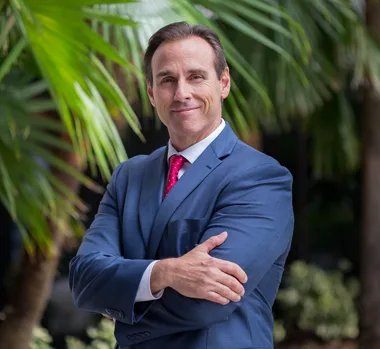 Richard P. Pravato Founding & Managing Attorney Board Certified in Civil Trial Law by The Florida Bar since 2004, and by the National Board of Trial Advocacy. Injury cases exclusively since 1996. Full profile →
 -
 Brett J. Yonon Senior Trial Attorney Selected to Florida Super Lawyers in 2024 and 2025. Brett Yonon is who this firm puts on a catastrophic injury or a death in the family, and he has tried those cases to verdict. Full profile →
Train Accident questions we are asked
The crossing gates were down. Is the case hopeless?
Not automatically. Whether the gates and lights operated correctly, how much warning time they gave, whether the train sounded its horn as required, and whether sight lines were obstructed are all separate questions with documentary answers. The gates being down is where the inquiry starts, not where it ends.
Can the event recorder data be obtained?
Yes, through the litigation process, but only if it still exists. Retention is limited and the railroad has no obligation to keep it absent a demand. That is why a preservation letter in the first days matters more in a railroad case than in almost any other.
I was hurt as a passenger on a train. Is that different?
Yes. A passenger claim does not involve the crossing questions at all and generally turns on the carrier’s duty to its passengers, covering matters such as sudden stops, platform gaps, door operation and boarding. It is a more conventional claim, though the operator may still be a government entity with notice requirements.
Questions that apply to any Florida injury claim, fees, deadlines, recorded statements and shared fault, are answered on our injury claim FAQ. What we have recovered is on recent case results.
Five Florida offices
We take train accident claims statewide. Each market below has its own page on this claim, with that office's address, its direct number and the court a case there is filed in.
Fort Lauderdale train accident claims
2101 W Commercial Blvd, Fort Lauderdale. Serving Broward County.
View →Miami train accident claims
1111 Brickell Avenue, Miami. Serving Miami-Dade County.
View →West Palm Beach train accident claims
2101 Vista Parkway, West Palm Beach. Serving Palm Beach County.
View →Boynton Beach train accident claims
1375 E Gateway Blvd, Boynton Beach. Serving Palm Beach County.
View →Fort Myers train accident claims
1825 Colonial Blvd, Fort Myers. Serving Lee County.
View →Other claims we handle
Three of the closest to this one. The full list is on our Florida practice areas page.
Tell us what happened
A lawyer will listen, tell you what Florida law does with those facts, and be straight with you about whether it is worth bringing. If it is not, we will say so.
We take cases anywhere in Florida.