
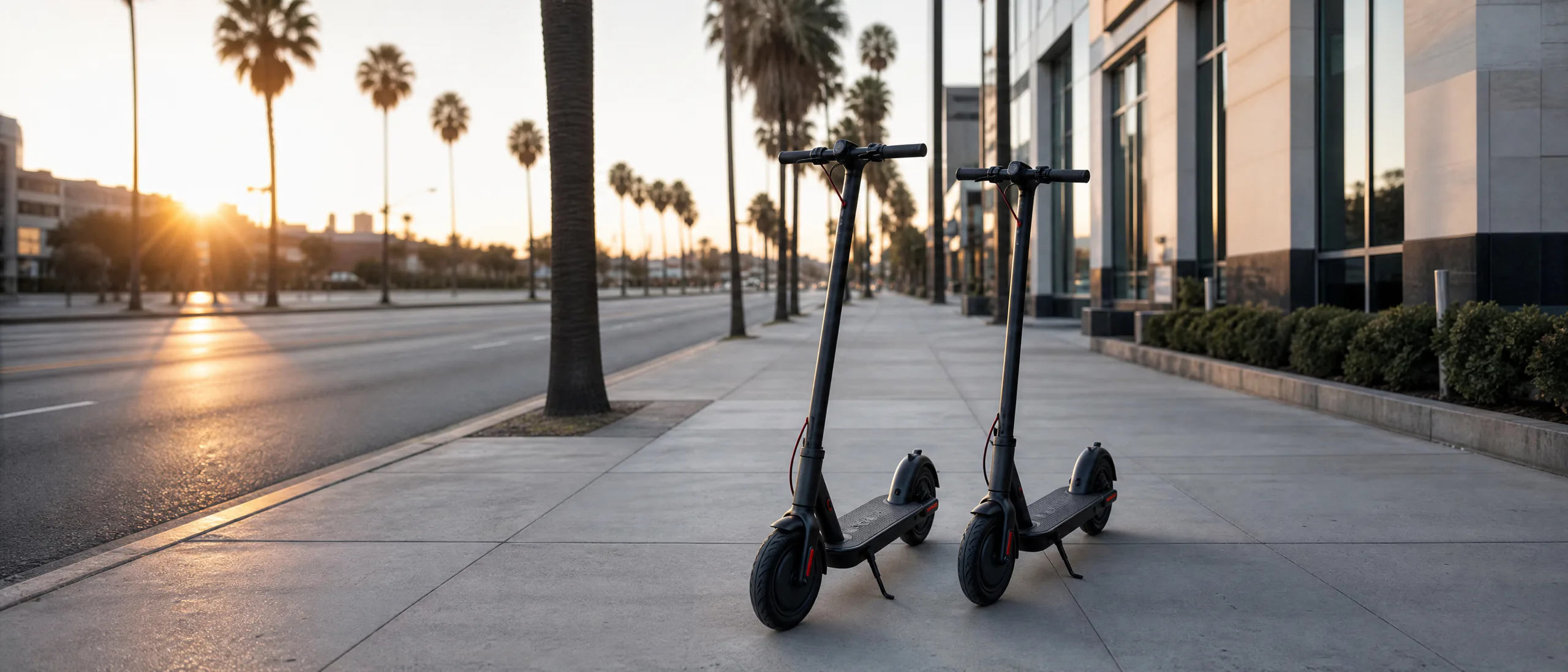
Florida Scooter Accident Lawyer
A scooter claim can run against a driver, a rental company or the machine itself. We work out which of them owes. We can take it from here. Call 954-522-5800 for a free consultation. You pay us nothing unless we win. We have won these claims for Floridians from the Keys to the Panhandle, and we work them from five offices between Fort Lauderdale and Fort Myers.
If it was a rental scooter, screenshot the ride record and the app terms as they appeared, and photograph the scooter and its ID number before it is collected. Operators retrieve damaged units quickly, app terms change without notice, and the ride record is the proof of which vehicle you were on and when.

Our team will not let you go through a scooter accident claim alone
A scooter crash is hard enough without an app, a rental company and a driver all pointing at each other. Nothing undoes the crash, and we will not pretend otherwise. What we can do is work out who is responsible and make them answer for it, and we will take the case as far as it has to go.
Our trial attorneys have won scooter accident cases across Florida since 1993, from the Keys to the Panhandle, and one of them will handle yours from the first call to the last check. Call 954-522-5800 for a free consult and a trial lawyer will tell you today whether you have a case. You pay us nothing unless we win, and we work from five offices between Fort Lauderdale and Fort Myers.
Meet the attorneys →What Florida law does with a scooter accident claim
A scooter rental company’s defense is the terms somebody tapped through on a phone screen, and the driver who hit them will point at the machine instead. Meanwhile you are covering the treatment, missing work, and getting nowhere with a company that has no local office. Working out whether it was the driver or the machine is our job, and it starts the day you call.
A rented scooter case involves three parties who each say it was one of the others: the driver who hit you, the company that put the machine on the sidewalk, and the city that allowed it there. Below is what the statute gives a rider, what the rental operator has to answer for, and how these claims are proved.
Florida gives the rider of a motorized scooter or micromobility device the rights and duties of a bicycle rider, and no driver license is required. Local governments set additional rules on where they may be ridden. Most claims must be filed within two years, and rental scooter cases turn on the app record.
The deadline that ends a Florida scooter accident claim
Two years to file, and a matter of days for the two records that decide most of these cases.
Two years to file
Most claims from an accident on or after March 24, 2023 have to be filed within two years. An older accident keeps the four years that applied when it happened. The period is in Fla. Stat. § 95.11, and a death claim runs two years from the date of death.
Where the surface, the path or the placement of the machine involves a public body, Fla. Stat. § 768.28 applies: written notice to the agency and, in most cases, to the Department of Financial Services, a waiting period before suit, and caps of $200,000 per person and $300,000 per incident.
Immediately, for the trip in the app
Screenshot the ride, the receipt, the map and the machine's identification number before anything else. It establishes which scooter, which company and which trip, and it is the only thing that ties a rider to a specific machine once the scooter has been collected and redeployed.
Accounts get closed and apps get reinstalled. What is on your phone today may not be there next month.
Days, for the machine and the maintenance record
Where the scooter itself failed, a brake that did not work, a throttle that stuck, a stem that folded, the machine goes back into a fleet and is repaired or scrapped. A written demand naming the identification number has to reach the operator before that happens.
The maintenance and inspection history for that specific machine exists and is dated, and it is what shows whether the failure had been reported before.
Weeks, for the footage
These crashes happen in dense areas covered by cameras belonging to shops, garages and public agencies, all overwriting on loops measured in days or weeks.
Who can be held answerable
A scooter case regularly has three defendants and the rider is frequently blamed by all of them.
- The driver who hit you. The most common defendant, and the same claim as any other vehicle case: the driver, the owner of the vehicle under Florida's dangerous instrumentality rule, and their employer where they were working.
- The rental operator. Responsible for the condition of its fleet, for how it maintained and inspected the machines, and for what it told riders. Where a mechanical failure caused the crash this is the claim, and it is proved from that machine's own service record.
- Whoever controlled the surface. A pothole, a lifted slab, a missing grate, construction plating left proud of the pavement. On a small-wheeled machine these cause crashes that would not trouble a car, and the responsible party is usually a public body or a contractor.
- A property owner, where a machine was left in the way. Scooters dumped across a walkway cause falls, particularly for older and visually impaired people. Whether the property or the operator was responsible for clearing them is a question the contracts and the ordinances answer.
- The manufacturer. Battery fires, brake failures and folding stems appear in these cases. Proved from the machine itself, which is another reason the identification number and a preservation demand matter in week one.
- A public body that permitted the program. Cities set the terms on which these fleets operate. Fla. Stat. § 316.2128 expressly allows a municipality to regulate the operation of micromobility devices and motorized scooters on streets, highways, sidewalks and sidewalk areas, and to set minimum ages and identification requirements, so what the local rules actually were is part of the case.
How a Florida scooter accident case actually runs
The statute is short and favorable, and most of the work is in getting records from a technology company and a city.
- Know what the statute gives the rider. Fla. Stat. § 316.2128 gives the operator of a motorized scooter or micromobility device all of the rights and duties applicable to the rider of a bicycle, other than the few that cannot apply by their nature, and provides that no driver license is required to operate one. So a rider is a lawful road user rather than a trespasser on the carriageway.
- Find out what the local rules were. Where these machines may be ridden, at what age, and under what conditions varies by city under the same statute. What applied at the specific place and time is established from the ordinance rather than from what anybody assumes.
- Preserve the machine and demand its history. In writing, naming the identification number, the date and the trip. Ask for the maintenance and inspection record for that machine, prior fault reports on it, and any telematics showing speed and braking.
- Deal with the terms of service early. Rental operators put arbitration clauses and liability waivers into the app sign-up. Their reach is narrower than the language suggests, enforceability depends on the wording and the circumstances, and Florida limits how far a business can contract out of its own negligence. It is read properly rather than accepted.
- Establish where the rider was and what the surface was like. Photographs and measurements of any defect, before it is patched. On a machine with wheels this size, a difference of an inch is the difference between a bump and a crash, and that is a measurement rather than a description.
- Treatment runs its course. Riders go over the handlebars and land on hands, wrists, shoulders and heads. Facial and dental injuries are common and expensive, and dental work in particular is frequently underclaimed because it arrives late.
- Demand, suit and mediation. Fla. Stat. § 627.4137 produces the policy limits in a sworn statement within 30 days of a written request. Fla. Stat. § 47.011 puts the case where it happened or where the defendant is, most Florida courts require mediation, and Fla. Stat. § 768.79 lets either side serve a formal offer with fees running from a refusal the judgment beats by at least 25 percent.
What the claim is worth, and how that number is built
The injuries are more serious than the machines look, and the argument is always about what the rider was doing.
The medical care, including the dental work
Everything billed and what is still ahead. Facial and dental reconstruction after a scooter crash runs for years and is frequently not covered by health insurance, which makes it a large and easily overlooked part of the claim.
Scarring, particularly to the face
A separate head of loss, and after a scooter fall it is regularly the most permanent thing about the injury. Photograph the healing weekly, because nobody can produce a record later of what week three looked like.
Income, and the capacity to earn it
Wages missed, and separately what somebody can no longer do. Wrist and shoulder injuries change what work is possible in ways that are easy to underestimate at the time.
The fault split, and the line at 50 percent
Fault is divided under Fla. Stat. § 768.81 and, since March 2023, a person found more than 50 percent responsible for their own harm recovers nothing at all. The defense in a scooter case is always some combination of speed, sidewalk riding, no helmet and unfamiliarity with the machine, and it is answered with the statute, the ordinance and the physical evidence.
What is repaid out of the recovery
Health insurance, Medicare and Medicaid are repaid, with Fla. Stat. § 768.76 keeping those payments from being deducted from the award because the repayment right already exists.
What changes from one part of Florida to another
Scooter programs are city by city, so the answer to almost every question about the rules depends on which city you were in.
Cities that run programs, and cities that do not
Fla. Stat. § 316.2128 leaves the operation of these machines on streets, sidewalks and sidewalk areas to local regulation, so two neighboring municipalities can have completely different rules. Where a rider crossed from one into the other, that matters.
Tourist districts and nightlife areas
Rental use concentrates where visitors are, at hours when both riders and drivers are least predictable. Those claims involve people who live elsewhere, treat at home, and have no local witnesses, so what exists locally is gathered while it exists.
Older residents on the pavement
A meaningful share of these claims are not riders at all but pedestrians struck by a scooter, or people who fell over one left across a walkway. Those are different cases against different parties and they are frequently more serious.
A proven record, anywhere in Florida
Our five offices run from Fort Lauderdale to Fort Myers, and we act statewide on these claims.
The insurance behind a Florida scooter accident claim
Nothing attaches to the scooter, and what answers depends on whether a car was involved.
Where a car hit you, your own auto policy pays first
Fla. Stat. § 627.736 follows the person rather than the vehicle, so a scooter rider struck by a car is covered by their own auto policy or one in their household: $10,000 in benefits, being 80 percent of reasonable medical expenses and 60 percent of lost wages, regardless of fault. A qualifying provider has to be seen within 14 days, and the full amount is available only where a provider finds an emergency medical condition.
Where no car was involved, nothing pays automatically
A rider who came off because of a defect in the machine or the surface has no auto claim and no automatic benefit. Treatment goes on health insurance and the bills wait for the claim, which is a reason to get advice early rather than after the first invoice.
The rental operator's coverage
A scooter operator carries commercial liability coverage, and Fla. Stat. § 627.4137 requires the limits of each known policy, including excess and umbrella layers, to be disclosed in a sworn statement within 30 days of a written request.
Uninsured motorist coverage, where a driver had nothing
Florida requires no coverage at all for injuring somebody else, so Fla. Stat. § 627.727 coverage on your own policy is frequently what answers a serious scooter injury caused by a car. It has to be offered with every liability policy and can be left off only where the customer signed a written rejection.
A public defendant, and the cap
Fla. Stat. § 768.28 limits a government body to $200,000 per person and $300,000 per incident whatever the harm. Where the surface or the program was the problem, that ceiling applies.
Why a scooter claim is harder than it should be
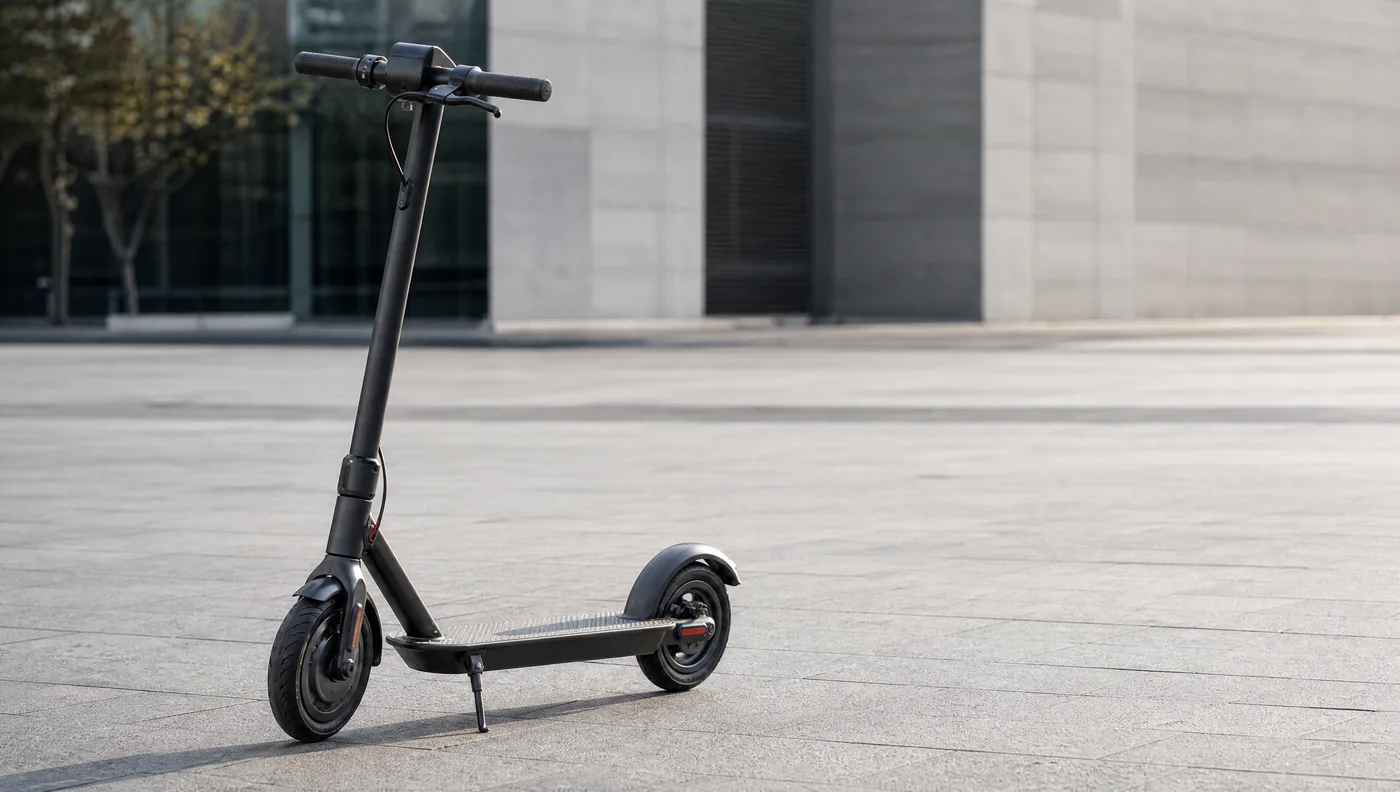
The scooter itself may be the defendant
Not every scooter injury involves another vehicle. Brake failure, throttle malfunction, wheel and stem failures and inadequately maintained rental fleets all cause serious injuries on their own, and those are product and maintenance claims against the operator or manufacturer.
That is why keeping the unit, or at least its identifying number and photographs, matters so much. Rental operators recover damaged scooters quickly and they do not preserve them for you.
What pays for treatment while the claim runs
Florida’s no-fault system does not extend to scooters in the way it does to cars, so a rider generally has no automatic medical benefit waiting. Health insurance, any medical payments coverage, uninsured motorist coverage on a personal auto policy and the at-fault driver’s liability policy are the routes, and the order they go in is not obvious.
For a rider without health insurance this is usually the most urgent practical problem in the case, and it is one we start on at the first conversation rather than after the claim is filed.
Who would handle your case
Your case is handled by one of the trial lawyers below, and you will know which of them has it from the first conversation. They do scooter accident work week in and week out, they will tell you what your case is worth and why, and they will be straight with you about the parts that are hard.
-
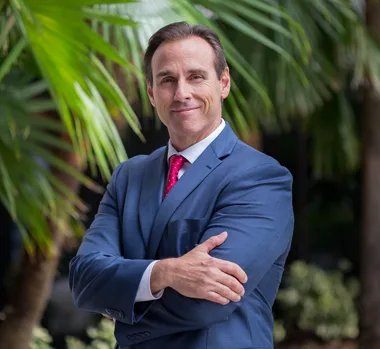 Richard P. Pravato Founding & Managing Attorney Board Certified in Civil Trial Law by The Florida Bar since 2004, and by the National Board of Trial Advocacy. Injury cases exclusively since 1996. Full profile →
 -
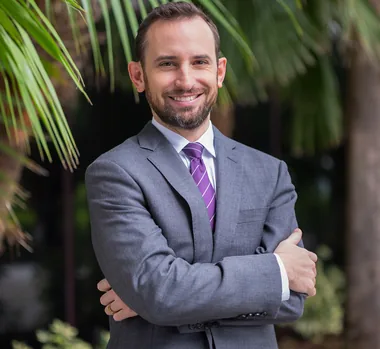 Brett J. Yonon Senior Trial Attorney Selected to Florida Super Lawyers in 2024 and 2025. Brett Yonon is who this firm puts on a catastrophic injury or a death in the family, and he has tried those cases to verdict. Full profile →
Scooter Accident questions we are asked
I agreed to the rental app terms. Have I signed my rights away?
Not necessarily. These agreements attempt to limit liability, but their enforceability depends on the wording, on what is being excused, and on the circumstances. A term purporting to excuse an operator for its own failure to maintain equipment is on much weaker ground than one covering ordinary riding risk.
Who pays my medical bills after a scooter crash?
Usually not PIP, because Florida’s no-fault system does not extend to scooters as it does to cars. Health insurance, any medical payments coverage, and uninsured motorist coverage on a personal auto policy are the common routes, alongside the at-fault driver’s liability policy where another vehicle was involved.
The scooter malfunctioned. Is that a different kind of claim?
Yes. That is a product and maintenance claim against the operator or the manufacturer rather than a road traffic claim, and it turns on the fleet’s maintenance records and any history of the same failure. Photograph the unit and record its ID number before it is collected.
Questions that apply to any Florida injury claim, fees, deadlines, recorded statements and shared fault, are answered on our injury claim FAQ. What we have recovered is on recent case results.
Five Florida offices
We take scooter accident claims statewide. Each market below has its own page on this claim, with that office's address, its direct number and the court a case there is filed in.
Fort Lauderdale scooter accident claims
2101 W Commercial Blvd, Fort Lauderdale. Serving Broward County.
View →Miami scooter accident claims
1111 Brickell Avenue, Miami. Serving Miami-Dade County.
View →West Palm Beach scooter accident claims
2101 Vista Parkway, West Palm Beach. Serving Palm Beach County.
View →Boynton Beach scooter accident claims
1375 E Gateway Blvd, Boynton Beach. Serving Palm Beach County.
View →Fort Myers scooter accident claims
1825 Colonial Blvd, Fort Myers. Serving Lee County.
View →Other claims we handle
Three of the closest to this one. The full list is on our Florida practice areas page.
Tell us what happened
A lawyer will listen, tell you what Florida law does with those facts, and be straight with you about whether it is worth bringing. If it is not, we will say so.
We take cases anywhere in Florida.