
Florida Negligent Security Lawyer
What happened to you had usually happened at that address before, to somebody else. We can take it from here. Call 954-522-5800 for a free consultation. You pay us nothing unless we win. We have won these claims for Floridians from the Keys to the Panhandle, and we work them from five offices between Fort Lauderdale and Fort Myers.
Camera systems at apartment complexes, stores and garages typically overwrite on a loop measured in days, not weeks. A written request to preserve the footage, sent now, is the difference between having it and being told it no longer exists. Send it even if the police have already been.
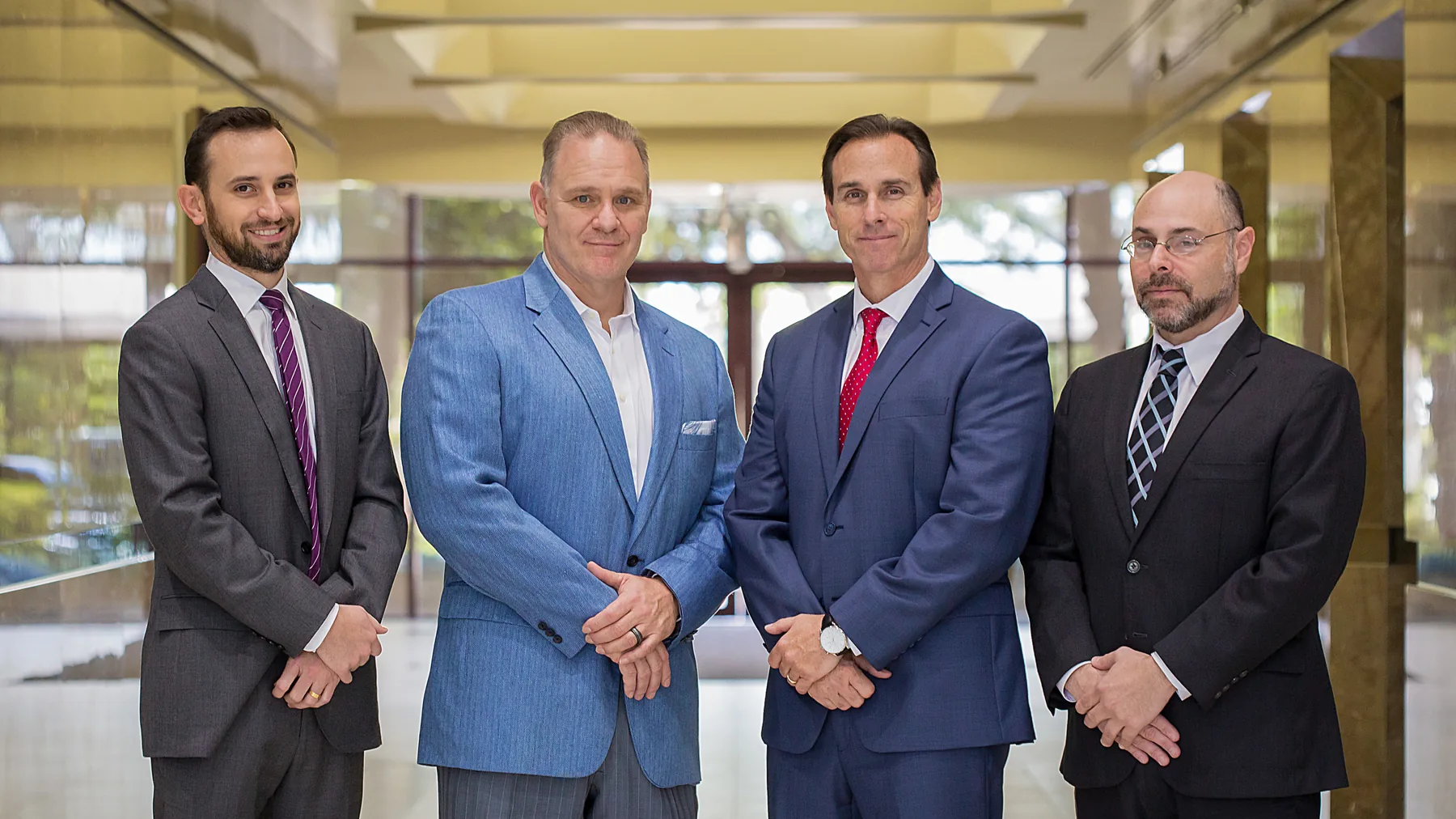
Our team will not let you go through a negligent security claim alone
Being attacked on somebody else's property is hard enough without that business saying it was nothing to do with them. Nothing undoes the attack, and we will not pretend otherwise. What we can do is make the property owner answer for the security they did not provide, and we will take the case as far as it has to go.
Our trial attorneys have won negligent security cases across Florida since 1993, from the Keys to the Panhandle, and one of them will handle yours from the first call to the last check. Call 954-522-5800 for a free consult and a trial lawyer will tell you today whether you have a case. You pay us nothing unless we win, and we work from five offices between Fort Lauderdale and Fort Myers.
Meet the attorneys →What Florida law does with a negligent security claim
The owner will say a criminal did this, not them, and that they cannot be responsible for what a stranger chose to do. Meanwhile you are the one recovering, and nobody has told you what the lights, the cameras, the gate or the locks were supposed to be, or what had already happened at that address. Florida answers a lot of that by statute, and finding out is our job from the first call.
Below is what a Florida negligent security claim actually runs on: the deadline and the much shorter one on the camera footage, the security Florida sets out by statute, who can be made to answer, and how the crime history at an address gets proved. Our city pages cover the markets. This is the part that is the same wherever you were attacked.
Florida sets required security by statute for convenience businesses and gives residential buildings of five or more homes a presumption against liability where listed measures are in place. Everywhere else the question is whether the attack was foreseeable at that address. Most claims must be filed within two years.
The deadline that ends a Florida negligent security claim
The filing deadline is the long one. The clock that actually decides these cases runs in days, and it is running now.
Two years to file
Most claims from an accident on or after March 24, 2023 have to be filed within two years. An older accident keeps the four years that applied when it happened. Fla. Stat. § 95.11 sets it, and where somebody died it is a wrongful death action with the two years running from the date of death rather than from the attack.
A claim filed a day late is over whatever the records show. It is worth establishing the date before anything else on this page matters.
Days, for the camera footage
This is the one that loses cases. Camera systems at apartment complexes, stores, garages and hotels record to a loop and overwrite themselves, commonly within a week and sometimes within seventy-two hours. Nobody preserves anything unless they are asked in writing.
Send that request now, to the property owner and to the management company, naming the date, the time and the cameras. Send it even if the police have already been, because a police request covers what the police need and not what your claim needs. It is the single most useful thing anybody does in the first week of one of these files.
Weeks, before the property is quietly improved
Lights get repaired, a broken gate gets fixed, a guard appears at a desk, a camera that was a dummy becomes real. Each of those is a sensible thing for an owner to do after somebody is hurt, and each one removes the condition that made the attack possible.
Photograph the lighting at the same hour of night it happened, the gate, the fencing, the door hardware and the camera positions. Photograph what a camera can actually see from where it is mounted, which is regularly not what the owner will later say it covered.
A public body sets its own timetable
Where the property is public housing, a school, a transit facility, a public college or a municipal garage, Fla. Stat. § 768.28 governs. Written notice has to reach the agency, and usually the Department of Financial Services, within three years of the claim accruing and within two where somebody died, and suit cannot start until the agency has had six months.
The same section caps a public body at $200,000 for one person and $300,000 for one incident, which in a shooting case is regularly a fraction of the loss. It is one of the reasons these files also look hard for a private contractor, a management company or a security firm who is not covered by that cap.
Who can be held answerable, besides the attacker
The person who attacked you is answerable and is usually the party with nothing to pay with. Everybody else in this list controlled the conditions.
- The owner of the property. The party with the duty and, usually, the insurance. Ownership is a public record at the county property appraiser and is regularly a company or a trust rather than the name on the sign outside.
- The management company. At an apartment complex, a shopping center or an office building, the day-to-day decisions about lighting, gates, patrols and repairs are made by a manager under contract rather than by the owner. They hold the maintenance records, the incident reports and the resident complaints, and they carry their own coverage.
- The security contractor. Where guards were provided, the company supplying them is a separate defendant with its own insurance, its own post orders and its own training records. Whether a guard was where the post orders said, and whether the company had staffed the shift at all, is documented rather than remembered.
- The business operating on the premises. A store, bar, restaurant, hotel or club is answerable for its own operation even where it does not own the building. Fla. Stat. § 812.173 applies directly to a convenience business, and a bar or club that draws crowds at closing time is answerable for what it does about the risk that creates.
- An association, at a residential property. Where the building is a condominium, the association usually controls the gates, the lighting, the garage and the common areas. Fla. Stat. § 768.0706 attaches its presumption to the owner or principal operator of a multifamily residential property of at least five dwellings, so establishing which entity that is comes early.
- The person who attacked you. Named in most of these cases even where there is nothing to recover, because their conduct is part of the story and because a criminal conviction or an arrest record is evidence that the attack happened as described. Their being unidentified does not stop a claim against the property.
- A public body, on the terms above. Housing authorities, school districts, transit agencies, public colleges and municipal garages, all subject to the notice requirements and the cap in the deadlines section.
How a Florida negligent security case actually runs
These cases are built out of records that exist right now and will not exist in six months. The order below is the order they get chased in.
- Preserve the footage, in writing, immediately. A letter to the owner and the manager naming the date, the time window and the cameras, asking them to preserve and to confirm in writing that they have. Where they do not, the failure to preserve is itself part of the case.
- Establish which rules the property was under. A convenience business answers to a statutory list under Fla. Stat. § 812.173. A residential building of five or more homes has the Fla. Stat. § 768.0706 list attached to it. Everything else is judged on foreseeability. That classification is settled first because it decides what has to be proved.
- Pull the crime history for the address and around it. Calls for service, incident reports and arrest records for the property and the surrounding blocks, going back years. This is what turns an attack from a bolt from the blue into something that had been happening at that address and was on notice.
- Get the property's own records. Incident reports, resident and customer complaints, security assessments, guard post orders and shift logs, work orders for lights and gates, and internal emails about all of it. A property that had been told its gate was broken for eight months is a very different case from one that had not.
- Establish that you were lawfully there. Fla. Stat. § 768.075 sharply limits what an owner answers for to a trespasser, including where somebody was impaired, so being a resident, a guest, a customer or an invited visitor is documented rather than assumed. It is one of the first things the defense tests.
- Measure what was actually there. The statutes use numbers, so the answers are measurable: 2 foot-candles per square foot at 18 inches for a convenience business parking lot under Fla. Stat. § 812.173, an average of 1.8 for a multifamily parking lot under Fla. Stat. § 768.0706, a deadbolt of at least an inch, thirty days of retrievable footage. A light meter settles in an evening what could otherwise be argued for a year.
- Suit, discovery and mediation. Filed where the incident happened or where the defendant does business under Fla. Stat. § 47.011. Discovery is where the complaint history and the internal emails come out, and it is regularly the point at which a case that was being denied resolves. Most Florida civil cases are ordered to mediation before trial.
What the claim is worth, and how that number is built
These are frequently catastrophic injuries with a criminal act in the middle of them, and both halves of that affect what the claim is worth.
The medical case, which is usually the larger half
Gunshot and stabbing injuries, head injuries from a beating and the surgeries that follow generate care that continues for years. What the treating doctors say is still ahead is normally worth far more than what has already been billed, and it is established by them rather than asserted.
Where somebody is left with a permanent disability, the claim is built on a life care plan and an economist in the same way a catastrophic injury case is.
Psychological injury, which juries in these cases understand
Being attacked where you live, work or shop produces effects that outlast the physical injury: not being able to return to the address, not being able to be there after dark, sleep that does not come back, work that becomes impossible. Where somebody has sought treatment, those records are part of the claim rather than a private matter kept out of it.
Lost income and lost earning capacity
Time away while recovering, and where the injury is lasting, the difference between the working life somebody had and the one they now have. In a shooting case that difference is frequently decades.
The share-of-fault argument, and the line at 50 percent
Fla. Stat. § 768.81 divides fault and, since 2023, bars recovery entirely for somebody found more than fifty percent responsible. The defense in these cases argues that the person attacked was somewhere they should not have been, at an hour they should not have been there, doing something that invited it.
That argument is answered with the crime history and with what the property knew, not with a debate about somebody's evening. Where a criminal was convicted, the conduct of that criminal is given its own share of the blame, which is a separate question from any share attributed to you.
Punitive damages, on a heightened standard
Fla. Stat. § 768.72 requires a court's permission before punitive damages may even be pleaded, and evidence to support them. A property that had been warned repeatedly, in writing, and did nothing is the fact pattern where that question gets asked.
What changes from one kind of property to another
The same attack produces a different case depending on what kind of place it happened at, because Florida asks a different question of each.
Apartment complexes and gated communities
The largest category, and since 2023 the one with a checklist attached. Fla. Stat. § 768.0706 lists cameras at entry and exit points retrievable for thirty days, a lit parking lot averaging 1.8 foot-candles from dusk until dawn, lit walkways, laundry rooms, common areas and porches, an inch-deep deadbolt in every unit door, locks on windows and exterior sliding doors, locked gates on pool fencing, and a peephole where a door has no window beside it.
It also requires a crime prevention through environmental design assessment no more than three years old by a law enforcement agency or a designated practitioner, and deterrence training for employees. A gate that has been broken for a year, which is the single most common finding in these files, sits badly against all of it.
Convenience stores and gas stations
The most heavily regulated of the lot. Fla. Stat. § 812.173 sets the camera system, the drop safe, the 2 foot-candle parking lot, the $50 notice at the entrance, the clear window sightline to the register, the height markers, the after-11 p.m. cash policy and the silent alarm, and Fla. Stat. § 812.174 requires robbery deterrence training within sixty days of hire.
The provision people do not know about is the escalation. Once a qualifying violent crime has occurred there, the business has thirty days after a judicial determination to add a further measure, such as two staff overnight or a secured transparent enclosure meeting a named standard. A second attack at a store that never added anything is a documented failure rather than an argument.
Hotels, bars and nightlife
No statutory checklist, so it runs on foreseeability, and in a nightlife district the foreseeability evidence is unusually good: calls for service at the address, incidents at closing time, what the venue does about capacity, alcohol service and the walk to the parking lot. A hotel adds key control, corridor access and who could reach a guest floor.
Parking garages, retail and transit
Structures where the design itself is part of the case: sightlines, blind corners, stair towers, where the lighting actually falls rather than where the fixtures are, and whether access was controlled at all. Where the operator is a public body the notice deadlines and the cap apply, and where it is a private operator under contract to one, both are usually defendants.
The policies behind a Florida negligent security claim
There is normally more than one policy here and they respond reluctantly, because a claim built on a criminal act is one insurers look hard for a way out of.
The property's general liability policy
An apartment complex, a store, a hotel or a shopping center carries commercial general liability sized for the risk it runs, and there is frequently an excess layer above the primary policy that is never mentioned unless somebody asks for the full coverage position in writing.
Where an owner and a management company both carry coverage, they usually point at each other for a while before either accepts the claim, and the contract between them is what settles it.
Assault and battery exclusions, which are the real fight
Many commercial policies carry an exclusion or a reduced sublimit for injury arising out of an assault or battery, and it is written precisely because these claims exist. Whether it applies turns on the wording and on how the claim is framed, since a claim about a broken gate and an unlit lot is not obviously a claim arising out of an assault.
This is a coverage argument rather than a reason there is no claim, and it is a reason the full policy is requested early rather than taken on trust from a letter.
The security company's own policy
Where guards were supplied under contract, that company carries its own coverage and its contract usually contains an indemnity running back to the property. Two policies and an indemnity clause is a far better position than one policy, and it is invisible until somebody reads the contract.
A public body, and the cap
Housing authorities, school districts and transit agencies are frequently self-insured or covered through a pooled arrangement, behind the Fla. Stat. § 768.28 cap of $200,000 for one person and $300,000 for one incident. A serious shooting is worth a great deal more, which is why these files also look for a private contractor or operator whose coverage is not capped.
What pays for treatment in the meantime
Health insurance is the practical answer for most people, repaid at the end under Fla. Stat. § 768.76. Florida also operates a crime victim compensation program that can help with medical costs and lost wages, and it is separate from any claim against the property.
Where there is no health cover, treatment can be arranged on a letter of protection, meaning the provider waits and is paid from the recovery. It is not free and it should not be entered into casually, and it is regularly how the surgery actually happens while the liability argument runs.
What the property was supposed to have, and who decides
Some of it Florida sets out in a list
People assume this is all argument and opinion. For some businesses it is a checklist. Fla. Stat. § 812.173 requires every convenience business to carry a recording camera system, a drop safe, a parking lot lit to at least 2 foot-candles per square foot measured 18 inches above the surface, a notice at the entrance saying the register holds $50 or less, an unobstructed window view of the register, height markers at the door, a cash policy after 11 p.m. and a silent alarm.
The same section then does something people find striking: once a murder, robbery, sexual battery, aggravated assault, aggravated battery, kidnapping or false imprisonment has occurred there, the business has 30 days after a judicial determination to add at least one further measure, such as two employees on duty overnight or a secured enclosure meeting a named testing standard. Fla. Stat. § 812.174 separately requires robbery deterrence training for retail staff within 60 days of hire.
Apartment buildings got their own rule in 2023
Fla. Stat. § 768.0706 gives the owner or principal operator of a residential building or group of buildings of at least five dwellings a presumption against liability for a crime committed there by somebody else, but only where a listed set of measures was substantially in place: recorded cameras at entry and exit points kept retrievable for at least 30 days, a parking lot averaging at least 1.8 foot-candles per square foot from dusk until dawn, lit walkways, laundry rooms, common areas and porches, a deadbolt of at least one inch in each unit door, locks on windows and exterior sliding doors, locked gates with key or fob access along pool fencing, and a peephole on any unit door without a window beside it.
The section also requires a crime prevention through environmental design assessment no more than three years old, carried out by a law enforcement agency or a designated practitioner, and deterrence training for employees. That is a list, and a list is something a property either satisfied or did not.
Everywhere else, it turns on what was foreseeable
For a hotel, a bar, a garage, a shopping center or an office, there is no statutory checklist, and the question is whether this kind of attack was foreseeable at this place and whether what the owner did was reasonable against it. That is answered from the crime history at the address and around it, prior incidents at the property, what security existed and what it cost to have more.
Being on the property lawfully matters. Fla. Stat. § 768.075 sharply limits what an owner answers for to somebody who was trespassing, so establishing that you were a resident, a guest, a customer or an invited visitor is settled early rather than assumed.
What we have recovered on these claims
Matters this firm handled in this area of law. Figures are gross recoveries, before attorney fees, costs and medical liens come out of them.
A young client was shot during a violent crime at a Miami-Dade apartment complex.
Confidential settlementEvery verdict and settlement we publish, with the press coverage for the ones that were reported. No result predicts another case: every claim turns on its own facts, its own evidence and the insurance actually available.
Who would handle your case
Your case is handled by one of the trial lawyers below, and you will know which of them has it from the first conversation. They do negligent security work week in and week out, they will tell you what your case is worth and why, and they will be straight with you about the parts that are hard.
-
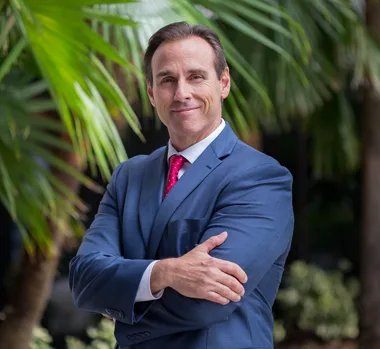 Richard P. Pravato Founding & Managing Attorney Board Certified in Civil Trial Law by The Florida Bar since 2004, and by the National Board of Trial Advocacy. Injury cases exclusively since 1996. Full profile →
 -
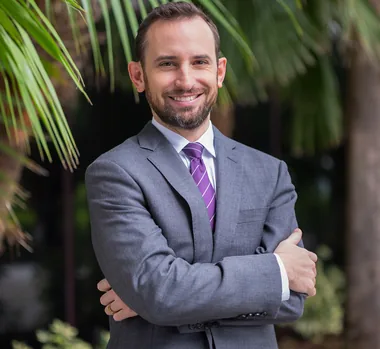 Brett J. Yonon Senior Trial Attorney Selected to Florida Super Lawyers in 2024 and 2025. Brett Yonon is who this firm puts on a catastrophic injury or a death in the family, and he has tried those cases to verdict. Full profile →
Negligent Security questions we are asked
How can the property be responsible for what a criminal did?
Because the claim is not about the criminal. It is about whether a business that knew people were being attacked at its address did something reasonable about it. Florida writes that duty into statute for convenience stores and for apartment buildings of five or more homes, and everywhere else it turns on what was foreseeable there. The person who attacked you is answerable too, and is usually the party with nothing to pay with.
The police are still investigating. Should I wait?
No. The two run separately and the civil deadlines do not pause for a criminal case. More urgently, the camera footage that would show what happened, and what the lighting and access control actually were, is usually overwritten within days. A written preservation request goes out now. Nothing about it interferes with the police investigation.
Does it matter if there had been crimes there before?
It is frequently the center of the case. Prior incidents at the address and in the surrounding blocks are obtainable from police records and from the property's own reports, and they are what establishes that this was foreseeable rather than a bolt from the blue. For a convenience business, a qualifying prior crime also triggers a statutory duty to add further security within thirty days.
Questions that apply to any Florida injury claim, fees, deadlines, recorded statements and shared fault, are answered on our injury claim FAQ. What we have recovered is on recent case results.
Five Florida offices
We take negligent security claims statewide. Each market below has its own page on this claim, with that office's address, its direct number and the court a case there is filed in.
Fort Lauderdale negligent security claims
2101 W Commercial Blvd, Fort Lauderdale. Serving Broward County.
View →Miami negligent security claims
1111 Brickell Avenue, Miami. Serving Miami-Dade County.
View →West Palm Beach negligent security claims
2101 Vista Parkway, West Palm Beach. Serving Palm Beach County.
View →Boynton Beach negligent security claims
1375 E Gateway Blvd, Boynton Beach. Serving Palm Beach County.
View →Fort Myers negligent security claims
1825 Colonial Blvd, Fort Myers. Serving Lee County.
View →Other claims we handle
Three of the closest to this one. The full list is on our Florida practice areas page.
Tell us what happened
A lawyer will listen, tell you what Florida law does with those facts, and be straight with you about whether it is worth bringing. If it is not, we will say so.
We take cases anywhere in Florida.