
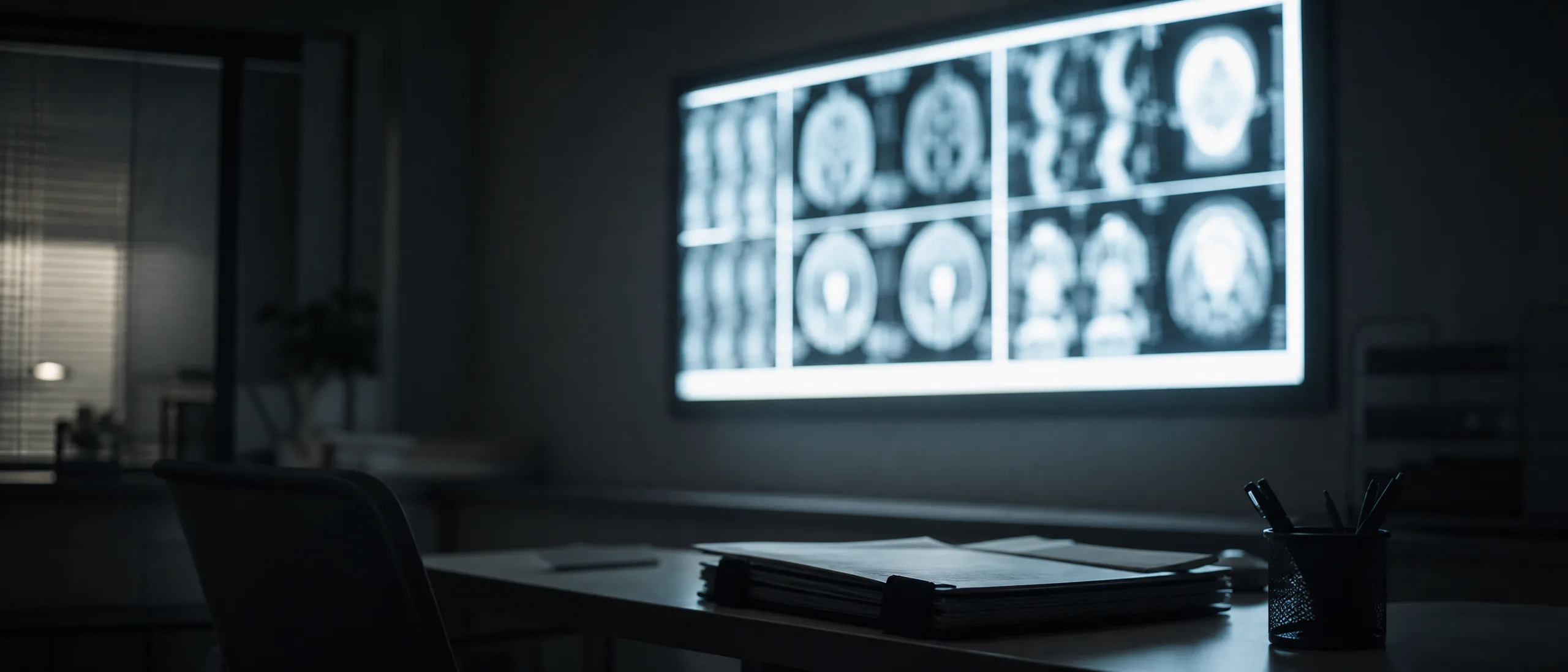
Fort Myers Traumatic Brain Injury Lawyer
The scan came back normal and you are still losing words, sleeping badly, and finding your own job harder than it was. We can take it from here. Call 833-370-8692 for a free consultation. You pay us nothing unless we win. Our Fort Myers personal injury lawyers have taken these cases across Lee County since 1993.
Traumatic Brain Injury claims in Fort Myers
The insurer will point at a clean scan and treat the rest as exaggeration. Meanwhile you are managing headaches, missed shifts, and a family who can see the difference even when a test cannot. Proving an injury that does not show up on film is our job, and we start the day you call.
A serious head injury anywhere in Southwest Florida generally routes to the trauma center at Lee Memorial Hospital in Fort Myers, which means the initial Glasgow Coma Scale scores, the imaging and the early findings that decide how much of your own coverage is available are all in one place. That is an advantage. The difficulty comes afterward, because rehabilitation and neuropsychological services are thinner outside the coastal cities, and gaps in treatment caused by availability get characterized by insurers as gaps caused by recovery. Documenting why a gap happened is worth as much as the treatment itself.
A serious head injury in Southwest Florida routes to the trauma center at Lee Memorial Hospital, so the initial scores, imaging and early findings sit in one place. The difficulty comes afterward: rehabilitation and neuropsychological services are thinner here, and a gap caused by availability gets characterized as a gap caused by recovery.
What to do after a traumatic brain injury in Fort Myers
- Say every symptom out loud, at the first visit. Headache, light sensitivity, ringing, nausea, trouble finding words, losing the thread of a sentence, sleeping badly, temper. Say all of it, even the parts that sound minor or embarrassing. Nobody in an emergency department asks whether you can still follow a conversation, and a symptom that is not in the first record is one the insurer will say began later and came from something else.
- Get the emergency finding made and written down. What a treating provider records in the first days decides how much of your own coverage is available to pay for the care that follows, and it is not automatic. A trauma unit usually produces that finding as a matter of course. A walk-in clinic frequently does not. It is a formal determination made by a physician, physician assistant, dentist or advanced practice registered nurse, and once the window has passed it cannot be fixed retrospectively.
- Have somebody else keep the record. A person with a head injury is the worst placed to notice what has changed, which is not a figure of speech but a feature of the injury. Ask a partner, a parent or a close friend to keep a short dated note: what was forgotten, what was repeated, what could not be finished, what the temper was like. Six months of that is more persuasive than any scan, and it cannot be reconstructed afterward.
- Do not resign, and tell somebody at work. People with brain injuries quit jobs they could have kept, because working feels impossible and they assume they are failing. Employment records showing performance falling away are among the strongest evidence in these cases, and a resignation letter saying you left for personal reasons is among the worst. Speak to a manager or human resources before making a decision, and keep what you send in writing.
- Keep going to appointments, and say why if you cannot. A gap in treatment gets read as recovery. A gap caused by a waiting list, no transport or no money is a different thing entirely and is defensible, but only when it is documented while it is happening: the referral date, the appointment offered, what you did instead. That is a five-minute phone call at the time and an argument you cannot win a year later.
Where brain injuries come from in Fort Myers
The record side of a Lee County brain injury case is unusually straightforward. The treatment side is where these claims are actually won or lost.
-
One trauma center, one record
Almost every serious head injury on this coast goes to the same place, which is an advantage worth using.
- Initial Glasgow Coma Scale scores, imaging and early neurological findings in a single file
- The formal emergency finding, which a trauma unit records as a matter of course
- Transfers in from Cape Coral, Naples, Bonita Springs and Charlotte County
- A consistent records process, rather than four systems that do not speak to each other
-
What happens after discharge
The services that document a brain injury are concentrated in the coastal cities and thin everywhere else.
- Waiting lists for neuropsychological assessment measured in weeks or months
- Rehabilitation and therapy that mean a long drive from Lehigh Acres or inland Charlotte County
- Transport, which is a real obstacle for somebody who has stopped driving
- Referral dates and offered appointments, which are what make a gap defensible
-
A population that gets misread
This coast skews older and more seasonal than the rest of the state, and both facts get used against a claim.
- Cognitive change attributed to age rather than to the injury that preceded it
- A fall recorded as a fall, with the head injury never named
- Seasonal residents whose before-and-after records sit in another state
- Family who live elsewhere and notice the change in a way daily contact does not
-
The mechanisms here
The crashes and falls that produce these injuries in Lee County follow the roads and the work.
- I-75, the Tamiami Trail and Colonial Boulevard, where the speeds do the damage
- Pedestrians and riders struck on roads built for cars alone
- Falls from height on construction and roofing work, which this region has a great deal of
- Falls in older adults at home and in care settings
What causes a brain injury
- Falls in older adults, which are frequently written up as a fall and never as a head injury
- Objects falling from scaffolding, shelving and overhead work
- Assaults on premises where the security was inadequate
- Near-drownings and other oxygen deprivation, which injure the brain without any blow to the head
- Birth injury, where the mechanism and the law are different again
What a brain injury actually looks like
Fatigue, sleep and light
Sleeping badly and then being exhausted by an ordinary day, unable to tolerate bright light or background noise. It is why somebody who looks recovered cannot hold a full shift, and it is the symptom most often dismissed as unrelated because everybody is tired.
Catastrophic injury and lifelong care
At the severe end the claim is not about a hospital bill. It is about supervision, therapy, equipment, housing and lost earning capacity over the rest of a life, and Florida requires that to be established with evidence rather than asserted. That means a life care plan built on the treating physicians and an economist to bring it to present value.
Why the scan being normal proves very little
A CT scan rules out bleeding, which is what it is for and why it is done first. Most traumatic brain injuries never appear on routine imaging at all, because the damage is to how cells connect rather than to structure a scanner resolves. Insurers lean on a normal scan precisely because it sounds conclusive to anybody who has not been told what the test measures. The diagnosis rests on the mechanism, the reported symptoms and formal neuropsychological testing.
What Florida law requires you to prove
What has to be proved, and by when
A brain injury claim is an ordinary negligence claim in its structure: duty, breach, causation and damages. Most claims arising on or after March 24, 2023 carry a two-year deadline under Fla. Stat. § 95.11, and fault is shared under Fla. Stat. § 768.81, where somebody more than 50 percent responsible recovers nothing. What makes these cases different is not the law. It is that the damage is invisible on the tests most people assume are definitive.
Causation is the whole fight
The defense in a brain injury case is rarely that the collision did not happen. It is that the symptoms come from something else: age, stress, depression, a previous concussion, a condition that predates the crash. Answering that needs a documented before and after rather than an opinion, which is why the accounts of people who knew somebody beforehand, employment records and school records matter as much as the medical file. A person is also taken as they were found: a defendant who injures somebody more severely because of a pre-existing vulnerability does not get a discount for it.
Proving what a lifetime costs
Future care and lost earning capacity have to be established with evidence. A life care planner sets out the therapies, medication, equipment, supervision and home modification that will be needed and how each changes over the years, working from the treating physicians rather than from a template, and an economist reduces it to present value. Defense experts attack the assumptions rather than the arithmetic, so the strength of the number depends on how well the underlying medical opinions were documented while treatment was happening.
The full statutory detail, and the parts that differ by claim type, sit on our statewide traumatic brain injury page rather than being restated in every market.
How we prove it in Lee County
The trauma record is the easy half. The half that decides the case is a treatment history that has to be actively protected while it is being made.
- Lee Memorial trauma records: the initial scores, the imaging and the early findings
- Whether the formal emergency finding was made in the first days, and by whom
- Referral dates and the appointments actually offered, which is what makes a gap defensible
- Formal neuropsychological testing, however long the wait for it was
- A dated account from family of what changed, including from relatives who live out of state
- Employment records, and where somebody is retired, the activities and independence they lost instead
- Prior records from a former home state, which establish the before
- A life care plan and an economist where the injury is permanent
Tell somebody about a delay while it is happening. A note made the week an appointment was unavailable is a complete answer to an argument that will otherwise be made a year later and cannot then be met. The same applies at the start: where a vehicle was involved, your own coverage reaches $10,000 only where a qualifying provider determined there was an emergency medical condition, and $2,500 where none was, under Fla. Stat. § 627.736. The Lee Memorial trauma record usually carries it.
Who would handle your case
Being hurt in Fort Myers is hard enough without working out the legal side on your own. The trial lawyers below have handled traumatic brain injury claims across Florida since 1993, and one of them will take yours from the first call to the last check. They will tell you what your case is worth and why, and they will be straight with you about the parts that are hard.
-
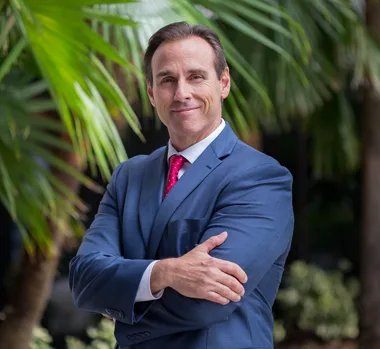 Richard P. Pravato Founding & Managing Attorney Board Certified in Civil Trial Law by The Florida Bar since 2004, and by the National Board of Trial Advocacy. Injury cases exclusively since 1996. Full profile →
 -
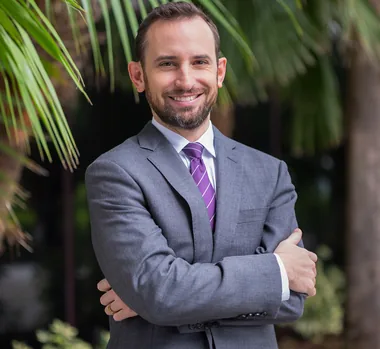 Brett J. Yonon Senior Trial Attorney Selected to Florida Super Lawyers in 2024 and 2025. Brett Yonon is who this firm puts on a catastrophic injury or a death in the family, and he has tried those cases to verdict. Full profile →
How insurance companies handle these claims
Every argument below rests on the same idea: that an injury nobody can see on a scan is an injury that is not there. They are answered with documentation rather than with indignation.
- The CT scan was normal
- It was, and that rules out bleeding rather than injury. Most traumatic brain injuries do not appear on routine imaging, because the damage is to how cells connect rather than to structure a scanner resolves. The answer is formal neuropsychological testing, which measures the affected functions directly, alongside a documented account of what changed from people who knew the person before.
- Surveillance shows you doing fine
- It shows a few hours out of months, chosen for how they look. Somebody with a brain injury can carry a shopping bag and still be unable to hold a shift, follow a meeting or tolerate a crowded room. Fatigue and cognitive load are not visible from a parked car. What answers it is the whole record, including the days that were not filmed.
- An offer, before the neuropsychological testing
- Offers in these cases arrive early and small, while the file still says concussion and the person still assumes they will be fine in a month. The testing that establishes what was actually lost usually happens later, and a release cannot be reopened once the results arrive. This is the practice where an early settlement most often turns out to have been a fraction of the claim.
What a claim can include
The claim a spouse has of their own
Loss of consortium is a separate claim belonging to the husband or wife, for the companionship and support the injury took. It is regularly left out, and in this practice it is often the loss the family feels most.
What a family may recover after a death
Funeral and medical expenses, lost support and services, and the losses the statute assigns to particular survivors, brought by the personal representative of the estate.
Medical care, past and future
Everything already billed and what the treating physicians say is still ahead, including the neuropsychological and rehabilitation work that usually starts months after the injury.
Why Wolf & Pravato in Fort Myers
A Lee County brain injury case is filed in the Twentieth Judicial Circuit at the Lee County Justice Center, and the firm has an office on Colonial Boulevard in Fort Myers rather than a referral arrangement with somebody here. Knowing which local providers actually have capacity, and how long each waiting list runs, is the difference between a documented gap and an undefended one.
Richard Pravato is one of 861 lawyers Board Certified by The Florida Bar in Civil Trial law, out of a membership over 109,000. The certification is about trial experience rather than advertising spend, and it is the part of a firm’s record that an insurance company checks.
Nothing is charged for the first conversation and nothing is charged at all unless there is a recovery. If we do not think you have a claim, we would rather tell you now than a year from now.
Fort Myers traumatic brain injury questions
I could not get a follow-up appointment for weeks. Will that hurt my claim?
It can, and it is worth heading off. Insurers treat a gap in treatment as evidence the injury resolved. A gap caused by waiting lists, transport or cost is a different thing, and it is defensible when it is documented at the time: referral dates, the appointment offered, what you did in the interim. Telling us about it while it is happening is more useful than explaining it a year later.
My mother is 78 and they keep saying it is her age.
That is the most common way a genuine brain injury in this county goes unexamined. Age and injury are separable, and the way to separate them is a before and after: what she was managing the week before, what she manages now, and what the people around her noticed and when. Neuropsychological testing accounts for age in its norms, so a deficit against those norms is a deficit, not a birthday.
We spend half the year up north. Where do the records come from?
From both places, and that is routine here. The Florida trauma record establishes the injury and the out-of-state records usually establish the before, which is the harder half to prove and the more valuable. Bring whatever you have, including the name of a physician who has known her for years, and the rest is requested. It takes weeks rather than days, which is a reason to start early.
I never lost consciousness. Does that matter?
Not in the way people assume. A traumatic brain injury can occur without any loss of consciousness at all. What matters is the how the injury happened and the documented change in function afterward.
Should I accept the offer while I am still recovering?
Almost never, and in a brain injury case especially not. Settling ends the claim permanently, and the long-term consequences of a brain injury are frequently not apparent for months. An offer made early is priced on what is not yet known, which is precisely why it arrives early.
The questions that come up on every kind of claim, deadlines, fees, recorded statements and fault, are answered on our Florida injury claim FAQ.
More in Fort Myers
Fort Myers Personal Injury Lawyer
Everything we handle in Lee County, and where our office is.
View →Fort Myers Construction Accident Lawyer
Florida construction accident lawyers.
View →Fort Myers Birth Injury Lawyer
Florida birth injury lawyers.
View →Fort Myers Uber and Lyft Accident Lawyer
Florida Uber and Lyft accident lawyers.
View →
Tell us what happened
A lawyer will listen, tell you what Florida law does with those facts, and be straight with you about whether it is worth bringing. We are at 1825 Colonial Blvd, Fort Myers, FL 33907.