
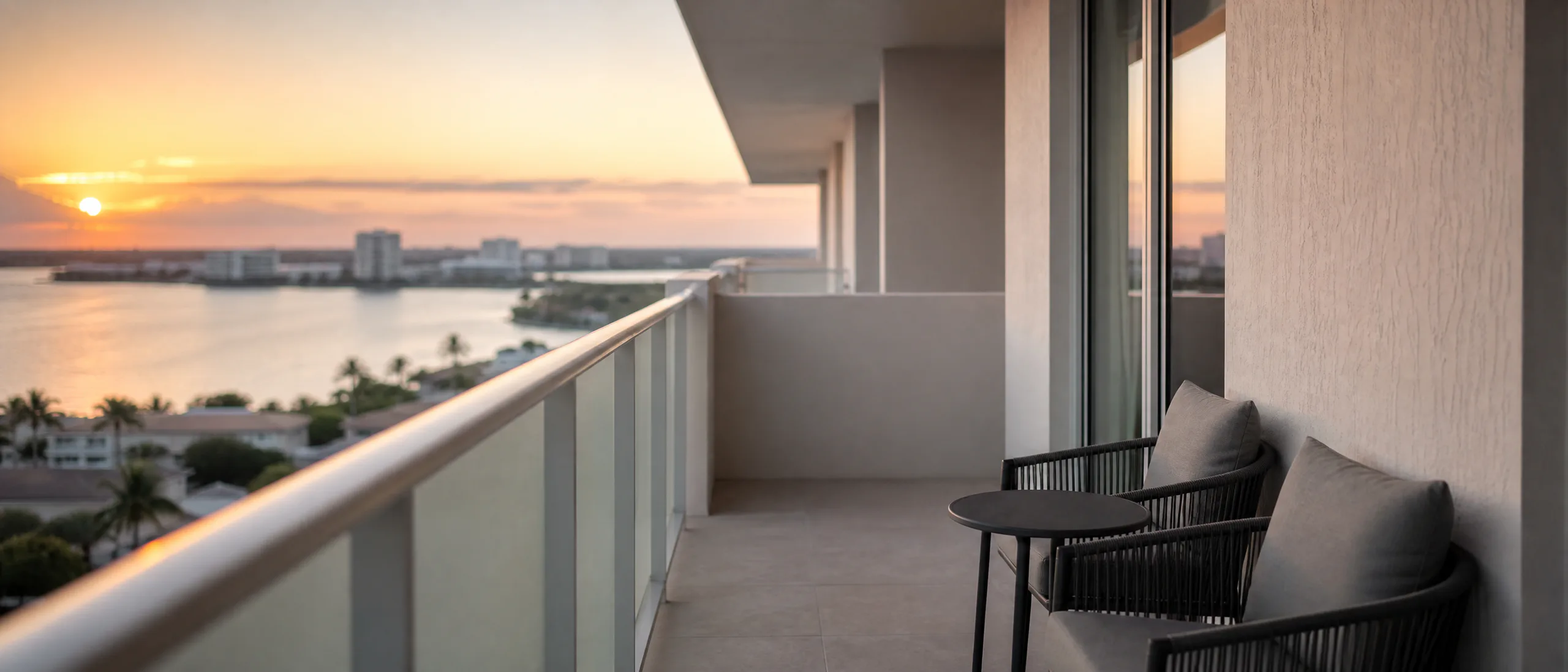
Fort Lauderdale Airbnb Injury Lawyer
You booked somewhere to stay for a few nights, came home hurt, and still cannot get a straight answer about who owned the place. We can take it from here. Call 954-522-5800 for a free consultation. You pay us nothing unless we win. Our Fort Lauderdale personal injury lawyers have taken these cases across Broward County since 1993.
Airbnb Injury claims in Fort Lauderdale
The host will say you were a guest who should have watched your step. Meanwhile you are the one with the hospital bill, the time off work and no idea whether the deck, the stairs, the gate or the water depth met any standard at all. Finding out what the law required of that property, and who was answerable for it, is our job from the first call.
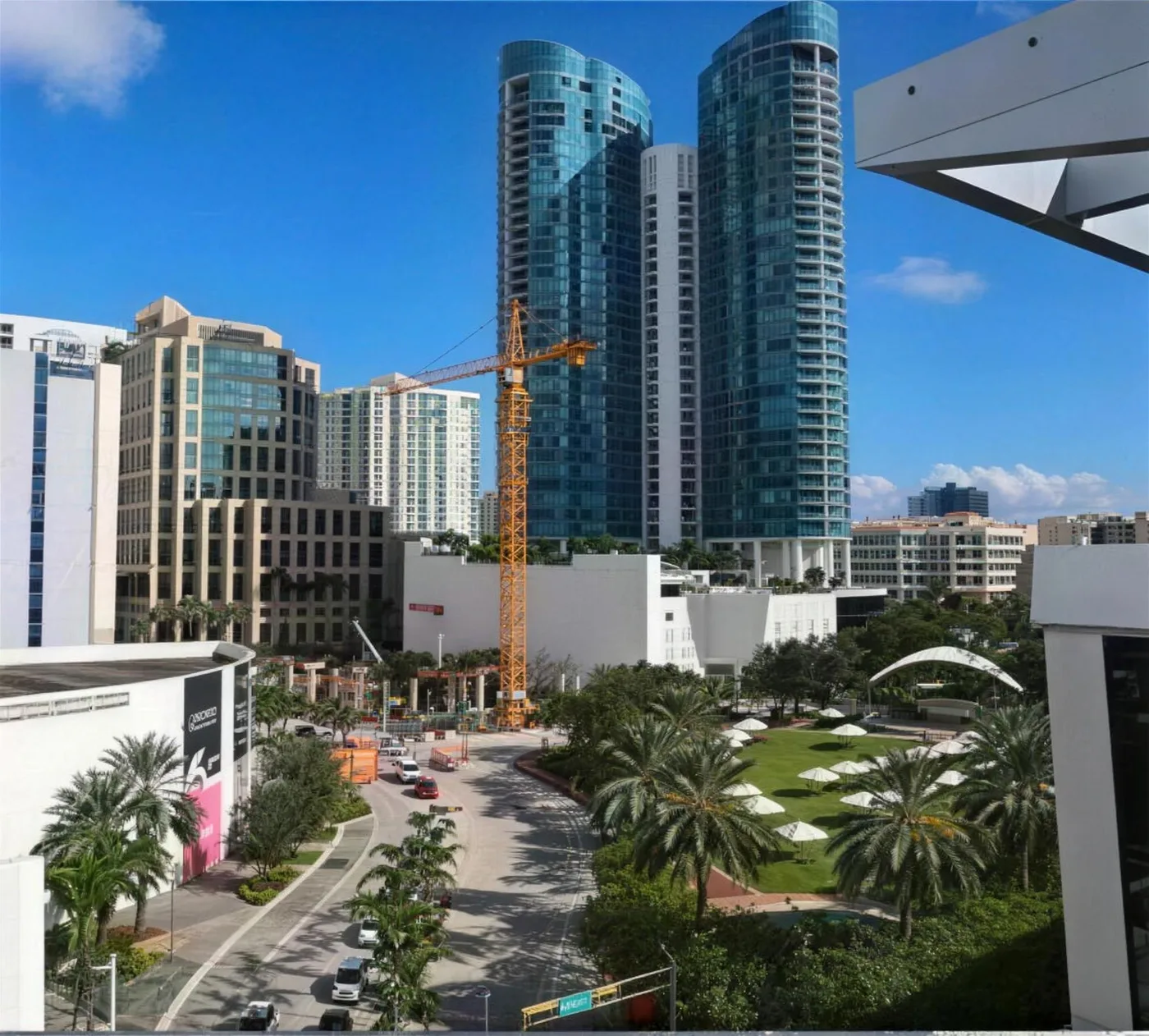
Broward has one of the densest concentrations of waterfront single-family rentals in the country, and in Fort Lauderdale the feature being advertised is almost always the back of the property: the dock, the seawall, the boat lift, the steps into the canal. Those are the parts a guest can least assess and the parts most likely to have been built or repaired by whoever owned the house at the time. The city also runs a vacation rental registration scheme of its own, which means there is frequently a local file as well as a state one, and the two do not always agree. Closer to the beach and the port the stock shifts to condominium units let short-term inside buildings whose associations restrict or prohibit it, which changes both who is answerable and which policy responds.
Fort Lauderdale short-term rentals are mostly waterfront houses and beach-area condominium units. A property let to guests more than three times a year for stays under thirty days is a licensed lodging business under Florida law, though vacation rentals are exempt from routine inspection. Most claims must be filed within two years.
What to do after a airbnb injury in Fort Lauderdale
- Screenshot the listing before you report anything. The whole page: photographs, title, amenity list, house rules, the description of the stairs or the pool or the dock, and every review going back as far as it loads. A host can edit or delete all of it in five minutes and they routinely do so the same week. Screenshot rather than bookmark, because a bookmark points at whatever the page says tomorrow. This is the single most useful thing anybody does in the first day of one of these cases.
- Photograph the thing that hurt you, with something for scale. The tread, the rail, the loose tile, the missing bulb, the gap, the water. Put a shoe, a phone or a hand in the frame, because heights, gaps and depths get measured later rather than described. Photograph the whole room or the whole approach as well as the detail, so it is clear where it was. Then photograph it again from where you were walking or standing when it happened.
- Keep every message in the thread, including the ones after. What the host said when you asked about the property, what they said when you told them, what they offered, and anything a manager or a cleaner sent. Hosts frequently admit a great deal in the first hour and become careful afterward. Export or screenshot the conversation rather than trusting it to stay in the app, because accounts get closed and threads disappear with them.
- Get seen in Florida before you fly home. An urgent care or emergency room visit here anchors the injury to the property and to the date, and that record is worth a great deal later. People routinely decide to wait until they get home, and a defense lawyer then argues the injury happened somewhere between Florida and their front door. It takes an afternoon and it closes an argument that is otherwise available for the life of the case.
- Find out who actually owns the place. The county property appraiser will name the record owner from the address in about a minute, and it is regularly a company or a trust rather than the person you were messaging. Write the name down. It decides which insurance is in play, and knowing it early stops a claim being aimed at somebody with nothing behind them.
Where these happen in Fort Lauderdale
Broward rentals divide cleanly into two kinds, and they fail in completely different ways.
-
Canal and waterway houses
The thing being advertised is the back of the property, and it is the part nobody inspected.
- Docks with no ladder, so anybody in the water has no way out
- Seawall edges and steps, unlit and invisible after dark
- Water dark enough that depth cannot be judged from the dock above it
- Boat lifts and davits left live or accessible to guests
-
Beach-area condominium units
The host controls the unit and the association controls everything you walk through to reach it.
- Lobbies, elevators, garages and pool decks, which belong to the association
- Building documents that restrict or prohibit short-term letting entirely
- Two or three separate policies, which do not point at each other voluntarily
- Whether the host had any authority to put a guest in the building
-
Owner-built outdoor structures
The outdoor structures here, including decks, stairs, rails and pool cages, are frequently the work of a previous owner rather than a contractor.
- Risers and treads that do not match, on a stair a guest takes in the dark
- Rails that are decorative rather than structural, or spaced widely enough for a child
- Whether the work was permitted and inspected, which the city holds on file
- Screen enclosures rebuilt after storm damage, at speed
-
Registered and unregistered lettings
Fort Lauderdale operates a vacation rental registration scheme of its own alongside the state license.
- Whether the property was registered with the city, and whether that registration was current
- Whether it held a state lodging license at all
- Inspection or complaint history where any exists
- A host operating outside both, which changes the position on every other question
What causes them
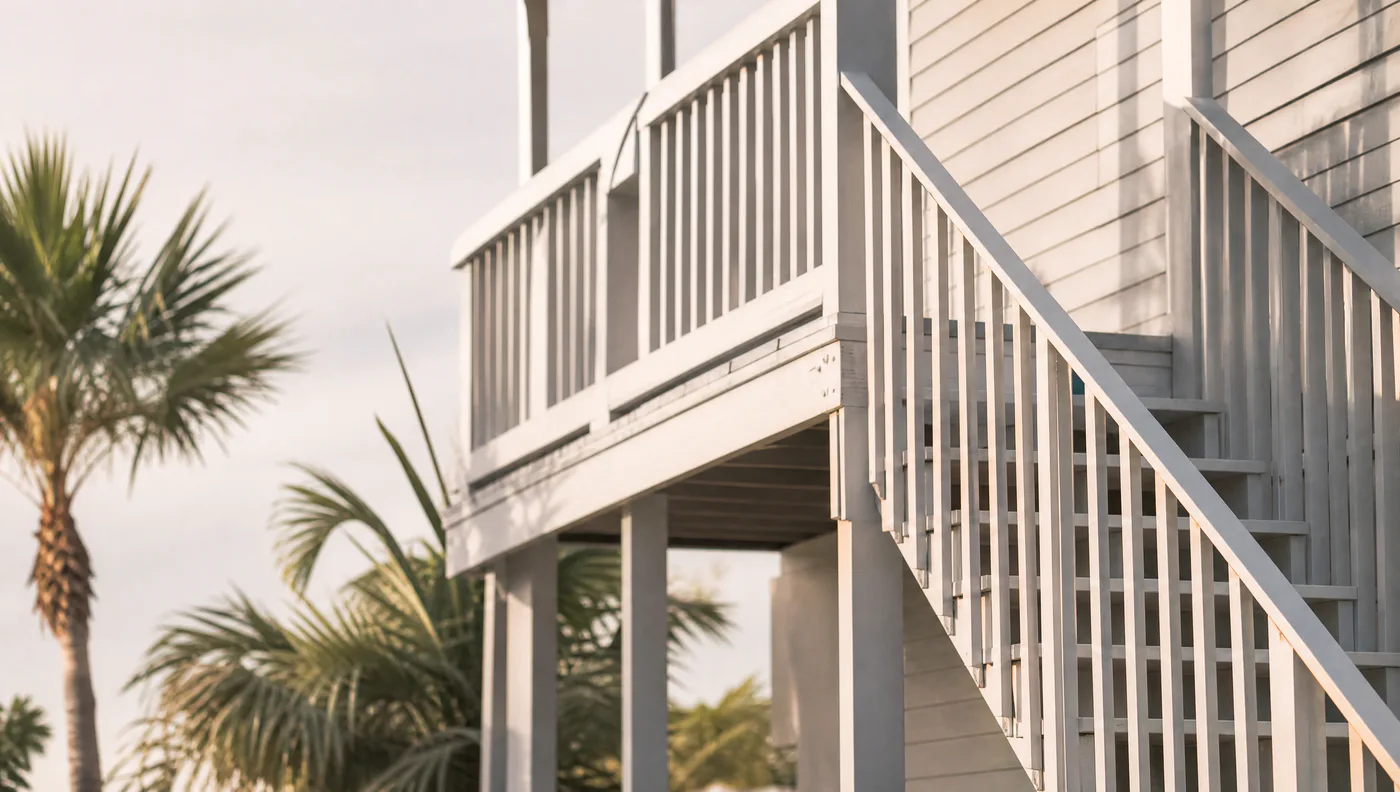
- Stairs and decking built or repaired without a permit, with treads and risers that do not match
- Balcony, deck and stair rails that are loose, low, or spaced widely enough for a child to pass through
- Docks with no ladder, and water too dark or too shallow to judge from above
- Lighting that was fine when the host set it up and has since failed on a path, a step or a landing
- Hot tubs and spas left with unbalanced chemicals, no cover, or a temperature nobody checked
- Grills, fire pits and outdoor heaters set up close to seating or under a soffit
What actually injures people at a short-term rental
Falls from height, and falls on stairs
The most common serious injury at these properties, and it usually comes from work somebody did themselves. Outdoor stairs, decks, balconies and docks at Florida rentals are frequently added or replaced without a permit, and the resulting geometry is wrong in ways a guest cannot see: an inconsistent riser, a tread that is shallower than the rest, a rail that is decorative rather than structural.
Whether that work was permitted and inspected is a public record at the local building department, and it is one of the first things worth pulling.
Head and spinal injury from entering water
Diving or jumping from a dock, a seawall or the edge of a pool into water shallower than it looked. Florida water is frequently dark with tannin or stirred sediment, the bottom is invisible from above, and depth changes with tide and with the season. The property knew all of that and the guest could not.
Burns and carbon monoxide
Hot tubs run too hot, outdoor cooking set up badly, and appliances in a house that is used a few weeks a year and serviced rarely. Carbon monoxide is the one that kills people in their sleep, and in a rental there is frequently nobody who has checked whether an alarm exists, let alone whether it works.
What Florida law requires you to prove
A rental is a business, and the guest is an invited customer
The full licensing scheme, the inspection exemption and the safety requirements sit on our Florida short-term rental page rather than being restated in every market. The short version is that a place let to guests more than three times a year for stays under thirty days is treated as a lodging business under Florida law, which puts a guest in the strongest category the state recognizes rather than in the position of somebody visiting a friend.
The deadline, and the share of the blame
Most claims from an incident on or after March 24, 2023 carry two years under Fla. Stat. § 95.11, and an older one keeps the four years that applied when it happened. Fault is divided under Fla. Stat. § 768.81, and since 2023 somebody found more than half responsible recovers nothing at all. Unfamiliarity with a property is the point of renting one rather than a fault in the guest, and it is answered with what the host knew.
Where the unit sits in a building of five or more homes
Fla. Stat. § 768.0706 gives the owner or principal operator of a multifamily residential property a presumption against liability for a crime somebody else commits there, but only where a listed set of measures was substantially in place: recorded cameras at the entry and exit points held for thirty days, lit parking and walkways, a deadbolt of at least an inch in each unit door, locks on windows and sliding doors, locked gates on pool fencing, and a peephole where a door has no window beside it. That is a checklist rather than a defense, and it is checked.
The full statutory detail, and the parts that differ by claim type, sit on our statewide airbnb injury page rather than being restated in every market.
How we prove it in Broward County
The most perishable evidence in a Broward rental case is a web page, and it can change in an afternoon.
- Screenshots of the entire listing as it appeared when you booked, including the reviews
- The booking confirmation, the house rules and every message with the host
- Photographs of what hurt you with something in frame for scale, and of the approach to it
- The dock, the ladder, the water and the lighting where the injury happened outside
- Permit history for decks, docks, stairs and enclosures, which the city building department holds
- The record owner from the county property appraiser, and any management company behind them
- Association records where the injury happened in a common area
- A Florida medical record made before you flew home
Take the screenshots before you tell the host you were hurt. A listing that promised a lit dock and a ladder, edited the following week, is the difference between a duty assumed and a duty denied.

Who would handle your case
Being hurt in Fort Lauderdale is hard enough without working out the legal side on your own. The trial lawyers below have handled airbnb injury claims across Florida since 1993, and one of them will take yours from the first call to the last check. They will tell you what your case is worth and why, and they will be straight with you about the parts that are hard.
-
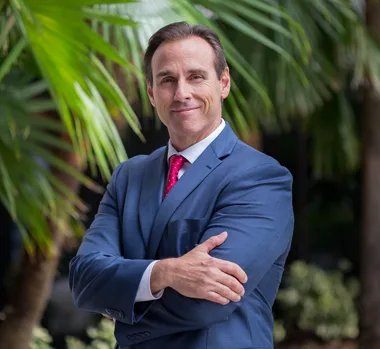 Richard P. Pravato Founding & Managing Attorney Board Certified in Civil Trial Law by The Florida Bar since 2004, and by the National Board of Trial Advocacy. Injury cases exclusively since 1996. Full profile →
 -
 Brett J. Yonon Senior Trial Attorney Selected to Florida Super Lawyers in 2024 and 2025. Brett Yonon is who this firm puts on a catastrophic injury or a death in the family, and he has tried those cases to verdict. Full profile →
What the insurer says about a short-term rental claim
The arguments here are unusually predictable, because there are only ever four of them and they arrive in the same order.
- You accepted the house rules and the terms
- House rules are not a release, and a term buried in a booking flow does not sign away a duty to keep a property reasonably safe. Florida limits what a release can do even when somebody signs one on purpose. This argument is made because it costs nothing to make, and it is answered with what the property was actually like rather than with a debate about the paperwork.
- The host does not own the place, so take it up with the owner
- Frequently true and rarely the end of it. A host who takes the money, sets the rules, arranges the cleaning and holds the keys has control of the property whether or not their name is on the deed. The owner is usually a defendant too, along with whoever managed it. Naming all of them is ordinary practice rather than an escalation.
- This was a short-term let, so the homeowners policy does not respond
- A real coverage problem and not a reason there is no claim. An ordinary homeowners policy is written for somebody living in their home and commonly excludes commercial use, which is exactly what letting it to guests is. Where that exclusion bites, the host remains personally answerable, the owner and the manager have their own coverage, and the booking platform operates a host liability program that regularly responds. Those are found by asking for the coverage position in writing.
What a claim can include
Medical care here and at home
The Florida treatment and everything that followed under your own doctors, gathered into one record rather than left as two unrelated halves.
Getting home, and being cared for once there
Changed flights, extra accommodation, medical transport, and the help hired because somebody could no longer drive, work or carry a child.
Income and earning capacity
Time lost while you could not work, and where the injury is lasting, what the rest of a working life is now worth against what it was.
Why Wolf & Pravato in Fort Lauderdale
A Broward claim is filed in the Seventeenth Judicial Circuit at the Broward County Courthouse, and this firm has been on West Commercial Boulevard in Fort Lauderdale since 1993 rather than working the county from elsewhere. Where an out-of-state family rented a house owned by one company and run by another, sorting out who actually held responsibility is local work.
Richard Pravato has been Board Certified in Civil Trial law by The Florida Bar since 2004. The Bar lists 861 lawyers in the state holding it against a membership over 109,000. What it means in practice is that the other side knows the file can go in front of a jury, and files that can go to trial are priced differently from files that cannot.
The first conversation is free. We are paid out of the recovery or not at all, and if we do not think there is a claim worth bringing we will tell you that rather than take it.
Fort Lauderdale airbnb injury questions
I have already flown home. Can I still bring a claim?
Yes, and it is the usual position. The evidence is in Broward and so is this office, so the photographs, the permit history and the local inquiries happen without you traveling. What matters from your end is preserving the listing, the messages and the records from wherever your treatment continued, and joining that treatment to the Florida visit rather than leaving it as two unrelated halves.
The host says the deck was like that when they bought the house.
That is an admission rather than a defense. Somebody letting a property to paying guests is responsible for its condition whether or not they built it, and the permit history at the city will show whether the work was ever inspected. Where it was not, the question of what a reasonable owner would have checked before advertising the property answers itself.
Does it matter that I booked through VRBO rather than Airbnb?
Not to the duty. Florida looks at how the property is used rather than at which site carried it, so the obligations are the same. What changes between platforms is the paperwork, what each site retains and for how long, and whether it runs a host liability program that may respond. All of that is worth pulling and none of it decides whether you have a claim.
Can I sue Airbnb or VRBO themselves?
Usually the claim runs against the host, the property owner and whoever managed or maintained the place, because those are the parties who controlled the condition. A platform generally argues it only carried the listing. That question turns on what the platform itself did rather than on what the host wrote, so it is worth assessing, but it is not where these cases normally start.
Does this cover VRBO, Booking.com and a rental arranged privately?
Yes. Florida law looks at how the property is used rather than at which website you found it on. A place rented to guests more than three times a year for stays under thirty days is treated the same way whether the booking came through Airbnb, VRBO, another site or a handshake. The platform changes the paperwork, not the duty.
The questions that come up on every kind of claim, deadlines, fees, recorded statements and fault, are answered on our Florida injury claim FAQ.
More in Fort Lauderdale
Fort Lauderdale Personal Injury Lawyer
Everything we handle in Broward County, and where our office is.
View →Fort Lauderdale Boat Accident Lawyer
Florida boat, jet ski, parasailing and watercraft accident lawyers.
View →Fort Lauderdale Product Liability Lawyer
Florida product liability lawyers.
View →Fort Lauderdale Scooter Accident Lawyer
Florida scooter and e-scooter accident lawyers.
View →
Tell us what happened
A lawyer will listen, tell you what Florida law does with those facts, and be straight with you about whether it is worth bringing. We are at 2101 W Commercial Blvd, Suite 1500, Fort Lauderdale, FL 33309.