
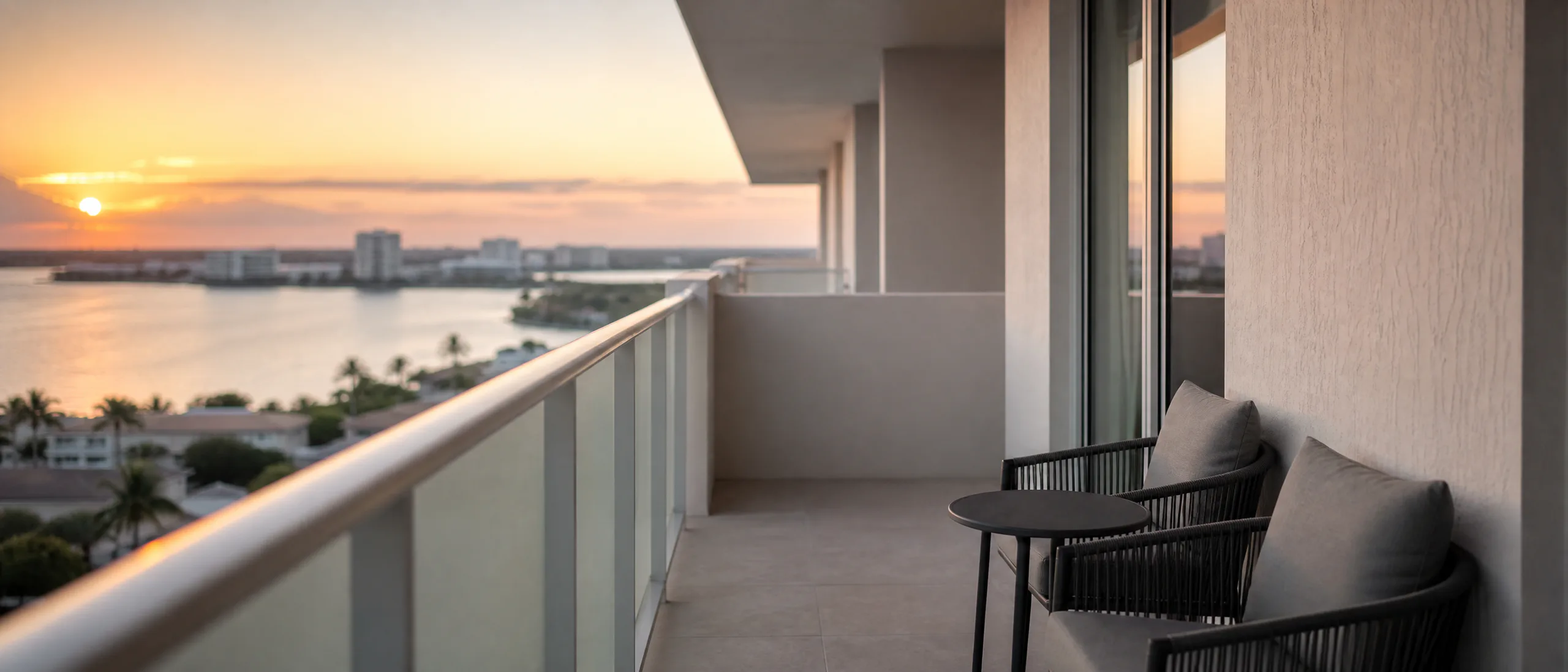
Florida Airbnb Injury Lawyer
You booked a place to stay for a few nights, and nobody had checked it before you walked in. We can take it from here. Call 954-522-5800 for a free consultation. You pay us nothing unless we win. We have won these claims for Floridians from the Keys to the Panhandle, and we work them from five offices between Fort Lauderdale and Fort Myers.
The listing, its photographs, the house rules, the reviews and your messages with the host are the only record of that property as it was when you booked it, and a host can edit or delete every part of it in about five minutes. Screenshot the whole listing before you tell anyone you were hurt.
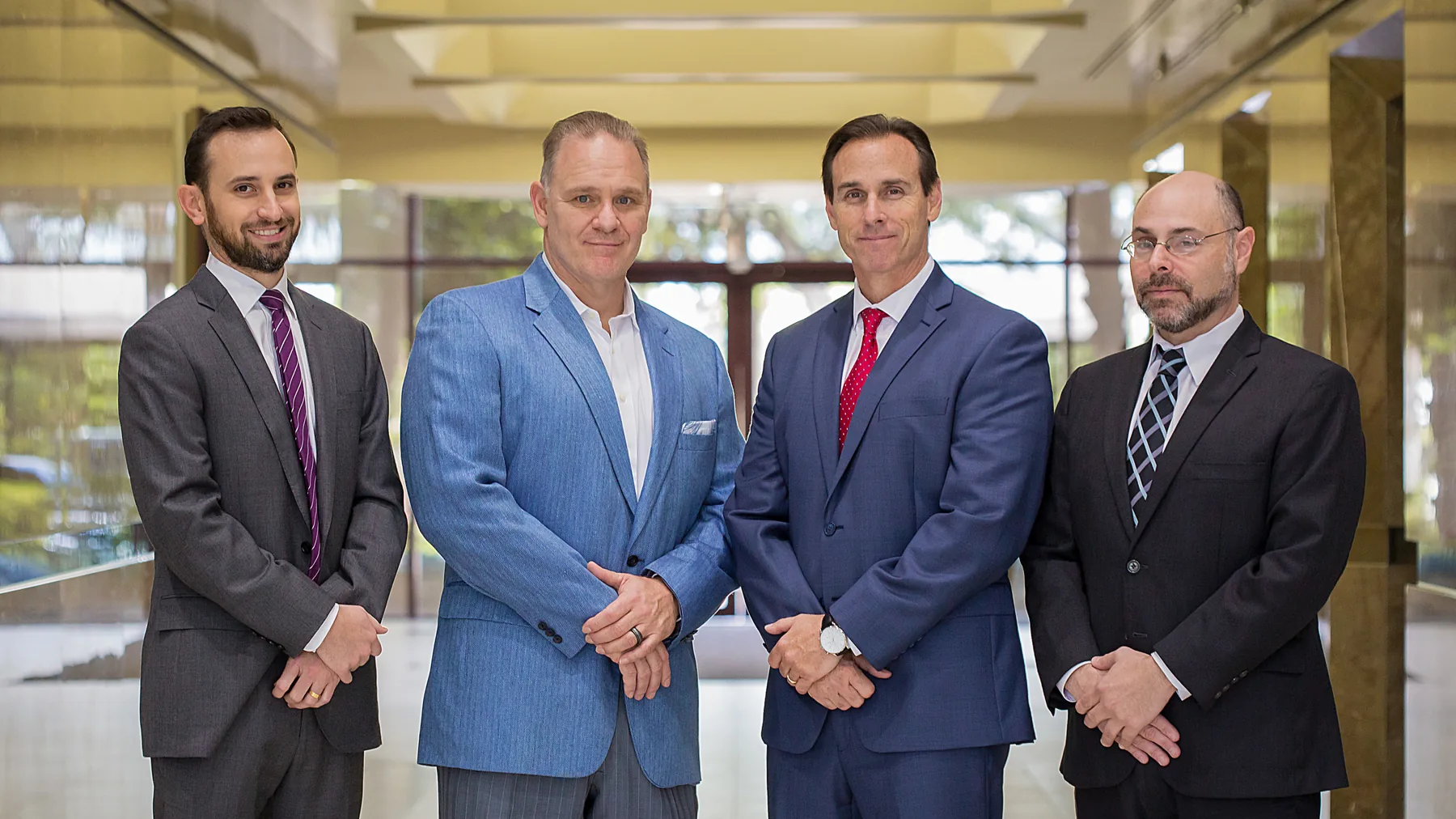
Our team will not let you go through a airbnb injury claim alone
Coming home hurt from a place you rented for a few nights is hard enough without a platform and a host pointing at each other. Nothing undoes the injury, and we will not pretend otherwise. What we can do is work out who owned the risk and make them answer for it, and we will take the case as far as it has to go.
Our trial attorneys have won airbnb injury cases across Florida since 1993, from the Keys to the Panhandle, and one of them will handle yours from the first call to the last check. Call 954-522-5800 for a free consult and a trial lawyer will tell you today whether you have a case. You pay us nothing unless we win, and we work from five offices between Fort Lauderdale and Fort Myers.
Meet the attorneys →What Florida law does with a airbnb injury claim
The host will say you were a guest who should have watched your step. Meanwhile you are the one with the hospital bill, the time off work and no idea whether the deck, the stairs, the gate or the water depth met any standard at all. Finding out what the law required of that property, and who was answerable for it, is our job from the first call.
Below is what actually decides a Florida short-term rental claim: the deadline, the fact that the property is a licensed business nobody inspected, every party who can be made to answer for it, and the problem of being hurt in Florida and treated a thousand miles away. Our city pages cover what these rentals look like in each market. This part is the same wherever you stayed.
A Florida short-term rental let to guests more than three times a year for stays under thirty days is a licensed lodging business, not a private home. The claim runs against the host, the owner and whoever managed the property. Most claims have to be filed within two years.
The deadline that ends a Florida airbnb injury claim
Two clocks run on these cases and only one of them is legal. The evidence clock is much shorter, and it is controlled by the person you would be suing.
Two years to file
Most claims from an accident on or after March 24, 2023 have to be filed within two years. An older accident keeps the four years that applied when it happened. The period is set by Fla. Stat. § 95.11 and it runs from the day you were hurt, not from the day the host stopped replying or the day a surgeon first used the word repair.
Filing one day late ends the claim whatever happened to you. If you are reading this from another state and assuming you have time to get home and settle in first, that assumption is the thing worth checking today.
Minutes, for the listing itself
This is the part that makes these cases different. The listing is the only description of the property as it was when you agreed to stay there: the photographs, the house rules, the amenity list saying there was a gate or a rail or a lifeguard, the reviews from earlier guests describing the same loose step you fell on.
A host can edit all of it, or take the listing down entirely, in about five minutes. They usually do it the same week. Screenshot the whole page including the reviews before you tell anybody you were hurt, and save the booking confirmation and every message in the thread. Those are frequently the strongest documents in the file and they are the ones nobody thinks to keep.
Days, before the property is put right
A tread gets replaced, a rail gets tightened, a latch gets fixed, a rug goes over the tile. None of that is sinister on its own and all of it destroys the thing that proves the case. Photograph what hurt you, with something in frame for scale, before you leave if you can.
Where a management company runs the property there is often a maintenance ticket, a cleaner's report or a prior guest complaint about the same thing. Those exist for a while and then they do not. A preservation letter goes out early for that reason.
A public body sets its own timetable
Where the water, the walkway, the beach access or the road outside is controlled by a city or a county rather than by the rental, Fla. Stat. § 768.28 governs and the ordinary rules stop. Written notice has to reach the agency, and usually the Department of Financial Services, within three years of the claim accruing and within two where somebody died, and suit cannot be filed until the agency has had its six months to respond.
The same section caps a public body at $200,000 for one person and $300,000 for one incident. It comes up more often than people expect in rental cases, because the hazard is regularly just past the property line.
Who can be held answerable
The person who answered your messages is frequently not the person who owned the place, and almost never the only party who owed you anything. Working out who actually controlled the thing that hurt you is most of the early work.
- The host. The account holder who took the booking. They may own the property, or they may be renting it themselves and subletting it, or they may be one of several people operating under one account. Fla. Stat. § 509.241 requires a public lodging establishment to hold a license from the state and makes operating without one a second-degree misdemeanor, so whether this host held one, and what name it was in, is a matter of public record worth pulling early.
- The owner of the property, who may be somebody else entirely. The county property appraiser will name the record owner in about a minute, and it is regularly a limited liability company, a trust or a family member who has never appeared on the listing. Ownership matters because it decides which insurance policy is in play and who has the authority to settle.
- The management company. A large share of Florida short-term rentals are run by professional managers who handle listings, cleaning, maintenance and guest contact for an owner who lives elsewhere. They usually hold the maintenance records, they usually carry their own coverage, and they are usually the party who knew about the problem before you arrived.
- The condominium or homeowners association. Where the unit sits in a building or a community, the association commonly controls the pool, the dock, the walkways, the lighting, the elevator and the parking. A guest hurt in a common area is rarely making a claim against the host at all. Where the building holds five or more dwellings, Fla. Stat. § 768.0706 also gives its owner or principal operator a presumption against liability for a crime committed there, but only where a listed set of security measures was substantially in place.
- Cleaners, maintenance contractors and pool services. The people who actually service these properties are third parties on contract, and where the thing that failed was theirs to maintain, they are answerable for it separately from the host. They also keep dated records of every visit, which is frequently how the timeline gets established.
- The platform, which is a narrower question than people assume. The site you booked through will say it published a listing somebody else wrote and did not control the property. Whether it has exposure turns on what the platform itself did rather than on what the host said, so it is worth assessing and it is not where these claims normally start. What the platform reliably does have is records: the listing as it stood on the day, the messages, the booking, and the earlier reviews. Those are worth preserving whether or not the platform is ever a defendant.
How a Florida airbnb injury case actually runs
These files move in a particular order, because the ownership question has to be settled before anything else can be aimed anywhere.
- Establish what the property legally was. Whether it was a licensed vacation rental, an unlicensed one, a condominium unit, a hotel room in all but name or somebody's actual home changes which rules applied. Fla. Stat. § 509.013 treats a place rented to guests more than three times a year for stays under thirty days as transient lodging, and Fla. Stat. § 509.242 classes a unit in a condominium or cooperative, or a one to four family house, as a vacation rental. That classification is the hinge the whole file turns on.
- Pull the license file and the complaint history. The state licenses these properties and keeps a record. Fla. Stat. § 509.032 then does something people find hard to believe when it is read to them: it requires inspection of licensed lodging at least twice a year, and in the same paragraph exempts vacation rentals from that requirement, making them available to the division only on request. So the file may show a license, a lapse, a complaint, or no license at all, and it will rarely show an inspection.
- Identify the record owner and the manager. Property appraiser, corporate registration and the association's own records between them usually produce the full chain within days. Naming the wrong entity and correcting it later costs time the deadline may not have.
- Preserve the physical condition and the paperwork together. A letter goes to the host, the owner, the manager and the association asking them to hold the property in its present state along with maintenance logs, cleaning reports, prior guest complaints, service contracts and any camera footage. Camera footage at these properties commonly overwrites within days.
- Get the medical picture built where you actually live. Most guests are treated once at a Florida emergency room and everything after that happens at home. Those two halves have to be joined into one record that reads as a single injury rather than a Florida visit and an unrelated course of treatment somewhere else. Doing that properly is the difference between a claim that is taken seriously and one an adjuster describes as a soft tissue complaint.
- Suit, discovery and mediation. Where a claim does not resolve, it is filed in the county where the incident happened or where the defendant does business under Fla. Stat. § 47.011. Discovery is where the maintenance records, the prior complaints and the manager's own emails come out, and it is regularly the point at which a case that was being denied gets resolved. Most Florida civil cases are ordered to mediation before trial.
What the claim is worth, and how that number is built
The value question in a rental case has a wrinkle no other page on this site has: the injury happened on vacation, and the person it happened to went home.
The out-of-state guest problem, and why it is worth solving early
Most people hurt at a Florida short-term rental do not live in Florida. They are treated once here, fly home in pain, and then see their own doctors under their own insurance for months or years. Every one of those visits is part of the claim and none of it is in a Florida record.
Left alone, that produces a file with one Florida emergency room note and a gap. Collected properly, it produces a continuous treatment history that starts at the property. The work is administrative rather than clever, and it changes the number more than almost anything else in these cases.
What the claim can include
Medical care already had and care still to come, income lost while you could not work and earning capacity lost where the injury is lasting, the cost of getting home and of care once you were there, and the pain and the loss of the ordinary use of your life.
Where a family was traveling together, the ruined trip itself is not the claim, but the costs it generated frequently are: the flights changed, the accommodation extended, the help hired because one adult could no longer carry a child.
Your own share of the fault, and the line at 50 percent
Fla. Stat. § 768.81 reduces a recovery by whatever share of the fault is yours, and since the 2023 amendment somebody found more than fifty percent responsible recovers nothing at all. In rental cases the argument is always some version of you were on vacation, you had been drinking, it was dark, you were unfamiliar with the place.
Unfamiliarity is the point of a rental rather than a fault in the guest, and that argument is answered with what the host knew and what the listing promised rather than with a debate about your evening.
What comes off the top before anyone is paid
Health insurers, government programs and medical providers who treated on a letter of protection all have a right to be repaid out of a recovery, and Fla. Stat. § 768.76 sets out how that works. For a guest treated in one state and then another, there are frequently two or three of them.
Those balances get negotiated down rather than paid at face value, and that negotiation happens after the settlement figure is agreed. It is the reason the headline number and the number that reaches a person are different, and it is worth understanding before anyone signs anything.
VRBO, other platforms, and what changes across Florida
Which site you booked on matters less than people expect. Where in Florida you stayed matters more.
VRBO, Booking.com and a rental arranged privately
Florida law looks at how a property is used, not at which website carried it. Fla. Stat. § 509.013 turns on the number of lettings and the length of the stay, so a house let through VRBO, through Booking.com, through a local agent or by a handshake with somebody at work is treated the same way as one let through Airbnb. The obligations under Fla. Stat. § 509.211 follow the property rather than the platform.
What does change between platforms is the paperwork: the wording of the terms you accepted, what the site retains and for how long, and whether the site operates a guest or host protection program that may respond. Those are worth reading and they are not the thing that decides whether you have a claim.
Whole-house rentals with water
Along the coasts, the Keys, the river towns and the canal networks, the rental is a house with a dock, a seawall, a boat lift or steps into open water. The hazards are the ones the guest can least assess: the depth below a dock, what is on the bottom, a ladder that has corroded, a lift that is live.
The firm has run this case. A guest dived from the dock of a rental on the Caloosahatchee and suffered a serious neck injury in water that was shallow and too dark to read. It resolved confidentially, and the reason it resolved was that the dock and the riverbed were inspected within days, weeks before Hurricane Ian destroyed the property and rearranged the bottom of the river.
Condominium units let out short-term
In the urban markets a short-term rental is usually a unit inside a tower with a pool deck, a gym, a garage and a lobby that the association controls and the host does not. That splits the claim in two, and it also brings the association's rules into it: many buildings restrict or prohibit short-term letting entirely, and a host operating against those rules is in a much weaker position when asked what authority they had to put you there.
It also changes the insurance. The association's policy, the unit owner's policy and any manager's policy are three separate places to look, and they rarely point at each other voluntarily.
The theme park corridor
Central Florida runs the densest concentration of purpose-built short-term rental housing in the country: entire subdivisions of large houses with private pools, sold to owners as investments and run at scale by management companies. The properties are newer and the pools are frequently within the era the residential safety chapter covers, which makes the construction and inspection paperwork unusually useful.
It is also where guests are most likely to be a large family group with young children, and where the gap between what the listing promised about safety and what was fitted is easiest to document.
The policies behind a Florida short-term rental
There is usually more than one policy behind a short-term rental and they do not volunteer for the job. Which one responds turns on a question the host may not have thought about when they listed the place.
The host's homeowners policy, and the business use problem
An ordinary homeowners or renters policy is written for somebody living in their home. Once that home is being let to paying guests on a regular basis it is being used commercially, and these policies commonly carry an exclusion for exactly that. Some hosts buy an endorsement or a separate short-term rental policy. Many do not, and find out only when a claim is made.
That is a coverage fight rather than a reason there is no claim. The host remains personally answerable whether or not a policy responds, and where the property is owned by a company there are usually other assets and other policies behind it.
The platform's own protection program
The major booking sites operate liability programs covering hosts up to a stated limit for guest injury, on their own terms and subject to their own conditions and exclusions. They are real and they are regularly the policy that actually pays, but they are not insurance the guest holds and the guest cannot claim on them directly. They are approached through the host and through the platform's process, which has its own notification requirements and its own clocks.
Association and management company coverage
Where the injury happened in a common area, the association's general liability policy is the relevant one and the host's is not. Where a management company ran the property, they will normally carry commercial general liability of their own. Both are usually larger than a homeowners policy and both are usually the reason a serious claim can be paid.
What pays for treatment while all of this is argued about
Your own health insurance is the practical answer for most guests, repaid at the end out of any recovery under Fla. Stat. § 768.76. Where somebody was hurt getting to or from the rental in a vehicle, Florida's own motor coverage under Fla. Stat. § 627.736 may be in play instead, and it carries its own fourteen-day treatment deadline that has nothing to do with the rental at all.
Where there is no health cover, treatment can often be arranged on a letter of protection, meaning the provider waits and is paid from the settlement. It is not free and it is not something to enter into casually, and it is regularly the difference between getting the care and going without it.

Who controls a short-term rental, and what the law asked of them
Most Florida short-term rentals are licensed lodging
Under Fla. Stat. § 509.013 a place rented to guests more than three times in a calendar year for stays under thirty days, or advertised as regularly rented that way, is a transient public lodging establishment. Fla. Stat. § 509.242 then classes a unit in a condominium or cooperative, or a single-family, two-family, three-family or four-family house, as a vacation rental.
That matters because it moves the property out of the category of somebody lending you their spare room and into the category of a business holding rooms out to the public. It also brings Fla. Stat. § 509.211 with it, which requires an approved locking device on every door opening to the outside, to an adjoining unit or to a hallway, and safe and secure railings on all balconies, platforms and stairways where the building has three or more stories.
Licensed does not mean anybody looked at it
This is the part almost nobody knows. Fla. Stat. § 509.032 requires the state to inspect each licensed lodging establishment at least twice a year, and apartments at least once. The same paragraph then says that units classified as vacation rentals are not subject to that requirement, and are simply made available on request.
So a hotel down the road has an inspector through it on a schedule, and the four-bedroom house you rented has never had one through the door. The photographs of the railing, the stair tread, the gate latch or the water below the dock may be the only evidence of the condition that hurt you, which is why they matter more here than in almost any other kind of premises claim.
The host is rarely the only one who owed you something
The person you messaged may not own the property. Florida short-term rentals are commonly run by a management company under contract, sit inside a condominium or homeowners association that controls the pool, the dock, the walkways and the lighting, and are owned by somebody who never appears on the listing at all. Each of those may have controlled the thing that hurt you.
Where the unit sits in a building of five or more dwellings, Fla. Stat. § 768.0706 gives the owner or principal operator a presumption against liability for a crime committed there by somebody else, but only where a listed set of security measures was substantially in place: recorded cameras at the entry and exit points kept for thirty days, lit parking and walkways, a deadbolt of at least an inch in each unit door, locks on windows and sliding doors, locked gates on the pool fence, and a peephole where the door has no window beside it. Whether those were actually there is a question of fact, and it is one worth asking early.
Who would handle your case
Your case is handled by one of the trial lawyers below, and you will know which of them has it from the first conversation. They do airbnb injury work week in and week out, they will tell you what your case is worth and why, and they will be straight with you about the parts that are hard.
-
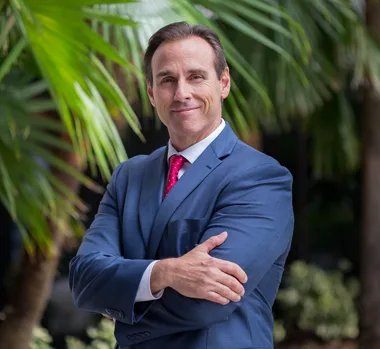 Richard P. Pravato Founding & Managing Attorney Board Certified in Civil Trial Law by The Florida Bar since 2004, and by the National Board of Trial Advocacy. Injury cases exclusively since 1996. Full profile →
 -
 Brett J. Yonon Senior Trial Attorney Selected to Florida Super Lawyers in 2024 and 2025. Brett Yonon is who this firm puts on a catastrophic injury or a death in the family, and he has tried those cases to verdict. Full profile →
Airbnb Injury questions we are asked
Can I sue Airbnb or VRBO themselves?
Usually the claim runs against the host, the property owner and whoever managed or maintained the place, because those are the parties who controlled the condition. A platform generally argues it only carried the listing. That question turns on what the platform itself did rather than on what the host wrote, so it is worth assessing, but it is not where these cases normally start.
Does this cover VRBO, Booking.com and a rental arranged privately?
Yes. Florida law looks at how the property is used rather than at which website you found it on. A place rented to guests more than three times a year for stays under thirty days is treated the same way whether the booking came through Airbnb, VRBO, another site or a handshake. The platform changes the paperwork, not the duty.
The host says I agreed to the house rules and accepted the risk.
House rules are not a release, and even a signed waiver has limits under Florida law. What matters far more is what the property was actually like and what the host knew about it. Your own share of the fault does reduce what you recover, so getting the condition documented early is the practical answer to this argument rather than a debate about the rules.
Questions that apply to any Florida injury claim, fees, deadlines, recorded statements and shared fault, are answered on our injury claim FAQ. What we have recovered is on recent case results.
Five Florida offices
We take airbnb injury claims statewide. Each market below has its own page on this claim, with that office's address, its direct number and the court a case there is filed in.
Fort Lauderdale airbnb injury claims
2101 W Commercial Blvd, Fort Lauderdale. Serving Broward County.
View →Miami airbnb injury claims
1111 Brickell Avenue, Miami. Serving Miami-Dade County.
View →West Palm Beach airbnb injury claims
2101 Vista Parkway, West Palm Beach. Serving Palm Beach County.
View →Boynton Beach airbnb injury claims
1375 E Gateway Blvd, Boynton Beach. Serving Palm Beach County.
View →Fort Myers airbnb injury claims
1825 Colonial Blvd, Fort Myers. Serving Lee County.
View →Other claims we handle
Three of the closest to this one. The full list is on our Florida practice areas page.
Tell us what happened
A lawyer will listen, tell you what Florida law does with those facts, and be straight with you about whether it is worth bringing. If it is not, we will say so.
We take cases anywhere in Florida.