
Florida Drowning Accident Lawyer
Florida loses more young children to drowning than any other state, and almost none of it happens in front of a lifeguard. We can take it from here. Call 954-522-5800 for a free consultation. You pay us nothing unless we win. We have won these claims for Floridians from the Keys to the Panhandle, and we work them from five offices between Fort Lauderdale and Fort Myers.
Drains get re-covered, signs go up, fences get repaired and lifeguard rosters get tidied in the days after a drowning. Photograph the water, the signage, the rescue equipment and the drain covers before anybody has a reason to improve them, and write down the names of everyone who was working.
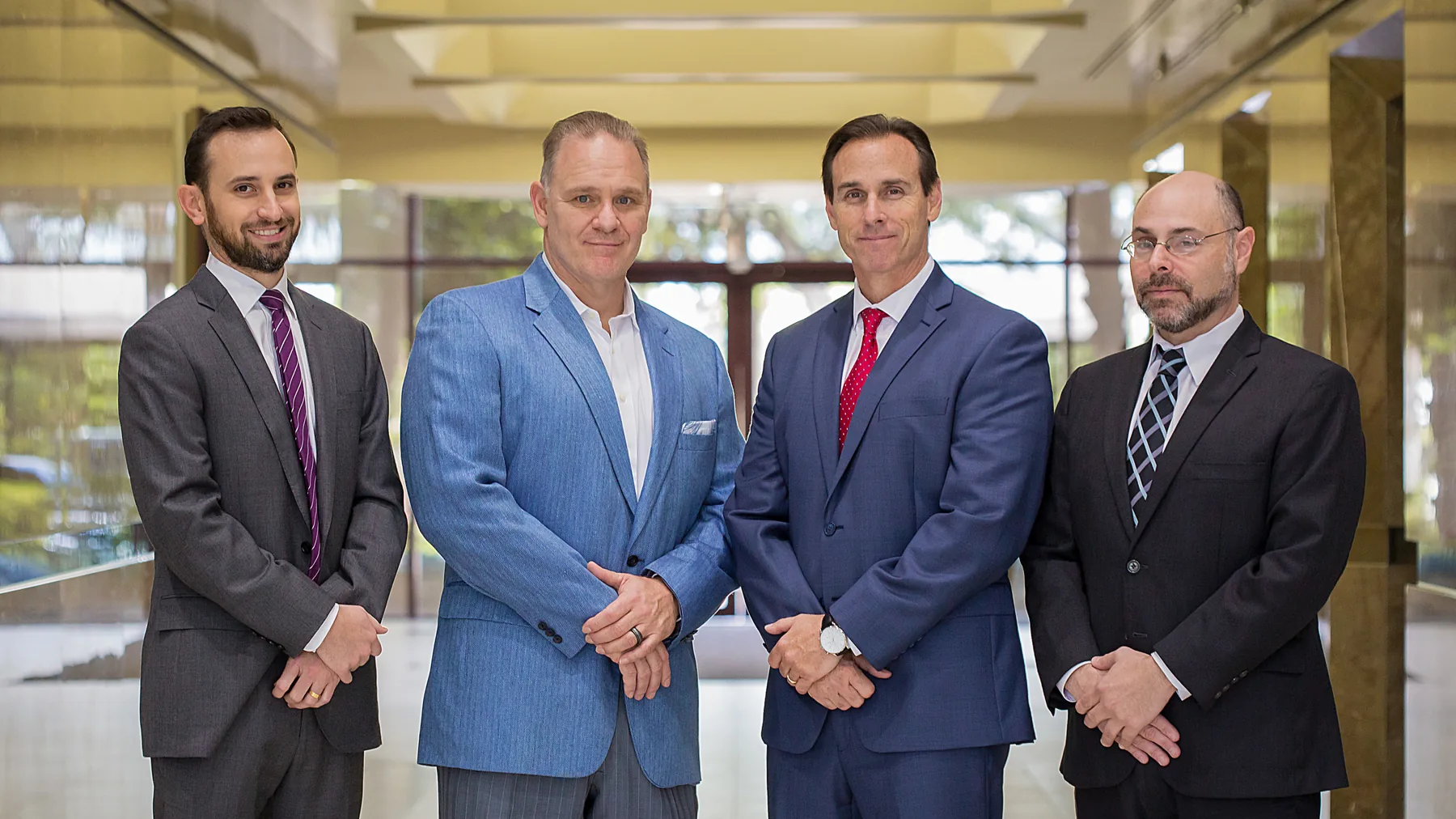
Our team will not let you go through a drowning accident claim alone
A drowning changes a family in minutes. Nothing undoes what happened in that water, and we will not pretend otherwise. What we can do is find out who was supposed to be watching and make them answer for it, and we will take the case as far as it has to go.
Our trial attorneys have won drowning accident cases across Florida since 1993, from the Keys to the Panhandle, and one of them will handle yours from the first call to the last check. Call 954-522-5800 for a free consult and a trial lawyer will tell you today whether you have a case. You pay us nothing unless we win, and we work from five offices between Fort Lauderdale and Fort Myers.
Meet the attorneys →What Florida law does with a drowning accident claim
You are being asked about long-term care, or about a funeral, by people who have already decided this was an accident. Whether a gate, a drain cover, a depth marking, a warning sign or a certified lifeguard was required at that water, and whether it was there, is a question with a documented answer. Getting it is our job, and it starts the day you call.
Below is what decides a Florida drowning case away from a private backyard: the permitted facilities and the chapter written for them, water a government body controls, who can be made to answer, and the medical evidence that a hypoxic brain injury is actually valued on. Our swimming pool page covers the barrier and the backyard. This is the rest of the water.
Florida regulates pools serving five or more units as public swimming pools, with a permit to operate, certified lifeguards and anti-entrapment equipment required. Open water and beaches controlled by a city or county carry their own notice deadlines. Most claims must be filed within two years.
The deadline that ends a Florida drowning accident claim
The legal deadline is the long one. Three shorter clocks decide whether there is anything left to prove by the time it matters.
Two years to file, and a different start date for a death
Most claims from an accident on or after March 24, 2023 have to be filed within two years. An older accident keeps the four years that applied when it happened. Fla. Stat. § 95.11 sets it, and where somebody survived the water and died later, the two years run from the date of death rather than from the day of the submersion. Those are frequently months apart in these cases, and the difference has ended claims that were otherwise sound.
Hours, for the rescue timeline
How long somebody was in the water, who noticed, how long until anybody entered it, and how long until compressions started are the facts that decide most of these cases, and they exist for about a day in a usable form. The dispatch record, the responding units' run reports and the times written on the emergency room chart are fixed. Everything else is memory, and memory of a drowning changes fast.
Write down every name you can, including the guests, the other parents and the staff whose shirts said something. Those people scatter within hours and are close to unfindable a month later.
Days, before the equipment is changed
Drain covers get replaced, pumps get serviced, a vacuum release gets fitted, rescue equipment appears on the wall, a depth marking gets repainted, a sign goes up. Each of those is a defensible thing for an operator to do and each destroys the state of the facility on the day.
Photograph the water, the drains, the depth markings, the signage and the rescue equipment where it hangs, and do it before anybody has a reason to improve any of it.
A government body sets its own, and shorter, timetable
A city beach, a county park, a public boat ramp, a school pool or a municipally run aquatic center is governed by Fla. Stat. § 768.28. Written notice has to reach the agency, and usually the Department of Financial Services, within three years of the claim accruing and within two where somebody died, and suit cannot start until the agency has had its six months.
The same section caps a public body at $200,000 for one person and $300,000 for one incident, whatever the injury is worth. Anything beyond that needs an act of the Legislature. It is the reason a claim about public water is a different case from the first day.
Who can be held answerable for a drowning
Away from a private home the answerable party is usually an operator rather than an owner, and the operator holds a permit that says what they undertook to do.
- The permit holder at a public pool. Fla. Stat. § 514.031 makes it unlawful to operate a public swimming pool without a permit from the Department of Health, and the application has to describe the structure, the water treatment and the safety equipment and standards to be used. The permit holder is the party who told the state what this facility would be, and that document is the yardstick everything else gets measured against.
- Whoever employed the lifeguard, or decided not to have one. Fla. Stat. § 514.071 requires anybody working as a lifeguard or swimming instructor at a public pool to hold current certification in lifeguarding or instruction, first aid and resuscitation from a recognized aquatic program, and lets the department sue to shut a facility that ignores it. Whether the person on the stand held that certification, and whether it was current that day, is a document rather than an argument.
- A camp, school, daycare, church or youth program. An organization that takes children to water assumes responsibility for supervising them there, whatever the facility itself was doing. Ratios, headcount procedures, swim testing and the training of the adults present are usually written down in that organization's own policies, and those policies are then the standard it agreed to be held to.
- A swim school or instructor. Lessons put a child in deep water on purpose, which makes supervision the entire service being sold. Class size, the instructor's certification and what happened in the moments either side are the questions, and reputable programs keep records of all three.
- A vessel owner or operator. Drownings from boats are governed by the vessel rules as well as by ordinary negligence. Fla. Stat. § 327.30 sets the duty to render assistance after an accident and Fla. Stat. § 327.54 governs the carriage and condition of safety equipment including flotation devices, with requirements that differ by the size of the vessel and the age of the people aboard.
- The manufacturer of the suction system. Entrapment cases are product cases as much as premises cases. The drain cover, the pump, the safety vacuum release and the fittings all have manufacturers, all have specifications, and all carry a date. Where the equipment failed rather than being absent, that is a separate claim against a separate defendant with separate insurance.
- The public body that controls the water. Beaches, springs, boat ramps, retention areas, drainage canals and public aquatic centers each have a body responsible for them, and that body decides what is fenced, what is signed, what is patrolled and when. Establishing which agency it is takes longer than people expect, and the notice clock above is running while it happens.
How a Florida drowning accident case actually runs
These files are built out of documents that exist somewhere already. Most of the early work is getting to them before they are tidied.
- Establish which chapter the water fell under. Fla. Stat. § 514.011 treats a pool serving a cooperative living project of five or more units as a public swimming pool and names apartments, hotels, motels, mobile home parks, recreational vehicle parks and townhouses. Fla. Stat. § 515.37 then puts public pools outside the residential chapter entirely. The classification decides which standards applied, and it is settled first because everything after it depends on the answer.
- Pull the permit file and the inspection history. Fla. Stat. § 514.04 gives the department right of entry at any reasonable time and Fla. Stat. § 514.05 lets it suspend or revoke a permit and impose fines. That means there is a file: applications, plans approval, inspection reports, violations, corrections and any enforcement. A facility with a history of the same violation is a very different case from one without.
- Check the equipment against the standard it was held to. Fla. Stat. § 514.0315 requires an anti-entrapment system meeting the ASME and ANSI A112.19.8 standard at every public pool and spa, and requires a pool built before January 1, 1993 with a single main drain other than an unblockable one to carry one of five listed further protections. Which of the five is the operator's choice. Whether any was fitted and working is measurable.
- Watch for an exemption that stopped applying. Fla. Stat. § 514.0115 exempts a pool serving no more than thirty-two condominium or cooperative units from supervision except on water quality, but only where the property is not operated as public lodging. Where units in that building are let to guests short-term, the basis of the exemption has moved. It is the kind of point nobody raises unless somebody goes looking for it.
- Build the rescue timeline minute by minute. The dispatch log, the responding units' reports, the emergency room arrival time, the first recorded rhythm and the first documented oxygen saturation together produce a timeline. That timeline is what an expert works from, and it is also what tells you whether the outcome turned on supervision, on the response, or on both.
- Get the neurological picture properly, and then wait. Where somebody survived, the prognosis is genuinely unclear for a period and nobody honest will pretend otherwise. Imaging, continuous monitoring and repeated neurological assessment over months are what establish what the injury actually is. Settling before that is known is the single most expensive mistake available in these cases, and it is the one an early offer is designed to produce.
What the claim is worth, and how that number is built
A hypoxic brain injury is valued on evidence rather than on sympathy, and the evidence is unusually technical. This is what actually moves the number.
The imaging and the monitoring, which are the objective record
Magnetic resonance imaging at the right interval, continuous electrical monitoring of the brain in the acute period, and the record of oxygen levels and circulation from the first minutes are the parts of this that cannot be argued away. They are also the parts most likely to be missing if nobody asked for them to be preserved.
Where cooling was used to protect the brain, the timing of it and the temperature record become part of the same picture. Every one of these is a document held by a hospital rather than an opinion held by a lawyer.
Neuropsychological testing, months and years later
A person who walks, talks and appears recovered can be left with deficits in memory, processing speed, attention and executive function that only formal testing detects. Those deficits decide whether somebody can return to school on the same track, hold the job they trained for, or live without supervision.
This is the evidence that distinguishes a claim that resolves for the medical bills from one valued on the rest of a life, and it takes time to gather because the testing is only meaningful once the picture has stabilized.
The fight over life expectancy
Where care is needed for life, the length of that life is worth an enormous amount of money to both sides, and it is contested by experts on published data about the specific condition and level of function. It is an uncomfortable argument to sit through and it is unavoidable.
It is also why the level of function has to be documented properly rather than described. A defense expert given a vague record will fill the gap with the most favorable assumption available to them.
How future care gets converted into a present figure
Care needed thirty years from now is paid for today, so the total is discounted to a present value using assumptions about inflation in medical costs and about the return on the money in the meantime. Small changes in those assumptions move the number by a great deal, which is why the economics are argued as hard as the medicine.
Where a settlement funds decades of care, it is frequently structured so that money arrives over time rather than at once. That is a decision to make carefully and with advice, and it is separate from the question of what the claim is worth.
What comes off before anyone is paid
Health insurers, government health programs and providers who treated on a letter of protection all have a right to be repaid from a recovery, and Fla. Stat. § 768.76 governs how. In a catastrophic drowning those balances are frequently the largest single deduction in the file.
They are negotiated rather than paid at face value, and that happens after the settlement is agreed. It is the reason the number announced and the number a family receives are different, and it is worth understanding before anything is signed.
Where the water was, and why it changes the case
Florida is water in every direction and almost none of it is regulated the same way. Where somebody went in decides who is answerable and under which rules.
Guarded and unguarded beaches
Some Florida beaches are patrolled by municipal or county ocean rescue with towers, warning flags and posted hours. Others are open sand with a sign. The presence of a guarded operation creates obligations about how it is run, what the flags are used to communicate and whether hazards known to the operation were communicated at all.
An unguarded beach is not automatically a claim, and a guarded one is not automatically a defense. What matters is what that operation held itself out as doing and whether it did it. Where the operator is a city or a county, the notice deadlines above apply from day one.
Springs, rivers and quarries
North and central Florida run on spring systems, rivers and flooded quarries where the hazards are cold water, current, sudden depth changes, submerged structure and limited visibility. Some are state or county parks with staff, rules and posted conditions. Others are private land with a history of people swimming there that the owner knows about.
That history matters. A landowner who has known for years that people enter the water at a particular spot is in a different position from one who has not, and the evidence of it is usually sitting in incident reports, complaints or the local paper.
Water the drainage system created
Much of built Florida sits alongside water that exists to move rainfall: retention areas, borrow pits, drainage canals and stormwater ponds behind housing, schools and shopping. They are usually controlled by a district, a city or a homeowners association rather than by whoever lives nearest.
Access, fencing, signage and the steepness and lining of the banks are decisions somebody made and recorded. Identifying which body made them is the first job, and it is slower than it should be because responsibility for one stretch of water is regularly split between more than one agency.
Off a vessel
In the Keys, the coastal counties and the inland lake systems, drownings happen from boats: someone goes over the side, a swimmer is struck, a passenger enters the water at a sandbar and does not come back. Those cases run on the vessel rules, the duty to assist and the flotation equipment carried, and on whether anybody aboard was capable of operating the boat at the time.
The coast guard or the state wildlife commission usually investigates, and their file is a starting point rather than an answer. It is written to establish what happened, not who is answerable for it.
The policies behind a Florida drowning claim
Away from a private home, the policy behind the water is a commercial or a public one. Which it is decides how much is available and how the claim has to be presented.
The commercial policy behind a permitted facility
A hotel, resort, club, apartment complex, aquatic center or water park carries general liability coverage sized for the risk it runs, and the limits are usually far larger than anything behind a private home. There is frequently a layer of excess coverage above the primary policy that is never mentioned unless somebody asks for the full coverage position in writing.
Where a management company operates the facility for an owner, both usually carry their own coverage, and the two point at each other for a while before either of them accepts the claim.
An organization's own policy
Camps, schools, daycare providers, churches and youth programs carry liability coverage, and where the program is run under a national body there is regularly a group policy above the local one. Those policies commonly require the organization to notify the insurer promptly, which is one reason a claim is put in writing early rather than raised informally with the people you know there.
A public body, which does not buy insurance the way anybody else does
Cities, counties, school boards and districts are frequently self-insured or insured through a pooled arrangement, and behind all of it sits the Fla. Stat. § 768.28 cap of $200,000 for one person and $300,000 for one incident. A serious drowning is worth a great deal more than that, which is why a claim against a public body is usually also a search for a second defendant who is not one.
That second defendant is often a contractor, a program operator, an equipment supplier or a maintenance company working for the agency. They are answerable on ordinary terms and their coverage is not capped.
Vessel and product coverage
Boat policies carry liability limits of their own and are frequently supplemented by an umbrella policy the owner has forgotten about. Where the case is against the manufacturer of a drain cover, a pump or a release system, that is a product claim against a company with commercial coverage and, in most cases, considerable assets behind it.
What pays for care while all of this is worked out
Health insurance is the practical answer for most families, repaid at the end under Fla. Stat. § 768.76. Where a child is involved, the state health programs frequently carry part of it and they have their own repayment rights.
Care can also be arranged on a letter of protection, meaning the provider waits and is paid from the recovery. In a catastrophic drowning that is regularly how the rehabilitation actually gets delivered while the liability argument runs.
Which water it was decides which law applied
A public pool and a backyard pool are governed separately
Fla. Stat. § 514.011 treats a pool serving a cooperative living project of five or more units as a public swimming pool, and names apartments, hotels, motels, mobile home parks, recreational vehicle parks and townhouses in the same breath. A public pool needs a permit to operate at all under Fla. Stat. § 514.071, which also requires any lifeguard working there to hold a current lifeguarding, first aid and resuscitation certification from a recognized program.
Fla. Stat. § 515.37 then takes public pools out of the residential chapter altogether. So the fence-and-gate rules that decide a backyard case are the wrong rules for a resort, and the certification and permit questions that decide a resort case have no bearing on a private home. Establishing which one it was is the first thing that happens in these files.
Entrapment is a federal standard with a Florida deadline attached
Fla. Stat. § 514.0315 requires every public pool and spa to carry an anti-entrapment system meeting the ASME and ANSI A112.19.8 standard. A public pool built before January 1, 1993 with a single main drain other than an unblockable one has to carry one of five further protections, among them a safety vacuum release system, a suction-limiting vent, a gravity drainage collector tank, an automatic pump shut-off or a device that disables the drain.
Which one is at the owner’s discretion. Whether any of them was fitted and working is not a matter of opinion, and it is recorded in the permit file, the maintenance records and the equipment itself.
A rented unit can strip a building of its exemption
Fla. Stat. § 514.0115 exempts a pool serving no more than thirty-two condominium or cooperative units from state supervision except on water quality, but only where the property is not operated as a public lodging establishment. Once units in that building are being rented out to guests short-term, the ground the exemption stood on has moved.
That is the kind of point nobody raises until somebody goes looking. It is also why the ownership and rental history of the building matters in a case that appears, at first, to be about a person and some water.
Who would handle your case
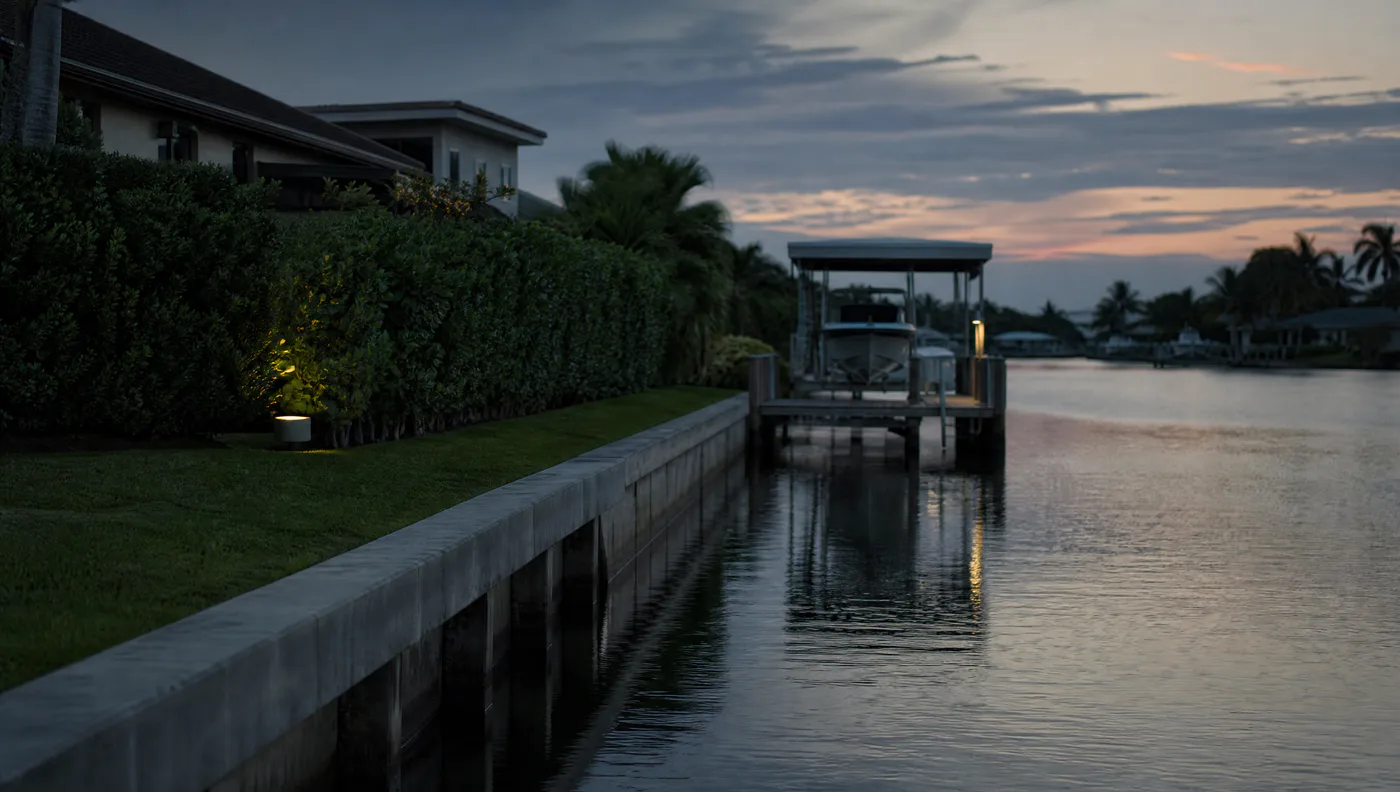
Your case is handled by one of the trial lawyers below, and you will know which of them has it from the first conversation. They do drowning accident work week in and week out, they will tell you what your case is worth and why, and they will be straight with you about the parts that are hard.
-
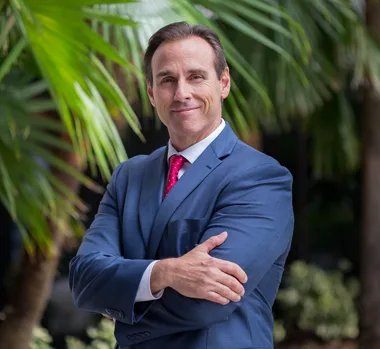 Richard P. Pravato Founding & Managing Attorney Board Certified in Civil Trial Law by The Florida Bar since 2004, and by the National Board of Trial Advocacy. Injury cases exclusively since 1996. Full profile →
 -
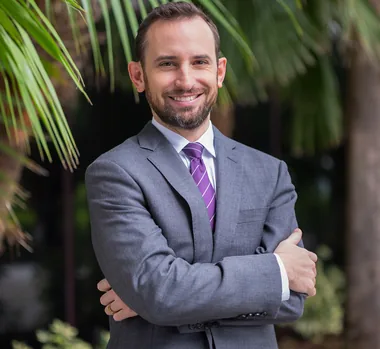 Brett J. Yonon Senior Trial Attorney Selected to Florida Super Lawyers in 2024 and 2025. Brett Yonon is who this firm puts on a catastrophic injury or a death in the family, and he has tried those cases to verdict. Full profile →
Drowning Accident questions we are asked
She survived. Is there still a case?
Frequently the larger one. A non-fatal drowning can leave lasting brain injury needing care for the rest of a life, and that claim is valued on decades of future medical need and lost capacity rather than on the bills already run up. The evidence about the water, the barrier and the response is the same either way.
It happened in a canal, a lake or at the beach, not a pool.
Open water cases turn on who controlled the access and what warning was given. Canals, retention ponds, quarries, seawalls and swimming areas all have somebody responsible for them, and where that is a city or a county the claim carries its own notice requirements and its own deadlines. Those are shorter than people expect, which is the reason to ask early rather than later.
There was no lifeguard on duty. Does that decide it?
Not by itself, and Florida law does not require a lifeguard everywhere. What it does require is that anybody working as one at a public pool holds a current certification, and that the facility carries the safety equipment and signage its permit was granted on. Whether the absence of supervision was a breach depends on what that place had held itself out as providing.
Questions that apply to any Florida injury claim, fees, deadlines, recorded statements and shared fault, are answered on our injury claim FAQ. What we have recovered is on recent case results.
Five Florida offices
We take drowning accident claims statewide. Each market below has its own page on this claim, with that office's address, its direct number and the court a case there is filed in.
Fort Lauderdale drowning accident claims
2101 W Commercial Blvd, Fort Lauderdale. Serving Broward County.
View →Miami drowning accident claims
1111 Brickell Avenue, Miami. Serving Miami-Dade County.
View →West Palm Beach drowning accident claims
2101 Vista Parkway, West Palm Beach. Serving Palm Beach County.
View →Boynton Beach drowning accident claims
1375 E Gateway Blvd, Boynton Beach. Serving Palm Beach County.
View →Fort Myers drowning accident claims
1825 Colonial Blvd, Fort Myers. Serving Lee County.
View →Other claims we handle
Three of the closest to this one. The full list is on our Florida practice areas page.
Tell us what happened
A lawyer will listen, tell you what Florida law does with those facts, and be straight with you about whether it is worth bringing. If it is not, we will say so.
We take cases anywhere in Florida.