Boynton Beach Dental Malpractice Lawyer — When Your Dentist's Negligence Causes Serious Harm
Dental malpractice can leave patients suffering from permanent nerve damage, failed dental implants, severe infections, anesthesia complications, and lifelong pain. When a dentist, oral surgeon, orthodontist, or dental clinic fails to provide treatment that meets accepted professional standards, injured patients may have the right to pursue compensation under Florida medical malpractice law.
At Wolf & Pravato, our Boynton Beach dental malpractice lawyers represent patients throughout Palm Beach County who were harmed by negligent dental care. We handle claims involving wrong tooth extractions, dental implant failures, nerve injuries, delayed diagnosis of oral cancer, root canal errors, IV sedation mistakes, and other serious forms of dental negligence. Our legal team works closely with qualified dental experts, oral surgeons, neurologists, and medical professionals to investigate malpractice claims and build strong cases for compensation.
Florida dental malpractice claims involve strict procedural requirements under Florida Statute §766.106, including a mandatory pre-suit investigation process and expert affidavit requirements before a lawsuit can be filed. Our attorneys understand the complexities of Florida dental malpractice litigation and help clients navigate every stage of the legal process.
If you or a loved one suffered serious harm from negligent dental treatment in Boynton Beach, Delray Beach, Boca Raton, or elsewhere in Palm Beach County, contact Wolf & Pravato today for a free consultation. We can review your dental records, explain your legal options, and help you pursue compensation for corrective treatment, lost income, pain and suffering, and long-term complications. You pay nothing unless we recover compensation for you.
What Constitutes Dental Malpractice Under Florida Law?
Dental malpractice is a subset of medical negligence under Florida law. It arises when a dentist, oral surgeon, orthodontist, periodontist, or other licensed dental provider fails to meet the minimum standards of performance in diagnosis and treatment when measured against generally prevailing peer performance — the standard articulated in Florida Statute §466.028(1)(x), which governs grounds for disciplinary action against Florida-licensed dentists.
More broadly, dental malpractice is governed by Florida Statute §766.102, which defines the standard of care in medical and dental negligence cases as the level of care, skill, and treatment which, in light of all relevant surrounding circumstances, is recognized as acceptable and appropriate by reasonably prudent similar health care providers.
To prevail in a Florida dental malpractice case, four elements must be established:
- Duty: A dentist-patient relationship existed, creating a professional duty of care
- Breach: The dentist deviated from the applicable standard of care as established by expert testimony from a qualified dental professional in the same or similar specialty
- Causation: The dentist’s deviation directly caused the patient’s injury — this requires more than showing a bad outcome; it requires expert testimony linking the deviation to the specific harm
- Damages: The patient suffered compensable harm — physical injury, additional treatment costs, lost income, or other documented damages
It is critical to understand that a bad dental outcome is not automatically malpractice. Complications can occur even when a dentist performs a procedure correctly. The legal question is always whether the dentist’s conduct fell below the standard that a reasonably prudent dentist in the same specialty would have met under the same circumstances.
Types of Dental Malpractice We Handle in Boynton Beach
Wrong Tooth Extraction
Extracting the wrong tooth is one of the most documented and preventable dental errors. It most commonly results from inadequate pre-operative radiograph review, failure to confirm the extraction site with the patient, or miscommunication between the dentist and dental assistant. A wrong tooth extraction causes immediate harm — the loss of a healthy tooth — and typically requires restorative treatment (implant or bridge) to address the resulting gap. Florida’s standard of care requires dentists to verify the correct tooth through multiple confirmatory steps before performing any extraction. Cases involving wrong-site dentistry are among the clearest examples of deviation from accepted standards.
Nerve Damage from Dental Procedures
The inferior alveolar nerve and the lingual nerve are the two nerves most frequently damaged during lower wisdom tooth extractions and implant placement in the posterior mandible. Damage to the inferior alveolar nerve can cause permanent numbness, tingling, or burning pain (paresthesia or dysesthesia) in the lower lip, chin, and teeth on the affected side. Lingual nerve damage affects sensation in the tongue. These injuries range from temporary to permanent and can severely impact a patient’s quality of life, eating, speaking, and professional functioning.
Dental nerve damage malpractice claims typically allege: failure to properly interpret pre-operative cone beam CT (CBCT) imaging to identify the nerve’s proximity to the planned surgical site; failure to modify the surgical approach based on imaging findings; and failure to obtain informed consent for the specific risk of nerve injury when pre-operative imaging showed elevated risk. A qualified oral and maxillofacial surgery expert is required to evaluate and testify about the standard of care in these cases.
Dental Implant Failures and Complications
Dental implants are among the fastest-growing procedures in the South Florida dental market — and among the most litigated for malpractice. Implant malpractice cases involve a range of allegations:
- Sinus perforation: Upper posterior implants placed without adequate bone height assessment can perforate the maxillary sinus, causing sinusitis, chronic infection, and the need for surgical correction
- Nerve impingement: Lower implants placed too close to the inferior alveolar nerve canal without adequate CBCT imaging review
- Improper implant positioning: Implants placed at incorrect angles or depths that compromise the final restoration and require removal
- Failure to identify contraindications: Placing implants in patients with uncontrolled diabetes, active periodontal disease, or a bisphosphonate medication history without adequate workup or consultation
- Implant osseointegration failure from improper technique, including overheating of the bone during drilling, inadequate primary stability, or immediate loading when delayed loading was indicated
The implant industry is largely unregulated at the device level — dentists may use implants of varying quality and from manufacturers with different track records. In some cases, a defective implant device may support a parallel products liability claim against the manufacturer in addition to the malpractice claim against the dentist.
Anesthesia and IV Sedation Errors
Florida’s Board of Dentistry regulates dental anesthesia under §466.017 F.S. and Rule 64B5-14, Florida Administrative Code, which establishes permit requirements for different levels of sedation — from minimal sedation (anxiolysis) through deep sedation and general anesthesia. Dentists performing moderate or deep sedation must hold specific Board-issued permits, maintain required equipment, and follow monitoring protocols.
Dental sedation malpractice claims arise when:
- A dentist administers sedation beyond their permit level or training
- Adequate pre-sedation patient assessment is not performed — including review of medications, allergies, and medical history
- Patient monitoring during sedation is inadequate — pulse oximetry, blood pressure, and cardiac monitoring requirements are not followed
- Rescue equipment is not immediately available or staff are not trained to use it
- Drug dosing errors — particularly with benzodiazepines and opioids used in combination sedation protocols
Anesthesia-related dental deaths and serious brain injuries — while rare — do occur in Florida. These cases are among the highest-value dental malpractice claims because the damages are catastrophic, the regulatory violations are often documentable, and the departure from the standard of care is typically clear.
Periodontal Disease Misdiagnosis and Failure to Treat
Periodontitis — advanced gum disease — is a progressive condition that causes permanent bone loss around teeth, eventually leading to tooth loss if untreated. When a dentist repeatedly fails to diagnose periodontal disease during routine exams, fails to refer the patient to a periodontist when disease severity warrants specialist care, or fails to document and communicate the patient’s periodontal status, the patient may lose multiple teeth that could have been saved with timely treatment. Florida’s standard of care under §466.028(1)(x) specifically references failure to perform and document comprehensive periodontal assessments as a disciplinary violation. These cases require expert review of the full clinical record, including probing depths, radiographic bone levels, and treatment notes over time.
Root Canal Errors and Endodontic Malpractice
Root canal malpractice includes: failure to identify all root canals during treatment (missed canals lead to persistent infection and tooth loss); instrument fracture within the canal — leaving a broken file fragment inside the tooth without informing the patient; perforation of the root during instrumentation; and over-extension of filling material beyond the root apex into adjacent structures, including the inferior alveolar canal. These cases require endodontic expert testimony and detailed radiographic analysis comparing pre- and post-treatment imaging.
TMJ (Temporomandibular Joint) Injuries
Temporomandibular joint injuries from dental treatment can result from extended mouth-opening during lengthy procedures, improper use of bite blocks or mouth props, or excessive force during extractions. TMJ injuries cause jaw pain, restricted mouth opening, clicking or locking of the joint, and in severe cases, require surgical intervention. When a dentist fails to recognize a patient’s pre-existing TMJ vulnerability during the treatment planning process, or fails to use appropriate protective measures during a long procedure, and the patient develops post-operative TMJ dysfunction, that may constitute a departure from the standard of care.
Delayed Diagnosis of Oral Cancer
Dentists are trained to screen for oral cancer during routine examinations. A dentist who fails to identify a suspicious oral lesion, fails to recommend biopsy for a lesion that meets clinical criteria for concern, or fails to refer the patient to an oral surgeon or oral medicine specialist in a timely manner may be liable for the consequences of delayed diagnosis — which in oral cancer cases can mean the difference between a Stage I and Stage IV diagnosis, between minor surgery and radical resection, and between survival and death. These cases require oncology expert testimony on the natural history of the cancer and what difference earlier diagnosis would have made.
Informed Consent in Florida Dentistry — A Separate Basis for Liability
Florida law requires dentists to obtain informed consent from patients before performing procedures. Informed consent is not merely having the patient sign a form — it is an affirmative duty to disclose the material risks, benefits, and alternatives of a proposed procedure so that a reasonable patient can make an informed decision about whether to proceed.
Florida Statute §766.103 (Florida Medical Consent Law) and Florida Statute §466.028(1)(w) impose specific obligations on dental providers:
- Disclosure of material risks: A dentist must disclose risks that a reasonable patient would consider significant in deciding whether to undergo a procedure. For an implant placement near the inferior alveolar nerve, which includes the specific risk of nerve injury. For sedation, it includes the risks of the sedation itself, not just the dental procedure.
- Disclosure of alternatives: The patient must be told about clinically reasonable alternatives to the proposed procedure — a patient offered a dental implant who is not told that a bridge or partial denture may be an appropriate alternative has not received adequate informed consent.
- Voluntary consent: Consent obtained through pressure, misrepresentation of risk, or failure to disclose material information is not legally valid.
An informed consent claim in dental malpractice is separate from a standard of care claim. A dentist may have performed a procedure technically correctly but still be liable if the patient would not have consented to the procedure had they been fully informed of its risks. This distinction is particularly important in elective cosmetic and implant procedures where the patient’s choice — if fully informed — would have been to decline.
Florida’s Mandatory Pre-Suit Process for Dental Malpractice Claims — §766.106

Florida Statute §766.106 governs the mandatory pre-suit process for all medical and dental malpractice claims. The process has three sequential phases:
Phase 1 — Pre-Suit Investigation and Corroborating Expert Affidavit (§766.203)
Before any notice can be sent to a dentist, the claimant must conduct a pre-suit investigation and obtain a written, verified affidavit from a qualified dental expert confirming that there are reasonable grounds to believe that a deviation from the standard of care occurred and that it caused the claimed injury. This is not a formality — it is a substantive requirement. The expert must be qualified in the same or a similar dental specialty as the defendant.
Selecting the right expert for this affidavit is one of the most consequential decisions in a dental malpractice case. An affidavit from an expert who is not qualified in the relevant specialty — for example, a general dentist opining on the standard of care for oral surgery — can result in dismissal of the claim. Wolf & Pravato maintains relationships with qualified dental experts across all major dental specialties who review our clients’ cases and provide the affidavits Florida law requires.
Phase 2 — Notice of Intent to Initiate Litigation
After obtaining the corroborating expert affidavit, the claimant must serve a formal Notice of Intent to Initiate Litigation on each prospective defendant — typically the treating dentist and, where applicable, the dental clinic or corporate dental practice entity. Under §766.106(2), this notice must be served by certified mail, return receipt requested, or by other verifiable means, and must include:
- A copy of the corroborating expert affidavit
- Copies of all medical and dental records relied upon by the expert
- A list of all health care providers who treated the patient for the alleged injury
- A list of all health care providers who treated the patient in the two years before the alleged negligence
- An executed HIPAA authorization form (§766.1065 F.S.)
Phase 3 — The 90-Day Investigation Period and Response
Once the Notice of Intent is served, Florida Statute §766.106(3) prohibits filing a lawsuit for 90 days. This mandatory waiting period gives the dentist’s malpractice insurer time to conduct its own investigation and respond. During the 90 days, informal discovery — exchange of records, depositions of treating providers — may occur. The statute of limitations is tolled (paused) during the entire 90-day period.
At the end of 90 days, the insurer must provide one of three responses:
- Rejection of the claim — the insurer denies liability; the claimant may then file suit within 60 days or the remainder of the limitations period, whichever is greater
- Settlement offer — the insurer offers compensation; the claimant may accept or decline
- Offer to arbitrate with admission of liability — a less common resolution pathway
Failure to respond within 90 days is deemed a rejection, and suit may be filed. Failure by either party to cooperate during the pre-suit process can result in sanctions, including dismissal of claims or defenses under §766.106(7).
Why This Process Makes Early Legal Representation Essential
The pre-suit process in Florida dental malpractice is not something to navigate without an attorney. The expert affidavit requirement, the detailed notice contents, the HIPAA authorization, and the precise timing rules require legal expertise to execute correctly. A defective notice — wrong content, wrong service method, or served on the wrong entity — can result in dismissal even if the underlying malpractice is clear. Most importantly, the two-year statute of limitations continues to run (with tolling only during the 90 days) — meaning that cases presented to attorneys with only weeks remaining before the limitations deadline may not have sufficient time to complete the pre-suit process properly.
The Florida Board of Dentistry — Regulatory Action Alongside Your Civil Claim
The Florida Board of Dentistry — operating under the Florida Department of Health and governed by Florida Statute Chapter 466 — is the regulatory body that licenses and disciplines Florida dentists. Filing a complaint with the Board is a separate process from your civil malpractice lawsuit, but the two often run in parallel and can reinforce each other.
What Triggers Automatic Board Review
Under Florida Statute §466.028(6), the Florida Department of Health is automatically notified when a pre-suit notice under §766.106 is served on a Florida-licensed dentist. This means that the moment your attorney serves the mandatory pre-suit notice, the Board is required to review whether the alleged conduct constitutes a disciplinary violation. Additionally, any dental malpractice settlement or judgment in excess of $25,000 — or any dentist with three or more paid malpractice claims within five years — triggers mandatory Board investigation under §466.028(6).
What the Board Can and Cannot Do
The Florida Board of Dentistry can impose disciplinary sanctions on a dentist’s license — ranging from fines and mandatory continuing education to probation, suspension, and revocation. What it cannot do is award damages to you personally. A Board proceeding is a regulatory enforcement action, not a mechanism for patient compensation.
However, a Board disciplinary action — particularly a finding of incompetence or negligence under §466.028(1)(x) — can be powerful evidence in the parallel civil lawsuit. A Board finding that a dentist violated the standard of care does not automatically establish civil liability, but it creates a documented record that supports your case and significantly increases settlement leverage. Our attorneys monitor Board proceedings that run concurrently with civil cases and coordinate strategy accordingly.
How to File a Complaint with the Florida Board of Dentistry
Patients can file a complaint against a Florida-licensed dentist through the Florida Department of Health’s online complaint system at flhealthsource.gov, or by calling the DOH complaint line at (850) 245-4339. Our attorneys can assist clients in preparing a thorough complaint that accurately describes the clinical events and their connection to the applicable standard of care — a complaint that is substantive and specific is far more likely to result in a meaningful investigation than a general expression of dissatisfaction.
Compensation Available in a Florida Dental Malpractice Case
The damages recoverable in a dental malpractice case depend on the nature and severity of the injury. Unlike typical personal injury cases, dental malpractice damages often center on the cost of corrective dental treatment and the long-term functional and aesthetic consequences of the original error.
Economic Damages
- Cost of corrective dental treatment: The full cost of repairing or replacing what the negligent dentist damaged — including implant removal and replacement, bone grafting, nerve decompression surgery, or reconstruction of a prematurely lost tooth
- Medical treatment for dental malpractice injuries: Treatment for nerve damage complications, sinus surgeries following perforation, hospitalizations for sedation-related events, or oncology treatment in delayed oral cancer diagnosis cases
- Future dental and medical care: Projected costs for ongoing treatment — implant replacement over a lifetime, nerve pain management, or ongoing periodontal treatment for disease that was allowed to progress
- Lost wages: Income lost during recovery from corrective procedures or while dealing with the functional consequences of the original negligence
- Loss of earning capacity: For cases involving permanent functional impairment — nerve damage that affects speech, TMJ injuries that limit professional activities, or disfiguring injuries from anesthesia complications
Non-Economic Damages
- Pain and suffering: Chronic nerve pain, post-operative pain from corrective procedures, and the ongoing discomfort of dental injuries
- Mental anguish and emotional distress: Anxiety, depression, and dental phobia resulting from a traumatic dental injury — particularly in cases involving extended treatment or permanent disfigurement
- Disfigurement: Facial asymmetry, visible scarring from oral surgical complications, and the aesthetic impact of tooth loss or damaged restorations
- Loss of enjoyment of life: Inability to eat comfortably, speak without pain, or engage in social activities — consequences that often persist for years after serious dental injuries
Wrongful Death from Dental Malpractice
Anesthesia-related deaths and unrecognized medical emergencies during dental procedures — while uncommon — do occur. When a patient dies as a result of dental negligence, the surviving family may bring a wrongful death claim under Florida’s Wrongful Death Act (§§768.16–768.26 F.S.). The same §766.106 pre-suit requirements apply. Wrongful death dental malpractice cases are among the most serious claims our attorneys handle and require immediate engagement given the evidentiary and procedural demands.
Statute of Limitations for Dental Malpractice in Florida — 2 Years
The statute of limitations for dental malpractice in Florida is 2 years from the date the patient discovered — or through the exercise of reasonable diligence should have discovered — the injury and its connection to dental negligence, under §95.11(4)(b) F.S. This is the medical malpractice limitations period, which applies to dental claims as a subset of medical negligence.
Several important nuances govern this deadline:
- The discovery rule: The limitations period begins not necessarily on the date of the procedure, but on the date the patient knew or should have known that the injury was caused by the dentist’s negligence. For nerve injuries that are initially attributed to normal post-operative sensitivity, or for implant failures that develop over months, the discovery date may be later than the procedure date.
- The 4-year absolute bar: Florida’s malpractice statute provides that, regardless of the discovery rule, no dental malpractice claim may be brought more than 4 years after the date of the negligent act, with a narrow exception for fraud or concealment by the provider.
- Tolling during pre-suit: The 90-day pre-suit investigation period under §766.106 tolls the statute of limitations. However, this tolling does not give unlimited additional time — the pre-suit process must be initiated before the limitations period expires.
- Minors: For patients who were minors at the time of the negligence, the limitations period may be extended — contact our office immediately if a child was injured by dental negligence.
⚠ CRITICAL: The 2-year limitations clock does not pause while you are weighing whether to pursue a claim. Given the pre-suit investigation requirements, the expert affidavit preparation time, and the 90-day waiting period, a dental malpractice attorney should ideally be consulted within the first year of discovering an injury. Cases presented to attorneys with fewer than 6 months remaining before the limitations deadline are significantly more difficult to handle properly.
Why Choose Wolf & Pravato as Your Boynton Beach Dental Malpractice Lawyer?
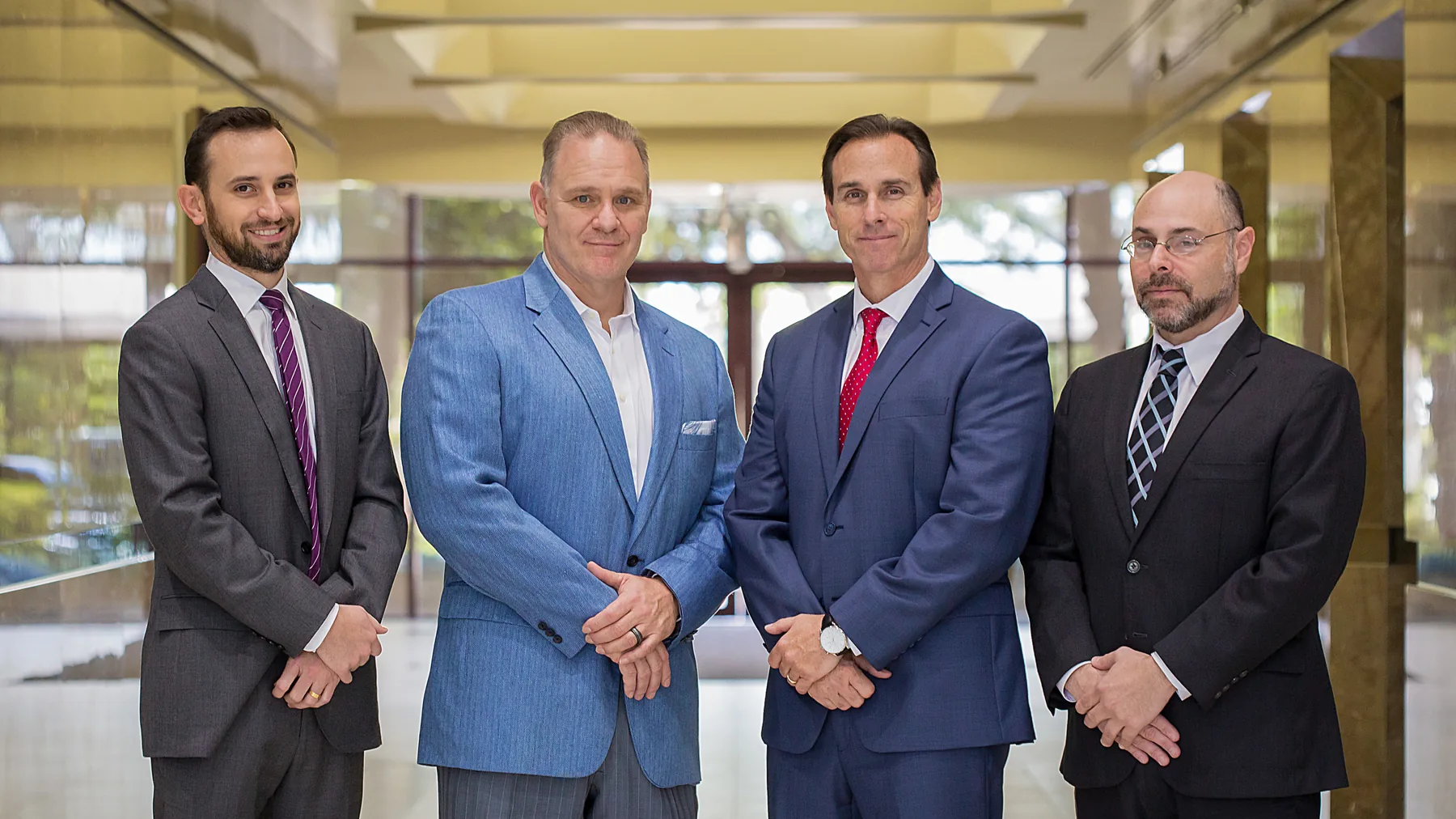
There is no shortage of personal injury and medical malpractice law firms in South Florida, but Wolf & Pravato provides the level of personal attention, legal experience, and trial readiness that many high-volume firms cannot offer. Our attorneys are licensed to practice law in Florida and have decades of combined experience representing patients injured by dental negligence throughout Palm Beach County and across South Florida.
Dental malpractice cases can involve serious injuries such as nerve damage, infections, anesthesia errors, unnecessary procedures, and failure to diagnose oral conditions. These claims often require detailed medical review and expert testimony to prove that the dentist failed to meet the accepted standard of care. Our legal team carefully investigates every case, works with qualified medical experts, and fights to hold negligent dental professionals and their insurers accountable.
We pursue compensation for medical expenses, corrective procedures, lost income, pain and suffering, and long-term complications caused by dental malpractice.
Licensed and Verified Legal Representation
Experienced Florida personal injury and malpractice attorney Richard Paul Pravato, a member in good standing with The Florida Bar since 1996, leads Wolf & Pravato. Attorney licensing and credentials can be verified through the official Florida Bar profile:
https://www.floridabar.org/mybarprofile/86150
Richard Pravato is also a Board Certified Civil Trial Attorney, a distinction awarded by The Florida Bar to attorneys who demonstrate exceptional knowledge, skill, and professionalism in civil trial law. This certification reflects our firm’s commitment to high-level advocacy in complex cases, including medical and dental malpractice claims.
When healthcare providers or insurance companies deny responsibility, having a board-certified trial lawyer on your side can make a significant difference in the outcome of your case.
What Our Clients Say About Us
“Brian and Vernae and Mr Pravato all did an excellent job handling my case in a timely manner! They also kept me informed and fought until the end! Brian was very informative!! The whole team, I couldn’t have asked for a better firm! HIGHLY RECOMMENDED.”
— Ja Morant
“Back in February I had an unfortunate accident and needed legal help. Jayne handled my case and she was amazing. I never had to guess what was happening because she always kept me updated by phone and email. The insurance and medical billing issues became complicated, but Wolf & Pravato fought for me every step of the way. They refused to let the insurance company take advantage of me, and we won. I highly recommend them to anyone who needs a personal injury attorney. They were fast, fair, and kept me informed throughout the entire process.”
— Madison Pando
Reference: https://share.google/vIaFmIWLh3vVcy1op
- Contingency fee representation — no fee unless we recover for you
Contact Our Boynton Beach Dental Malpractice Lawyers — Free Consultation
If you suffered a serious injury from dental negligence in Boynton Beach or Palm Beach County — nerve damage, a failed implant, a wrong-tooth extraction, an anesthesia complication, or a delayed diagnosis of oral cancer — the legal clock is running from the moment you discovered the connection between your injury and your dentist’s care.
Law Offices Of Wolf & Pravato offers a free, confidential consultation. We will review your dental records, assess whether your injury meets the threshold for a malpractice claim, and explain the mandatory pre-suit process and what it will take to pursue your case. There is no fee unless we recover for you. Contact us today — the 2-year limitations period does not wait.
Frequently Asked Questions About Dental Malpractice in Boynton Beach
How do I know if I have a dental malpractice case in Boynton Beach?
If a dentist’s mistake caused serious injury, nerve damage, infection, failed implants, or unnecessary treatment, you may have a valid dental malpractice claim under Florida law.
How long do I have to file a dental malpractice lawsuit in Florida?
Florida generally allows victims two years from discovering the injury to file a dental malpractice claim, subject to limited exceptions under state law.
Can I sue for nerve damage after a dental implant procedure?
Yes. If a dentist failed to properly evaluate imaging, warn about risks, or safely place the implant, you may be entitled to compensation.
What compensation can I recover in a Boynton Beach dental malpractice case?
Victims may recover compensation for corrective dental work, medical expenses, lost income, pain and suffering, and long-term complications.
Can I file a claim for a wrong tooth extraction?
Yes. Extracting the wrong tooth is often considered a preventable dental error and may support a malpractice lawsuit in Florida.
What should I do after suspected dental malpractice in Palm Beach County?
Seek immediate treatment, request copies of your dental records and imaging, and contact a dental malpractice lawyer as soon as possible.
Do I need an expert witness for a Florida dental malpractice claim?
Yes. Florida law requires a qualified dental expert affidavit before filing a dental malpractice lawsuit.
Can I sue a dental clinic or corporate dental practice in Boynton Beach?
In many cases, both the treating dentist and the dental clinic or corporate practice may be held liable for negligent treatment.
Recent Posts
- Distracted Driving Accidents in Fort Lauderdale: Proving Fault
- Truck Driver Fatigue and Hours-of-Service Violations in Florida
- When PIP Isn’t Enough: Filing a Third-Party Claim in Florida
- Rainy-Weather Crashes in Fort Myers: Who’s Responsible?
- Florida Birth Injury §766.106 Pre-Suit Notice and the 4-Year Statute of Repose
- Slip & Fall vs. Premises Liability in Miami: What’s the Difference (and Why It Matters for Your Claim)
FLORIDA’S PERSONAL INJURY ATTORNEYS FOR + 20 YEARS

FORT LAUDERDALE PERSONAL INJURY
2101 W. Commercial Blvd. Suite 1500
Fort Lauderdale, FL 33309
Phone: 844-643-7200
Fax: 954-767-0960
FORT MYERS PERSONAL INJURY
1825 Colonial Blvd,
Fort Myers, FL 33907
Phone: 844-643-7200
Fax: 239-337-4794
TAMPA PERSONAL INJURY
2202 N. West Shore Blvd. Suite 200
Tampa, FL 33360
Phone: 844-643-7200
Fax: 954-767-0960
MIAMI PERSONAL INJURY
1111 Brickell Avenue
11th Floor
Miami, FL 33131
Phone: 844-643-7200
WEST PALM BEACH PERSONAL INJURY
2101 Vista Parkway. Suite 4500
West Palm Beach, FL 33411
Phone: 844-643-7200
Fax: 954-767-0960
BOYNTON BEACH PERSONAL INJURY
1375 E Gateway Blvd,
Boynton Beach, FL 33426
Phone: 844-643-7200
Fax: 954-767-0960