
Florida Wrongful Death Lawyer
The worst call you will ever take is followed within days by paperwork, and by people who want statements. We can take it from here. Call 954-522-5800 for a free consultation. You pay us nothing unless we win. We have won these claims for Floridians from the Keys to the Panhandle, and we work them from five offices between Fort Lauderdale and Fort Myers.
A Florida wrongful death claim is brought by the personal representative of the estate, on behalf of the survivors and the estate together. That appointment happens in probate and it has to come first. Families sometimes lose months discovering this, which is one reason to ask early even if you are not ready to decide anything.
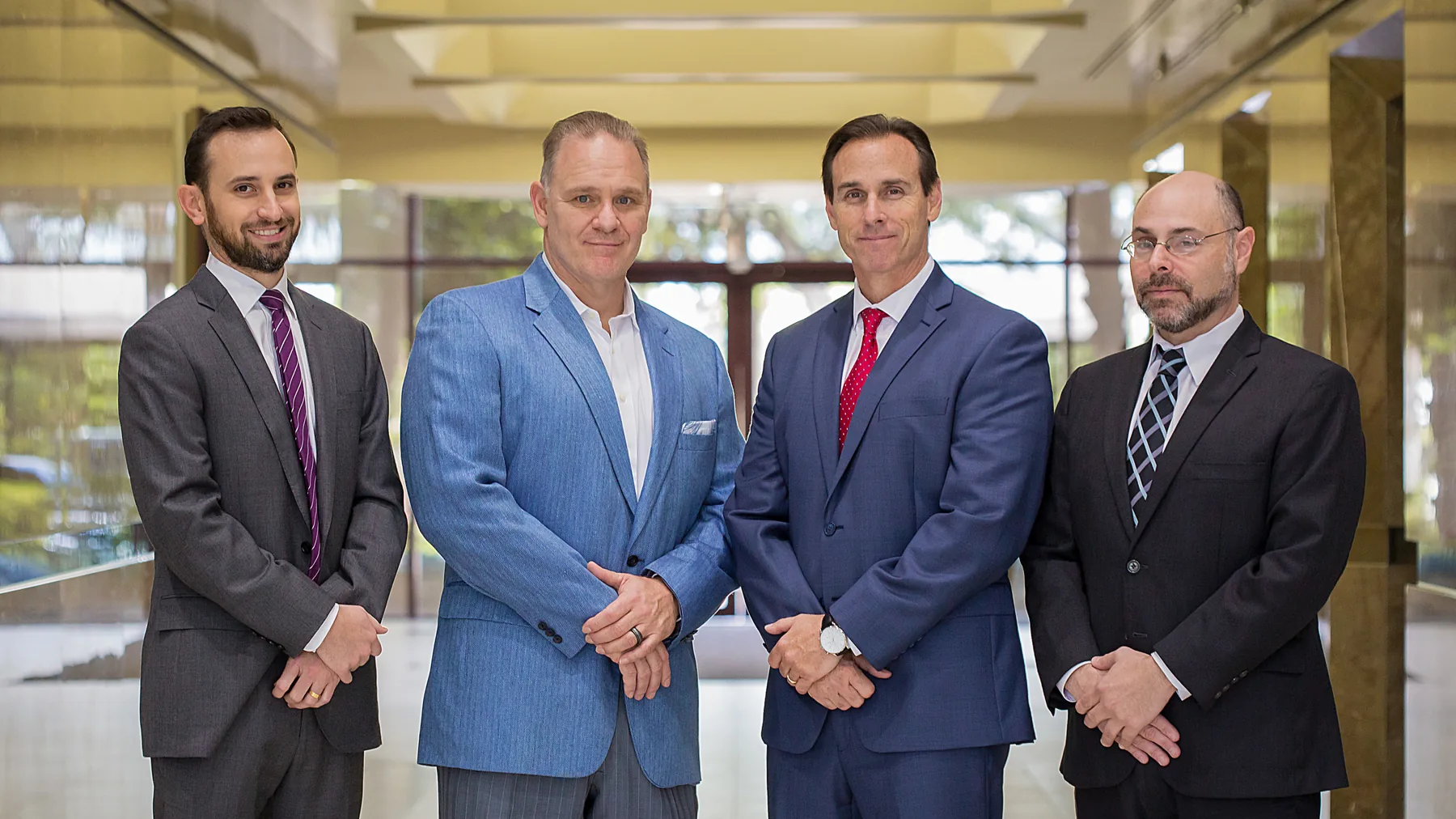
Winning wrongful death claims for Floridians for more than thirty years
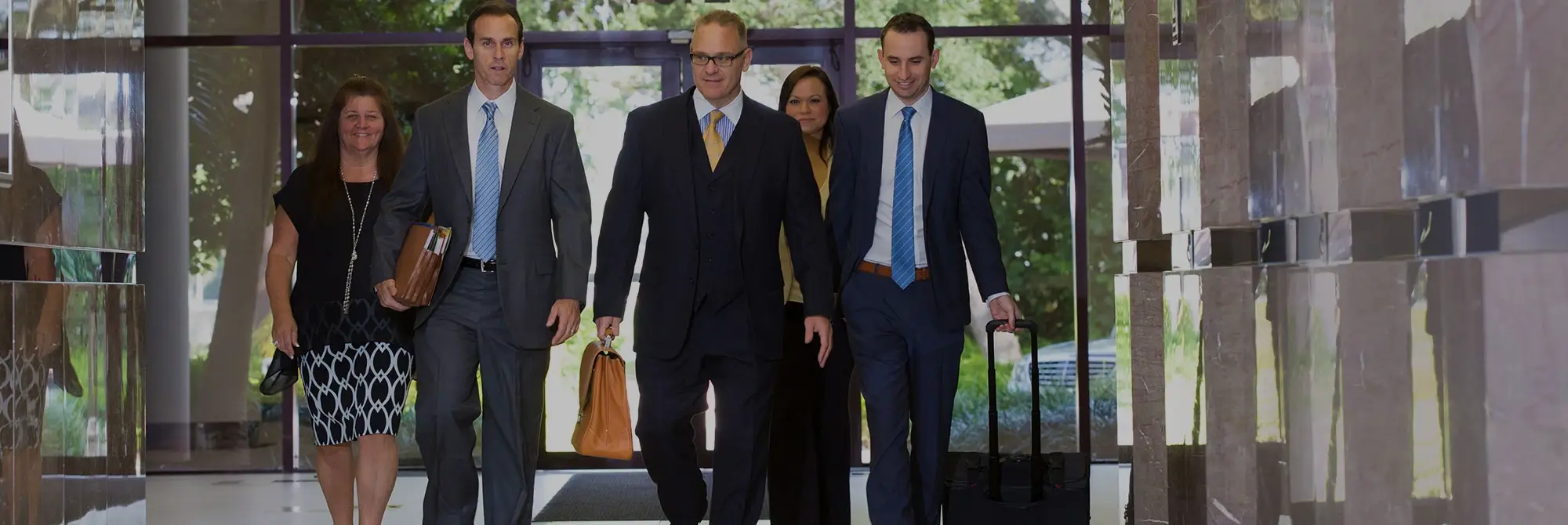
A wrongful death claim arrives at a hard time, usually while the bills are still coming in and nobody has told you what happens next. You do not have to work it out on your own. The attorneys in this photograph have won these cases across Florida since 1993, from the Keys to the Panhandle, and one of them will handle yours from the first call to the last check.
Call 954-522-5800 for a free consult and a trial lawyer will tell you today whether you have a case. You pay us nothing unless we win, and we work from five offices between Fort Lauderdale and Fort Myers.
Meet the attorneys →What Florida law does with a wrongful death claim
The other side had counsel within days, and you are being asked for paperwork while you are still arranging a service. Meanwhile the mortgage is due, the income has stopped, and nobody has given you a straight account of what actually happened. Getting that account, and providing for the people left behind, is what we do from the first call.
A wrongful death claim in Florida is built differently from every other injury case, and the differences are structural rather than emotional. One person brings it on behalf of everybody. A statute, not the family, decides who recovers and what they recover. Below is how that works, in the order it comes up.
A Florida wrongful death claim must generally be filed within two years of the death. It is brought by the personal representative of the estate, not by the family directly, and Florida decides by statute which survivors may recover and for what. Opening the estate takes time, so it starts before the claim does.
The deadline that ends a Florida wrongful death claim
Two dates matter, and families regularly find out about the second one too late to use it.
Two years, from the date of death
Most claims from an accident on or after March 24, 2023 have to be filed within two years. An older accident keeps the four years that applied when it happened. For a death claim the two years in Fla. Stat. § 95.11 run from the date of death rather than from the date of the injury, which matters enormously where somebody was hurt and lived for months afterward.
Where a death was caused by murder or manslaughter the statute allows an action to be brought at any time. That is a narrow exception and it does not extend to anything else.
The estate has to exist first, and that takes weeks
Under Fla. Stat. § 768.20 the claim is brought by the personal representative of the decedent's estate, on behalf of the survivors and the estate. Nobody can file anything until a probate court has appointed one, and that is a separate proceeding with its own paperwork, its own court and its own pace.
Where there is a will naming somebody it is faster. Where there is not, or where family members disagree about who should serve, it can take months. Starting it early costs nothing and starting it late costs the case.
A pending injury case does not simply continue
Where somebody was already suing over the injury and then died from it, Fla. Stat. § 768.20 provides that the personal injury action does not survive and any pending action abates. What replaces it is a wrongful death action brought by the personal representative, with a different set of damages and a different set of claimants. It is a change of case, not a change of caption.
A government defendant, and a shorter window
Where a public body is answerable, Fla. Stat. § 768.28 requires written notice to the agency and, in most cases, to the Department of Financial Services. The presentment period is two years for a wrongful death claim rather than the three years an injury claim gets, the agency is allowed 90 days to respond in a death claim, and the same caps apply: $200,000 per person and $300,000 per incident.
Who can be held answerable
Who answers depends entirely on how the death happened, and the wrongful death act is the vehicle rather than the claim. The underlying case is still a crash case, a premises case or a malpractice case.
- Whoever would have been answerable for the injury. The driver, the trucking company, the property owner, the physician, the manufacturer. Death does not change who is responsible; it changes who brings the claim and what can be recovered.
- An employer, where the person was working. A death on the job is usually a workers’ compensation matter against the employer and a separate claim against anybody else who contributed: a subcontractor, an equipment manufacturer, a property owner, a driver. The second claim is where the real recovery is, and it is easy to miss while the first is being processed.
- A business that served alcohol, in two narrow cases. Fla. Stat. § 768.125 allows a claim only where alcohol was sold or furnished to somebody under 21, or knowingly served to a person habitually addicted to it. Those are the two, they are provable from receipts and staff, and they need somebody asking within days rather than months.
- A public body. A road authority, a public hospital, a school district, a transit agency, a sheriff’s office. All of it runs through Fla. Stat. § 768.28, with the notice, the waiting period and the caps.
- More than one defendant, more often than in an injury case. Fatal events tend to involve several failures at once. Finding all of them matters more here than anywhere, because the caps and the policy limits on a single defendant are frequently a fraction of what the loss is worth.
How a Florida wrongful death case actually runs
The first month of a wrongful death case is mostly probate and evidence, and almost none of it looks like a claim yet.
- Somebody is appointed to represent the estate. A petition in the probate court in the county where the person lived, letters of administration issued, and a personal representative with authority to act. Every other step waits on this one, which is why it goes first even while a family is still arranging a funeral.
- The evidence gets preserved, on the same clocks as any other case. Vehicles, video, employer records, medical records, the scene. None of these pause because there has been a death, and several of them are shorter than the time it takes to open an estate. They run in parallel rather than in sequence.
- The medical examiner and the autopsy. Where there is one, the report and the underlying materials matter a great deal, and they take time to be released. The cause of death stated there frames everything that follows, and it is worth understanding early whether it will be contested.
- The survivors are identified, by statute rather than by family. Fla. Stat. § 768.18 defines survivors as the spouse, children and parents, and any blood relative or adoptive sibling who was partly or wholly dependent on the person for support or services. The same section defines minor children as children under 25 regardless of the age of majority, which surprises nearly everybody and regularly changes what a claim is worth.
- Any presuit steps for the underlying claim. Where the death came from medical care, the presuit notice and investigation under Fla. Stat. § 766.106 apply and add months before suit can be filed. Where a public body is involved, its notice period applies. These are worked out at the start, because they set the real timetable.
- The demand, and then suit. One action, brought by the personal representative, covering the claims of all survivors and of the estate. Florida does not allow each family member to bring their own, which avoids a family being split into competing cases.
- Dividing what is recovered. A settlement has to be split among the survivors and the estate, and where minors are involved or the survivors do not agree, that division goes to a court for approval. It is a real stage of the case and it is worth knowing about before it arrives rather than during it.
What the claim is worth, and how that number is built
This is the part of Florida law that most needs explaining, because what the family can recover is not what most people assume, and it is decided by which box each person falls into rather than by how close they were.
What a surviving spouse may recover
Under Fla. Stat. § 768.21 a surviving spouse recovers for the loss of the person's companionship and protection and for mental pain and suffering from the date of the injury, along with the value of lost support and services. It is the broadest of the categories.
What children may recover
Minor children recover for lost parental companionship, instruction and guidance and for mental pain and suffering from the date of injury, plus lost support and services. Because Fla. Stat. § 768.18 defines minor children as under 25, a 23-year-old is a minor child for this purpose.
Adult children recover the same things only where there is no surviving spouse. Where there is a surviving spouse, an adult child recovers nothing for their own grief, which is the single hardest thing to explain to a family and it is the law as written.
What parents may recover
Parents of a deceased minor child recover for mental pain and suffering from the date of the injury. Parents of an adult child recover for it only where there are no other survivors.
The exception that applies to medical negligence
Fla. Stat. § 768.21 carries a subsection that removes those two categories entirely where the death was caused by medical negligence: an adult child cannot recover for the loss of a parent, and a parent cannot recover for the loss of an adult child. It has been debated in the Legislature repeatedly and it remains the law.
It means an identical loss produces a very different claim depending on how the person died, and it is a reason to understand the legal position before deciding whether a case is worth bringing.
What the estate itself recovers
Lost earnings from the date of injury to the date of death, the value of earnings the person would reasonably have accumulated had they lived, and the medical and funeral expenses paid by the estate. Where a spouse or children survive, the rules on accumulations differ, and it is one of the places a claim is undervalued by people handling it themselves.
What still comes off the top
Fault is divided under Fla. Stat. § 768.81, so the share of blame placed on the person who died reduces the recovery. Health insurance, Medicare and Medicaid are repaid from it, with Fla. Stat. § 768.76 keeping those payments from being deducted from the award because the repayment right already exists.
What changes from one part of Florida to another
Two things move from county to county on a death claim, and one of them is a court most families have never dealt with.
The probate court is local, and they are not all the same
The estate is opened where the person lived, and how quickly a personal representative is appointed varies by county and by how busy that division is. Where the family disagrees about who should serve, it varies a great deal more. Because nothing else can start until it is done, this is frequently what sets the pace of the whole case.
The injury case is filed where the event happened
Fla. Stat. § 47.011 puts the underlying claim in the county where the death occurred or where the defendant is, which is regularly not the county the estate was opened in. Two counties, two courts and two timetables on one matter is normal here and it is not a sign anything has gone wrong.
Juries differ, and on a death claim it shows most
The heads of loss in a wrongful death case are the ones with no invoice attached, which is exactly where jury attitudes vary most from one part of Florida to another. Every defense carrier in the state prices that difference, and any honest assessment of a case has to as well.
A proven record, anywhere in Florida
Our five offices run from Fort Lauderdale to Fort Myers, and we act statewide. A family does not need to be near one of them for us to take the case.
The insurance behind a Florida wrongful death claim
What can actually be collected depends on the policies behind whoever caused the death, and on a fatal claim the limits are reached far more often than in an injury case.
The at-fault party’s liability coverage, and how little may exist
Where the death came from a crash, Florida required that driver to carry Fla. Stat. § 627.736 benefits and $10,000 of property damage coverage under Fla. Stat. § 324.022. Coverage for injuring or killing somebody else is not required of an ordinary private car at all, which means a driver can cause a death and be fully legal with no policy that pays the family anything.
Uninsured and underinsured motorist coverage
On a fatal crash this is regularly where the real recovery is. Fla. Stat. § 627.727 requires an insurer to offer it with every liability policy, allows it to be left off only where the customer signed a written rejection, and sets its limits to match the bodily injury liability limits bought. Whether the limits on several vehicles stack is decided by a separate signed form and can multiply what is available.
Finding every layer, which matters more on a death claim
Fla. Stat. § 627.4137 forces disclosure of the limits of each known policy, including excess and umbrella coverage, in a sworn statement within 30 days. Where a claim is worth more than the first policy found, the case becomes a search for the second and third: an employer’s policy, a vehicle owner’s policy, a commercial policy behind a property or a contractor.
A government defendant, and the cap
Fla. Stat. § 768.28 limits a public body to $200,000 per person and $300,000 per incident, whatever the loss is worth, with anything beyond that requiring an act of the Legislature. On a wrongful death claim that cap is frequently a small fraction of the loss, which is a hard conversation and one worth having at the start rather than at the end.

How the Florida Wrongful Death Act works
Who the statute lets recover
Fla. Stat. § 768.21 sets out which survivors may claim and what each may claim for. A surviving spouse, minor children and, in defined circumstances, adult children and parents each have different entitlements, and those entitlements are not intuitive.
The estate itself can also recover certain losses, including medical and funeral expenses paid by the estate and, in some circumstances, lost earnings and accumulations. We would rather walk a family through exactly where they sit before anyone signs anything.
The personal representative comes first
The action is brought by the personal representative appointed for the estate. Where there is a will, it usually names one. Where there is not, the court appoints under the statutory order of preference. Until that appointment exists, there is no one with standing to file.
This is procedural rather than dramatic, but it takes time, and it is the step families most often do not know about. Starting it early costs nothing and removes a delay later.
What these cases arise from
- Fatal traffic and commercial truck collisions
- Deaths caused by dangerous or defective products
- Fatal falls and unsafe premises, including negligent security
- Deaths following medical negligence, which is governed by its own pre-suit process
- Funeral home and cemetery negligence, where we have a $3,500,000 jury verdict
A note on medical negligence
Where a death follows medical care, chapter 766 imposes a separate pre-suit investigation and notice process before a claim can be filed, and it also sits outside the modified comparative negligence bar introduced in 2023. It is a different track with different deadlines, and it should not be approached on the same timetable as a traffic case.

What we have recovered on these claims
Matters this firm handled in this area of law. Figures are gross recoveries, before attorney fees, costs and medical liens come out of them.
A father and grandfather died in a fall down a makeshift stairwell built when an owner split a townhouse into two units without permits.
Broward County jury verdictEvery verdict and settlement we publish, with the press coverage for the ones that were reported. No result predicts another case: every claim turns on its own facts, its own evidence and the insurance actually available.
Who would handle your case
Your case is handled by one of the trial lawyers below, and you will know which of them has it from the first conversation. They do wrongful death work week in and week out, they will tell you what your case is worth and why, and they will be straight with you about the parts that are hard.
-
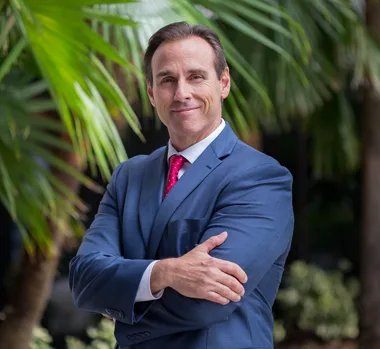 Richard P. Pravato Founding & Managing Attorney Board Certified in Civil Trial Law by The Florida Bar since 2004, and by the National Board of Trial Advocacy. Injury cases exclusively since 1996. Full profile →
 -
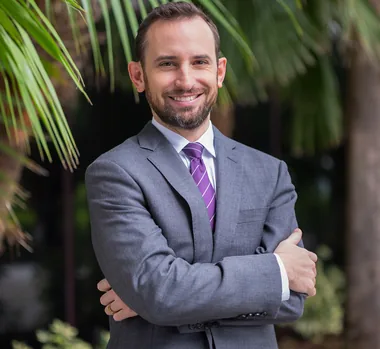 Brett J. Yonon Senior Trial Attorney Selected to Florida Super Lawyers in 2024 and 2025. Brett Yonon is who this firm puts on a catastrophic injury or a death in the family, and he has tried those cases to verdict. Full profile →
Wrongful Death questions we are asked
Who is allowed to bring a wrongful death claim in Florida?
The personal representative of the deceased person’s estate, acting on behalf of the surviving family members and the estate. Individual relatives do not each file their own suit. Fla. Stat. § 768.21 then decides which survivors may recover and what each of them may recover for.
What can a family actually recover?
Depending on the survivor, it can include lost support and services, loss of companionship and protection, mental pain and suffering, and medical and funeral expenses they paid. The estate may separately recover certain losses. The categories are set by statute rather than negotiated, which is why an early read of where a family sits is worth having.
How long do we have?
Generally two years from the date of death for most wrongful death claims. Cases involving medical negligence and claims against government entities run on their own timetables with their own pre-suit requirements. Because those tracks differ, it is worth asking early rather than assuming the two-year figure covers your situation.
We have not been appointed personal representative yet. Is it too early to call?
No, and that is precisely when the call is most useful. The appointment is a probate step that takes time, and evidence in the underlying case is aging while it happens. We can explain the sequence and begin preserving what matters without anyone committing to anything.
Questions that apply to any Florida injury claim, fees, deadlines, recorded statements and shared fault, are answered on our injury claim FAQ. What we have recovered is on recent case results.
Five Florida offices
We take wrongful death claims statewide. Each market below has its own page on this claim, with that office's address, its direct number and the court a case there is filed in.
Fort Lauderdale wrongful death claims
2101 W Commercial Blvd, Fort Lauderdale. Serving Broward County.
View →Miami wrongful death claims
1111 Brickell Avenue, Miami. Serving Miami-Dade County.
View →West Palm Beach wrongful death claims
2101 Vista Parkway, West Palm Beach. Serving Palm Beach County.
View →Boynton Beach wrongful death claims
1375 E Gateway Blvd, Boynton Beach. Serving Palm Beach County.
View →Fort Myers wrongful death claims
1825 Colonial Blvd, Fort Myers. Serving Lee County.
View →Other claims we handle
Three of the closest to this one. The full list is on our Florida practice areas page.
Tell us what happened
A lawyer will listen, tell you what Florida law does with those facts, and be straight with you about whether it is worth bringing. If it is not, we will say so.
We take cases anywhere in Florida.