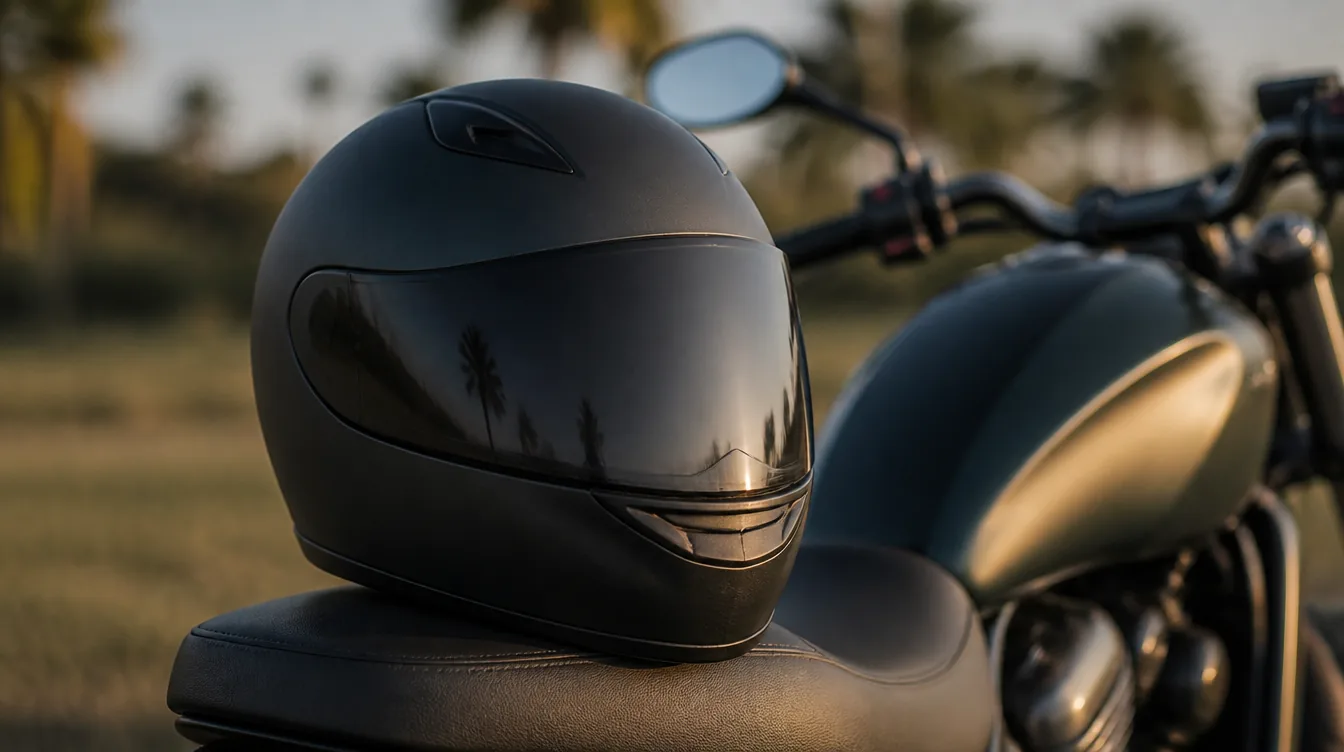
Florida Motorcycle Helmet Law: Who Has to Wear a Helmet?
 By Richard P. Pravato, Board Certified in Civil Trial Law Published October 3, 2025 Updated September 15, 2026
You are over 21, you have ridden for years, and you would rather ride without a helmet. Florida does let you make that choice, which surprises riders who assume every state requires one. The Florida motorcycle helmet law is not a flat rule either way.
The state attaches a single condition to that choice, and the condition is about insurance rather than about the helmet. Ride bare-headed without that coverage and you are breaking the law without knowing it.
I have handled Florida motorcycle injury cases since 1996, and this is the rule I spend the most time correcting in a first meeting.
Florida requires a helmet on every rider, then excuses one group. Under Florida Statute 316.211, a person over 21 may ride bare-headed, but only while covered for at least $10,000 in medical bills from a motorcycle crash.
- At 21 and under there is no exception. The helmet goes on, and it has to meet the federal safety standard.
- Eye protection is required for whoever is driving the motorcycle, at every age, and no insurance policy replaces it.
- Going without a helmet is not a crime and puts no points on your license. It is a nonmoving violation.
How I know: the statute runs one page, and it says exactly that. The rule telling everybody to wear one comes first. The riders who are allowed to skip it are added afterward, as an exception.
By the end you will know who has to wear one, what the $10,000 rule really asks for, the eye protection rule that has no exception, what a ticket costs, and what an adjuster does with a bare head after a crash.
Key takeaways
- Anyone 21 and under must wear a helmet meeting the federal standard, with no way to buy out of it.
- Over 21 you may ride bare-headed only while you carry at least $10,000 in medical benefits for motorcycle injuries.
- A motorcycle registered to a rider under 21 has to carry a license plate of its own design and color.
- Riding legally without a helmet does not bar a claim, but the insurance company will still argue your injuries were partly your own doing.
Florida motorcycle helmet law: who has to wear one
It opens with everybody. Nobody may drive or ride on a motorcycle without a helmet that passes the federal crash test, which the law calls Safety Standard 218. Passengers are covered by that rule the same as drivers.
Then one group gets excused. A person over 21 may ride bare-headed while covered for at least $10,000 in medical bills from a motorcycle crash. Watch the age wording. At exactly 21 you are not over 21 yet.
One more thing young riders run into. A bike registered to somebody under 21 has to carry a license plate of its own design and color, so an officer can tell at a glance which riders get no exception.
What the $10,000 rule actually asks for
The policy has to pay at least $10,000 for injuries you get in a motorcycle crash. That wording gets misquoted constantly.
Two things follow. It does not have to be a motorcycle policy, and it does not have to come from your bike insurer. It does have to cover motorcycle crash injuries, and plenty of coverage leaves those out.
So if you plan to ride bare-headed, ask your agent in writing whether your coverage pays for motorcycle crash injuries, and whether at least $10,000 is there. Plenty of health plans leave motorcycle injuries out, and riders find that out at the worst time.
Whether you need any motorcycle policy at all is a separate question, and I answer it in the post on motorcycle insurance in Florida.
Eye protection has no exception at all
Helmets get all the attention, and the second half of that same statute barely gets read. Whoever is driving the bike has to wear eye protection the state approves. Every age. No insurance gets you out of it.
A windshield on the bike does not count, because the law asks for something worn over your eyes. Riders who legally skip the helmet are the ones who get caught, because the face shield they used to rely on was attached to the helmet.
What a ticket costs
Riding without a required helmet or eye protection is not a crime. It is a traffic ticket, of the kind the law calls a nonmoving violation.
The word nonmoving is what matters here, more than the size of the fine. Under Florida Statute 322.27, points go on your license only for moving violations. This one puts none on your license, so it does not push you toward a suspension the way a speeding ticket would.
What an adjuster does with a bare head
Now the part that costs real money. Riding legally without a helmet does not bar your claim. What it gives the other side is an argument that you made your own injuries worse, and Florida allows them to make it.
Under Florida Statute 768.81, your payment gets cut by your share of the blame. So an adjuster arguing about your helmet is arguing about a percentage, whether or not your head was ever hurt. I have seen it raised in cases about an arm and a leg, and the same argument runs on riders who were between lanes.
You beat that argument with a doctor, not with words. A doctor compares your actual injuries against the parts of the head a helmet protects, and says whether a helmet would have changed anything. That opinion has to go into the file early.
It is worth remembering how often the first version of a crash is wrong. In a fatal Miami-Dade case, the police first blamed the rider who died.
We brought in a crash reconstruction expert, went over the scene and the vehicles ourselves, and found witnesses who had not wanted to come forward. What they described was a different crash. We settled that case, and the money provides for that rider's children.
Questions riders ask me
Does my passenger need a helmet if I do not?
Your passenger is judged on their own age and their own coverage. Over 21 with at least $10,000 in medical benefits for motorcycle injuries, they may ride bare-headed. At 21 or under, the helmet goes on no matter what you are wearing.
Is a novelty helmet good enough?
No. The statute asks for headgear meeting the federal standard, and a novelty shell does not meet it. Look for the certification label inside before you buy.
Should I wear one even though I do not have to?
Yes, and I say that as the person who handles these cases afterward. The exemption is about what the state can write you a ticket for. It has nothing to do with how well your head is protected if you go down.
Hurt while riding in Florida?
Wolf & Pravato represents hurt riders across Florida, from offices in Fort Lauderdale, Miami, West Palm Beach, Boynton Beach and Fort Myers. If an adjuster has already brought up your helmet, get somebody reading your medical records before they finish building that argument.
Request a free case review. There is no fee unless we win money for you.
This article is general information about Florida law, not legal advice, and every case turns on its own facts. Prior results do not guarantee a similar outcome.
Related reading
 Road Accidents
Florida Motorcycle vs. Car Accident Statistics
Richard P. Pravato Road Accidents Motorcycle vs. Large Vehicle: Understanding the Legal Complexities of Your Accident
Richard P. Pravato  Road Accidents
 Lakeland Motorcycle Accidents on US-98 and Florida's Backroads
Richard P. Pravato