

Florida Catastrophic Injury Lawyer
The hospital discharges you and the rest of your life begins, and nobody has costed it. We can take it from here. Call 954-522-5800 for a free consultation. You pay us nothing unless we win. We have won these claims for Floridians from the Keys to the Panhandle, and we work them from five offices between Fort Lauderdale and Fort Myers.
The first offer in a catastrophic case arrives before anyone knows what the injury will cost, and accepting it ends the claim permanently. A settlement cannot be reopened when the care turns out to cost more than expected. That is precisely why the offer comes early.
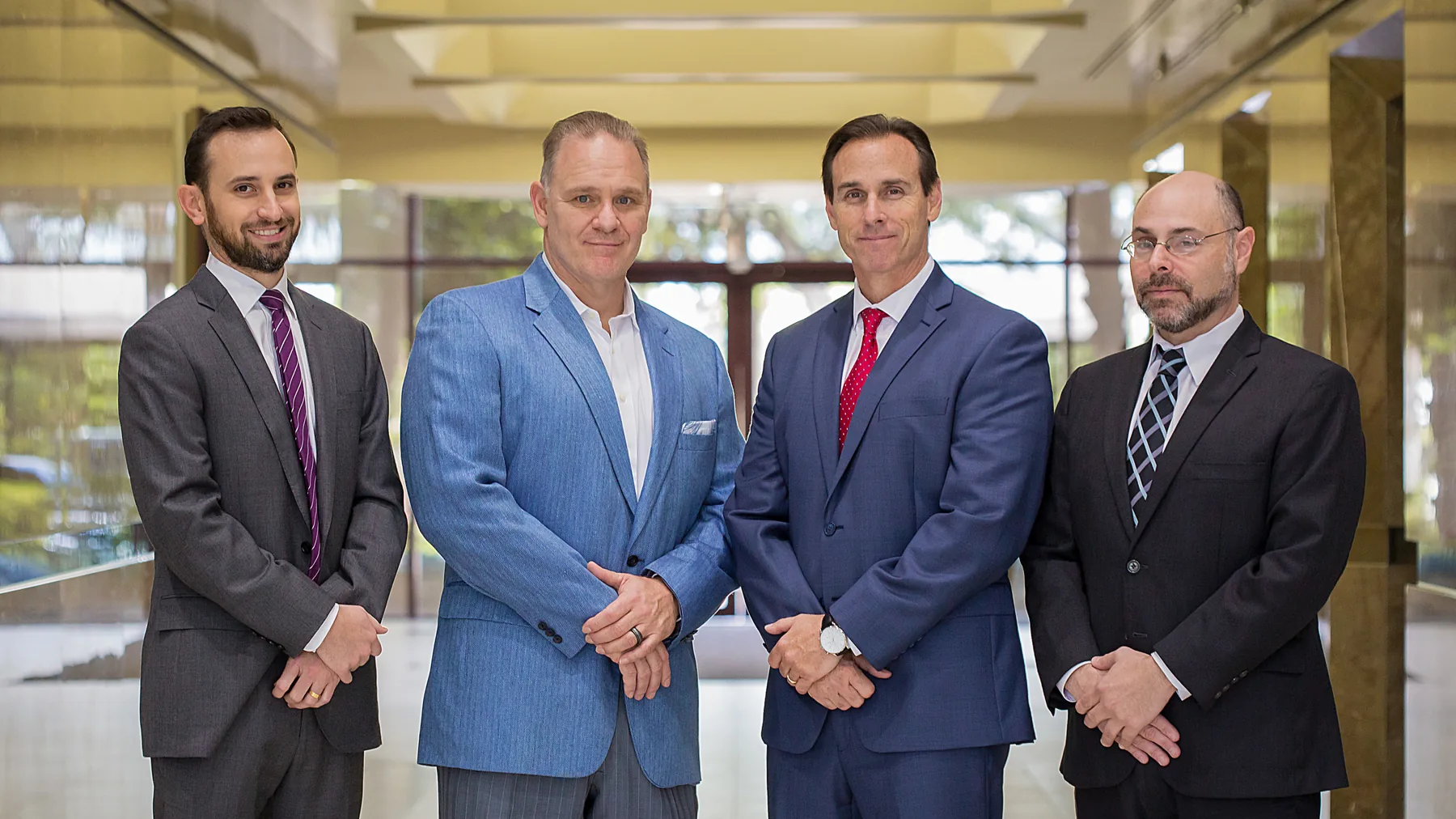
Winning catastrophic injury claims for Floridians for more than thirty years
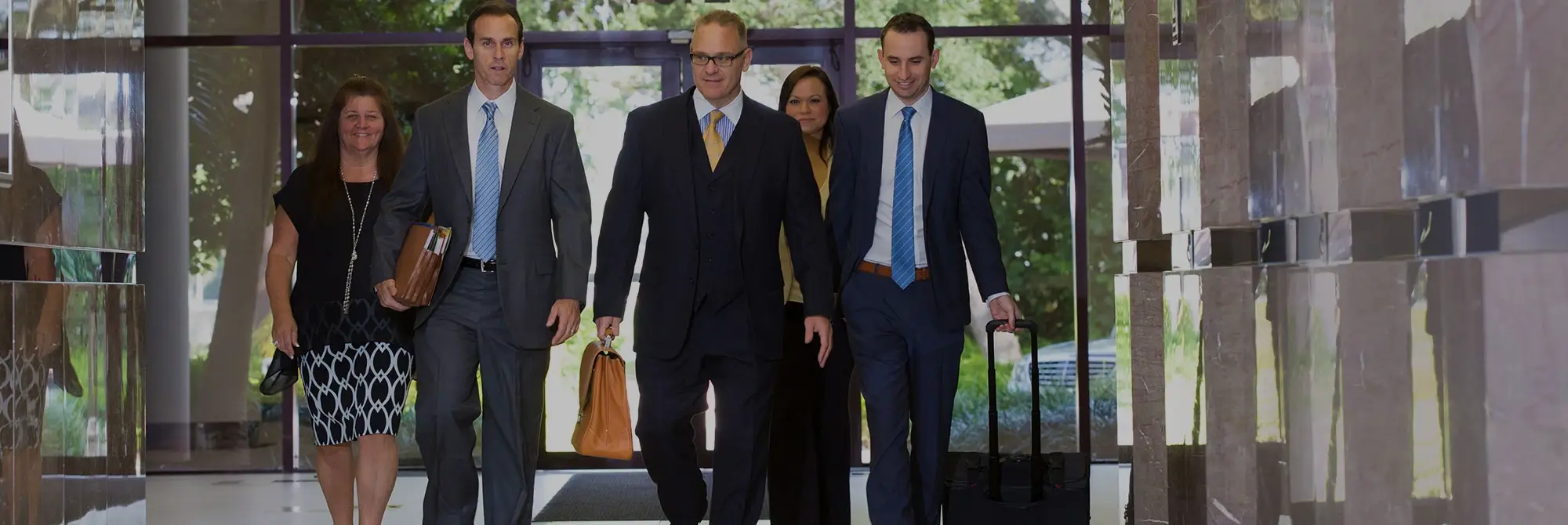
A catastrophic injury claim arrives at a hard time, usually while the bills are still coming in and nobody has told you what happens next. You do not have to work it out on your own. The attorneys in this photograph have won these cases across Florida since 1993, from the Keys to the Panhandle, and one of them will handle yours from the first call to the last check.
Call 954-522-5800 for a free consult and a trial lawyer will tell you today whether you have a case. You pay us nothing unless we win, and we work from five offices between Fort Lauderdale and Fort Myers.
Meet the attorneys →What Florida law does with a catastrophic injury claim
The insurer will make an early offer that looks large next to the bills you have seen so far. Meanwhile nobody has costed the surgeries still ahead, the equipment, the changes the house needs, or the work you will never do again. Putting a real number on decades rather than months is our job, and we start the day you call.
When an injury is permanent, the case stops being about what happened and becomes about the next forty years: the care, the equipment, the housing, the work that will not happen, and how a family lives. Below is how that is established and paid for, and why the search for coverage matters more here than anywhere.
A catastrophic injury claim is valued on a lifetime rather than on a set of medical bills. Florida generally gives two years to file. What decides the recovery is usually how much insurance can be found, because the loss almost always exceeds the first policy anybody identifies.
The deadline that ends a Florida catastrophic injury claim
The deadlines are the ordinary ones. What is not ordinary is that the injured person frequently cannot act on them, and somebody has to be appointed who can.
Two years to file
Most claims from an accident on or after March 24, 2023 have to be filed within two years. An older accident keeps the four years that applied when it happened. The period is in Fla. Stat. § 95.11. Where somebody died, the claim is a wrongful death action with two years running from the date of death.
Where a public body is answerable, Fla. Stat. § 768.28 requires written notice to the agency and, in most cases, to the Department of Financial Services, a waiting period before suit, and caps of $200,000 per person and $300,000 per incident regardless of the loss.
Where the injured person cannot make decisions
Somebody with a severe brain injury or in a minimally conscious state cannot instruct anybody, and a guardian has to be appointed by a court before the claim can be run properly. Fla. Stat. § 95.051 tolls a limitations period for a plaintiff adjudicated incapacitated before the cause of action arose, in defined circumstances and subject to an outer limit of seven years from the event, which is far narrower than families assume.
Starting the guardianship early costs little and starting it late costs time nobody has.
The evidence, on the usual short clocks
Camera footage in days, vehicles and equipment before repair, incident and maintenance records in months. A catastrophic case is proved on liability like any other, and the scale of the loss does not slow anybody else's deletion schedule.
The medical picture, which needs a year or more
Nobody can cost a lifetime until the treating physicians can say what is permanent. That is a reason to file rather than to settle, because filing starts a court timetable while the medicine catches up, and a settlement signed early cannot be reopened when the picture becomes clear.
Who can be held answerable
In an ordinary claim the search stops when a defendant with adequate coverage is found. Here it does not stop, because there is rarely a policy large enough on its own.
- Everybody who contributed, not the most obvious one. Florida divides fault between parties rather than requiring a single wrongdoer, so adding a defendant does not weaken the case against the first. Leaving one out simply removes their insurance from the table.
- Employers, owners and companies behind individuals. A driver on the clock brings in an employer. A vehicle owner is answerable under Florida's dangerous instrumentality rule. A contractor works for somebody. In each pair, the company is where the coverage is.
- Commercial defendants, wherever one exists. A truck company, a property owner, a manufacturer, a contractor, a bar in the narrow cases the statute allows. Any of these carries coverage in a different order of magnitude from a private individual.
- Public bodies, with the caution the caps require. A road authority, a transit agency, a public hospital or a school district may be genuinely at fault, and Fla. Stat. § 768.28 caps what any of them pays at $200,000 per person and $300,000 per incident. A capped defendant is still worth pursuing and is never the plan on its own.
- Your own insurers, which people do not think of as defendants. Uninsured and underinsured motorist coverage is a claim against your own carrier, and on a catastrophic injury it is frequently the largest single recovery in the case. It is set out further down this page.
How a Florida catastrophic injury case actually runs
A catastrophic case is run differently from the first week, because the work that establishes its value takes a year and cannot be started at the end.
- Liability is investigated as though it were the whole case. Reconstruction, scene work, preservation letters, and the records that show what a company knew. The size of the loss makes it certain the other side will fight fault hard, because on this scale a percentage is worth more than most whole cases.
- The coverage search runs in parallel and does not stop. Fla. Stat. § 627.4137 requires the limits of each known policy including excess and umbrella layers to be disclosed in a sworn statement within 30 days of a written request. Household policies, employer policies, owner policies, contractor policies and umbrella layers are each found by asking rather than by being told.
- The treating team is followed, not directed. Acute care, then rehabilitation, then the long plateau where the physicians can finally say what is permanent. The claim waits for that, and the file is built alongside it rather than afterward.
- A life care plan is prepared. A qualified planner working from the treating physicians sets out every element over a lifetime: therapy, medication, equipment and its replacement cycles, attendant care, transport, home modification and the surgeries that are foreseeable. It is the document the case is built on.
- An economist and a vocational assessment. What the person would have earned, what they can still earn if anything, and what the life care plan costs in today's money. Both are evidence rather than argument, and both are attacked hard by the defense, so they have to be defensible.
- The liens are worked on early. Health insurance, Medicare, Medicaid and any compensation carrier will be repaid out of the recovery. On claims of this size those figures are large, they are negotiable, and reducing them is worth as much to a family as an increase in the settlement.
- How the money will be held is decided before settlement. Where somebody relies on means-tested benefits, a lump sum paid the wrong way disqualifies them from the programs their care depends on. Structuring it properly, including where a trust or a structured settlement is appropriate, is part of resolving the case rather than something arranged afterward.
- Suit, mediation and trial. Fla. Stat. § 47.011 puts the case where it happened or where the defendant is. Most Florida courts require mediation, and Fla. Stat. § 768.79 lets either side serve a formal offer with attorney fees running from a refusal the judgment beats by at least 25 percent. Cases of this size settle when the other side believes the trial will happen.
What a lifetime costs, and how it is proved
Nothing here is guessed. Every element below is established by somebody qualified, in writing, and every one of them is contested by the defense.
The care ahead, costed over a lifetime
Attendant care is usually the largest single item, because somebody has to be there. Then therapy, medication, equipment and its replacement cycles, and the surgeries that are foreseeable. Costed by a life care planner and brought to present value by an economist.
Housing, transport and the ordinary business of living
A house that a wheelchair can be used in, a vehicle somebody can be transported in, and the modifications and replacements those need over decades. Families frequently do not know these are recoverable and do not raise them.
The working life that will not happen
Established from what the person did, what they were on course to do, and what the vocational evidence says is still possible. On a young person this is regularly a very large number and it is proved with evidence rather than asserted.
Pain, suffering and the loss of an ordinary life
The head of loss with no invoice, and in these cases the one that carries the most weight with a jury. It is established from the detail of a life: what somebody did before, what they cannot do now, and what a day actually looks like.
What a family loses
A spouse has a claim of their own in Florida for the loss of companionship and services, and it is regularly left out of an early offer. So is the cost of a family member giving up work to provide care.
The fault split, and the line at 50 percent
Fault is divided under Fla. Stat. § 768.81 and, since March 2023, a person found more than 50 percent responsible for their own harm recovers nothing at all. On a claim of this size a single percentage point is worth more than most complete cases, which is why the liability work is done as thoroughly as the damages work.
What changes from one part of Florida to another
The law is the same across Florida. Where a family lives changes what care costs, what is available and how a case is actually run.
Rehabilitation and specialist care are not evenly distributed
Spinal cord and brain injury programs, and the specialists who supervise them, cluster in the larger metropolitan areas. A family in a smaller market frequently travels for care or goes without it, and both of those are costs that belong in the life care plan rather than being absorbed quietly.
Attendant care costs differ, and the plan has to reflect it
Hourly rates for home care vary across the state and over time. A life care plan costed on the wrong market understates the claim, and the defense will use local rates where they are lower.
Housing, and what modification actually involves
Older housing stock, second-floor units and buildings without lifts change what accessibility requires, and in some markets buying a suitable property is cheaper than adapting an unsuitable one. That is a costed comparison rather than a preference.
A proven record, anywhere in Florida
Our five offices run from Fort Lauderdale to Fort Myers, and a family anywhere in the state can instruct us.
The insurance behind a Florida catastrophic injury claim
Almost every catastrophic case comes down to the same problem: the loss is larger than the first policy found. The work is finding the rest.
Your own uninsured motorist coverage, where a vehicle was involved
Florida does not require a driver to carry any coverage for injuring somebody else, only Fla. Stat. § 627.736 benefits and $10,000 of property damage liability under Fla. Stat. § 324.022. Uninsured and underinsured motorist coverage under Fla. Stat. § 627.727 has to be offered with every liability policy and can be left off only where the customer signed a written rejection, and whether limits across several vehicles stack is decided by a separate signed form. On a catastrophic claim, stacking can multiply what is available.
Umbrella policies, which people forget they own
An umbrella sits above a home or auto policy and frequently carries a million dollars or more. Defendants routinely disclose the primary policy and say nothing about the umbrella until somebody asks under oath.
Commercial towers
A company defendant carries a primary policy, excess layers above it and sometimes its own retention at the bottom. Each layer is a separate insurer with separate lawyers, and the whole tower is disclosed under a single written request rather than one policy at a time.
Where a public body is involved
Fla. Stat. § 768.28 caps a government defendant at $200,000 per person and $300,000 per incident, with anything more requiring the Legislature to pass a claim bill. It is a hard conversation and it belongs at the start, and it makes finding a private defendant alongside them a priority rather than an option.
Health insurance, Medicare and Medicaid in the meantime
They pay for the care and are repaid out of the recovery. On these claims the repayment figures are large enough that negotiating them down is a substantial part of what a family actually keeps, and it is work that happens throughout the case rather than at the end.
The problem is rarely liability
It is finding enough insurance
In a catastrophic case, fault is often reasonably clear. What is not clear is whether enough coverage exists to pay for what happened. Florida does not require drivers to carry bodily injury liability coverage at all, and a lifetime of care can exceed a policy limit many times over.
So the work becomes a search: every applicable policy, umbrella and excess layers, uninsured and underinsured motorist coverage across every household vehicle, commercial policies where a business was involved, and any additional responsible party whose insurance can be reached.
Proving what the future costs
A life care plan prepared by a qualified expert sets out what the injury will require over a lifetime: surgeries, equipment and its replacement cycle, home modification, attendant care, therapy and medication. An economist then reduces it to present value.
Without that, a catastrophic claim gets valued on the medical bills to date, which understates it enormously.
The orthopedic injuries that turn out to be catastrophic
Nobody hires a lawyer for an orthopedic injury. They hire one for the crash or the fall that caused it, and the injury is what decides the value. The ones that carry a lifetime behind them are the ones that need hardware or fusion: a shattered pelvis or femur, a crushed heel, a spinal fusion, a shoulder or knee rebuilt with plates and screws, and the amputations that follow when the blood supply cannot be saved.
Two things separate these from a broken bone that heals. The first is revision surgery, because hardware is replaced on a schedule and a person injured at thirty faces several more operations before they are sixty. The second is what the injury does to the work someone can do. A fusion that ends a career on a job site is worth a multiple of the same fusion in someone who sits at a desk, and that difference is proved with a vocational assessment rather than argued.
Who would handle your case
Your case is handled by one of the trial lawyers below, and you will know which of them has it from the first conversation. They do catastrophic injury work week in and week out, they will tell you what your case is worth and why, and they will be straight with you about the parts that are hard.
-
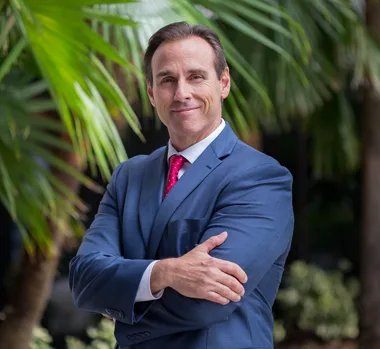 Richard P. Pravato Founding & Managing Attorney Board Certified in Civil Trial Law by The Florida Bar since 2004, and by the National Board of Trial Advocacy. Injury cases exclusively since 1996. Full profile →
 -
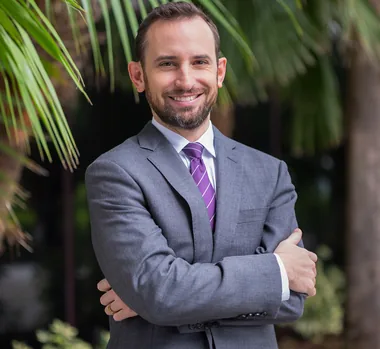 Brett J. Yonon Senior Trial Attorney Selected to Florida Super Lawyers in 2024 and 2025. Brett Yonon is who this firm puts on a catastrophic injury or a death in the family, and he has tried those cases to verdict. Full profile →
Catastrophic Injury questions we are asked
What counts as a catastrophic injury?
There is no single statutory definition for every purpose, but in practice it means an injury that permanently and substantially changes what a person can do: spinal cord injury and paralysis, amputation, severe burns, serious traumatic brain injury, and injuries requiring lifelong care. What matters legally is the permanence and the scale of future need.
The insurance policy is too small to cover this. Is that the end?
It is the beginning of the search rather than the end. Umbrella and excess layers, uninsured and underinsured motorist coverage across household vehicles, commercial policies, and additional responsible parties can all add coverage. In some circumstances an insurer that mishandles a claim exposes itself beyond the policy limit.
How long do these cases take?
Longer than smaller cases, and for a reason worth accepting. The claim cannot be properly valued until the medical picture stabilizes enough for a life care plan to be credible. Settling before that point is the single most expensive mistake available in a catastrophic case.
Questions that apply to any Florida injury claim, fees, deadlines, recorded statements and shared fault, are answered on our injury claim FAQ. What we have recovered is on recent case results.
Five Florida offices
We take catastrophic injury claims statewide. Each market below has its own page on this claim, with that office's address, its direct number and the court a case there is filed in.
Fort Lauderdale catastrophic injury claims
2101 W Commercial Blvd, Fort Lauderdale. Serving Broward County.
View →Miami catastrophic injury claims
1111 Brickell Avenue, Miami. Serving Miami-Dade County.
View →West Palm Beach catastrophic injury claims
2101 Vista Parkway, West Palm Beach. Serving Palm Beach County.
View →Boynton Beach catastrophic injury claims
1375 E Gateway Blvd, Boynton Beach. Serving Palm Beach County.
View →Fort Myers catastrophic injury claims
1825 Colonial Blvd, Fort Myers. Serving Lee County.
View →Other claims we handle
Three of the closest to this one. The full list is on our Florida practice areas page.
Tell us what happened
A lawyer will listen, tell you what Florida law does with those facts, and be straight with you about whether it is worth bringing. If it is not, we will say so.
We take cases anywhere in Florida.