

Florida Product Liability Lawyer
It failed in your hands, in your kitchen or in your car, and you are the one who ended up in the hospital. Keep the product. We can take it from here. Call 954-522-5800 for a free consultation. You pay us nothing unless we win. We have won these claims for Floridians from the Keys to the Panhandle, and we work them from five offices between Fort Lauderdale and Fort Myers.
Manufacturers and retailers routinely offer to collect a failed product "for testing", or to replace it. Do not hand it over. The product itself is the single most important piece of evidence, and once it is out of your possession its condition can no longer be established independently. Photograph it, keep the packaging and any manual, and store it somewhere safe.

Winning product liability claims for Floridians for more than thirty years
A product liability claim arrives at a hard time, usually while the bills are still coming in and nobody has told you what happens next. You do not have to work it out on your own. The attorneys in this photograph have won these cases across Florida since 1993, from the Keys to the Panhandle, and one of them will handle yours from the first call to the last check.
Call 954-522-5800 for a free consult and a trial lawyer will tell you today whether you have a case. You pay us nothing unless we win, and we work from five offices between Fort Lauderdale and Fort Myers.
Meet the attorneys →What Florida law does with a product liability claim
The manufacturer will say the product was misused, and will want the item itself sent away for testing on its terms. Meanwhile you are covering the treatment, missing work, and living in a house that may hold more of the same product. Keeping that evidence and proving the fault is our job, and it starts the day you call.
Every product case in Florida turns on two things that have nothing to do with how badly somebody was hurt: whether the product still exists, and how long ago it was sold. Below is the law on both, the three ways a product can be defective, and who in the chain from factory to shelf can be made to answer.
A Florida product liability claim generally has to be filed within two years, and Florida also imposes an outer limit measured from delivery of the product: 12 years for most products, and 20 for aircraft, large vessels, railroad equipment and improvements to real property. The product itself is the evidence.
The deadline that ends a Florida product liability claim
Two separate limits apply and they run from different events. A claim can be perfectly timely under the first and dead under the second.
Two years from the injury
Most claims from an accident on or after March 24, 2023 have to be filed within two years. An older accident keeps the four years that applied when it happened. A products claim for personal injury is founded on negligence and runs under Fla. Stat. § 95.11 accordingly. Where somebody died, the claim is a wrongful death action with two years running from the date of death.
Twelve years from delivery, whatever the injury
Fla. Stat. § 95.031 sets an outer limit that has nothing to do with when somebody was hurt: no products liability action may be brought where the harm was caused by exposure to or use of the product more than 12 years after delivery of the product to its first purchaser or lessee. A product that injures somebody in year 13 produces no claim at all.
The same section provides that where a manufacturer warranted an expected useful life of more than 10 years, the period runs to the end of that expected useful life or 12 years from delivery, whichever is later. So the warranty documentation is worth finding.
Twenty years for four categories
Fla. Stat. § 95.031 extends the period to 20 years after delivery for aircraft used in commercial or contract carrying of passengers or freight, vessels of more than 100 gross tons, railroad equipment used in commercial service, and improvements to real property including elevators and escalators.
Days, for the product itself
Insurers dispose of vehicles, repairers return or scrap parts, employers replace machinery and families throw out the thing that hurt them. Once it is gone the case is usually gone with it, because a manufacturer defends by arguing misuse, alteration or wear and the only reliable answer is examination of the actual item.
Keep it, untouched, and put every party who might take it on written notice that it may not be repaired, altered, returned or destroyed.
Who can be held answerable
A product passes through several hands between the factory and the person it injures, and Florida law does not require an injured person to work out which pair of hands was at fault before bringing a claim.
- The manufacturer. The primary defendant, answerable for the design, for how the item was made and for what it told users about the risks. On an imported product the manufacturer may be beyond practical reach, which is why the rest of this list matters.
- The maker of a component. A tire, a battery, a switch, a valve, a fastener. Component makers are separate companies with separate coverage, and a defect in one part of an otherwise sound product is a common finding.
- The distributor and the importer. Where a foreign manufacturer cannot be served or has no assets here, the company that brought the product into the country and the one that distributed it are the practical defendants, and both are within the chain.
- The retailer that sold it. Part of the chain that put the product in a consumer's hands. Florida gives sellers who did not create the defect certain protections, and a retailer remains a route to a recovery where nobody upstream can be reached.
- Whoever assembled, installed or maintained it. A machine put together wrongly, a water heater installed badly, equipment serviced by somebody who removed a guard. That is an ordinary negligence claim against a company that usually has records and insurance.
- An employer's compensation carrier, alongside the claim. Where somebody was hurt by a machine at work, the compensation claim and the product claim run together, and the second is where the pain and suffering is. Covered on our Florida workers compensation page.
How a Florida product liability case actually runs
Three theories are available and they are proved differently. Most serious cases plead more than one, because the evidence frequently supports more than one.
- Secure the product before anything else. In writing, to the insurer, the employer, the repairer, the retailer and anybody else who might touch it. Photograph it in place first, including model and serial numbers and any labels, warnings or missing guards.
- A design defect. The product was made exactly as intended and the intention was unsafe. Proved by showing what the design does in foreseeable use and that a safer alternative was available and practical. This is engineering work rather than argument, and it is the most expensive theory to run.
- A manufacturing defect. The design was sound and this particular item was not: a bad weld, a contaminated batch, a part out of tolerance. Proved by comparing the item against the manufacturer's own specifications, which are documents that exist.
- A failure to warn. The risk was real, was not obvious, and the instructions or labeling did not convey it. What the packaging, the manual and the label actually said gets preserved along with the product, because the version in circulation today may not be the version sold then.
- Look for what happened to other people. Recalls, safety notices, regulator complaint databases and prior lawsuits about the same model. Evidence that the manufacturer already knew changes a case from an argument about engineering into an argument about what a company did with what it knew.
- An engineer examines it, on both sides. Usually under an agreed protocol so that testing which alters the item is done with everybody present. Getting that agreement in place early avoids a fight later about evidence somebody destroyed while examining it.
- Suit, discovery and mediation. Fla. Stat. § 47.011 puts the case where the injury happened or where the defendant is, and a foreign manufacturer raises questions about service and jurisdiction that are settled before filing rather than after. Discovery reaches design files, testing records and internal communications, which is where these cases are won. Most Florida courts require mediation, and Fla. Stat. § 768.79 lets either side serve a formal offer with fees running from a refusal the judgment beats by at least 25 percent.
What the claim is worth, and how that number is built
Product cases are valued like other serious injury claims, with one difference: the conduct of a company that knew is itself worth something.
The medical care, past and future
Everything billed and what the treating physicians say is still ahead. Burns, crush injuries and amputations produce staged surgery over years, and the future half is regularly the larger one.
Income, and the capacity to earn it
Wages missed, and separately the working life that has gone. Where a hand, an arm or an eye is involved, the second figure is established with an economist and the treating physicians and it usually dominates.
Scarring, disfigurement and pain
Separate heads of loss, and after a burn or an amputation they are substantial. Photograph the healing as it happens, because no record of week three exists unless somebody made one.
Punitive damages, where a company knew
Fla. Stat. § 768.72 requires a court to see evidence before punitive damages may be pleaded, and then intentional misconduct or gross negligence proved by clear and convincing evidence. A manufacturer that had its own test results, or a pattern of the same failure, and shipped anyway is the situation this exists for, and the proof comes out of the company's own files.
The fault split, and the line at 50 percent
Fault is divided under Fla. Stat. § 768.81 and, since March 2023, a person found more than 50 percent responsible for their own harm recovers nothing. The defense in every product case is misuse: that the item was used in a way nobody intended. Foreseeable misuse is a different thing from unforeseeable misuse, and the difference is usually the case.
What is repaid out of the recovery
Health insurance, Medicare, Medicaid and any compensation carrier are repaid, with Fla. Stat. § 768.76 keeping those payments from being deducted from the award because the repayment right already exists.
What changes from one part of Florida to another
What injures people in Florida is not what injures people elsewhere, and three categories come up here far more than the national picture would suggest.
Marine equipment
Boats, engines, fuel systems, steering and safety equipment. Florida has an enormous recreational fleet, and the 20-year period under ${S95031} for vessels over 100 gross tons does not reach most of it, so the ordinary 12 years applies to the boats most people own.
Building products, and the years after a storm
The rebuild after a hurricane puts heavy use on roofing, fixings, windows, generators and portable heating and cooling equipment, most of it installed quickly by crews brought in for the season. Failures follow, and the improvements-to-real-property category carries the longer 20-year period.
Agricultural and outdoor machinery
The interior counties run equipment that causes crush and amputation injuries, much of it old. That is exactly where the 12-year limit from delivery decides whether there is a case, and it is checked before anything else is promised.
A proven record, anywhere in Florida
Our five offices run from Fort Lauderdale to Fort Myers, and we act statewide on product claims.
The insurance behind a Florida product liability claim
Product cases are expensive to bring and the coverage behind them is usually substantial, provided the defendant can actually be reached.
Manufacturers carry real limits
A company making a product sold at scale carries product liability coverage in layers, with a primary policy and excess above it. Fla. Stat. § 627.4137 requires the limits of each known policy including excess and umbrella coverage to be disclosed in a sworn statement within 30 days of a written request.
A foreign manufacturer may be out of reach
Serving a company abroad, establishing that a Florida court can hear the claim against it, and enforcing a judgment against assets that are all somewhere else are three separate problems. It is the practical reason the importer, the distributor and the retailer matter, and it is assessed at the start rather than after two years of work.
The seller's own coverage
A retailer or distributor carries general liability coverage, and the contracts up the chain frequently require the manufacturer to indemnify them, which pulls the manufacturer in whether it wanted to appear or not.
Where a compensation claim runs alongside
A machine injury at work produces benefits from the compensation carrier and a separate claim against the manufacturer. The carrier is repaid out of any product recovery, and how much it actually gets is negotiable.
What pays in the meantime
Health insurance, repaid at the end out of any recovery. Product cases take longer than most because of the engineering, so treatment cannot wait for the claim.
What makes a product legally defective
Three separate routes
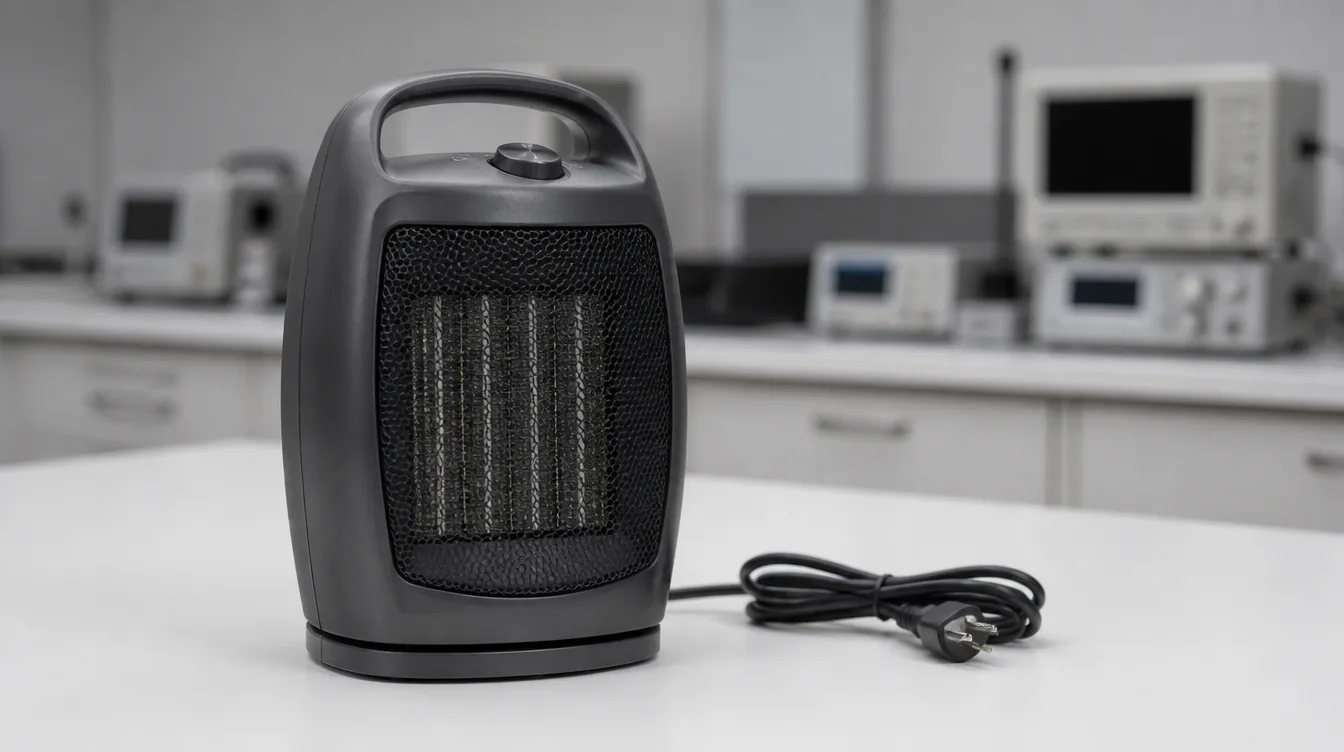
A design defect means the product was dangerous as designed, so every unit shares the flaw. A manufacturing defect means the design was sound but this particular unit was made wrong. A failure to warn means the danger was foreseeable and the instructions or warnings did not adequately address it.
They are proved differently and they implicate different defendants. A design case tends to reach the manufacturer; a manufacturing case may implicate a component supplier; a warning case can involve the distributor and retailer as well.
What we look for
- Recall notices and safety bulletins for the same model, before and after your injury
- Consumer complaint databases and reports of similar failures
- The manufacturer’s own testing records and internal design correspondence
- The instructions, warnings and packaging as they actually reached you
- Whether a safer alternative design existed and was rejected on cost
Who would handle your case
Your case is handled by one of the trial lawyers below, and you will know which of them has it from the first conversation. They do product liability work week in and week out, they will tell you what your case is worth and why, and they will be straight with you about the parts that are hard.
-
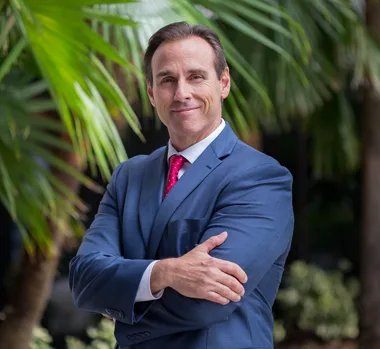 Richard P. Pravato Founding & Managing Attorney Board Certified in Civil Trial Law by The Florida Bar since 2004, and by the National Board of Trial Advocacy. Injury cases exclusively since 1996. Full profile →
 -
 Brett J. Yonon Senior Trial Attorney Selected to Florida Super Lawyers in 2024 and 2025. Brett Yonon is who this firm puts on a catastrophic injury or a death in the family, and he has tried those cases to verdict. Full profile →
Product Liability questions we are asked
Do I have to prove the manufacturer was negligent?
Not for a strict liability claim. The question is whether the product was defective and whether the defect caused your injury, not whether the company was careless in producing it. Negligence can also be pleaded alongside, but it is not the only route.
The product was recalled after I was hurt. Does that help?
It is usually helpful, though a recall is not automatically an admission and its use at trial has limits. What tends to matter more is what the manufacturer knew and when, which the recall investigation and the internal documents behind it often reveal.
I threw the product away. Is my claim finished?
It is harder, not necessarily finished. A claim can still be supported by photographs, the model and lot number, purchase records, medical records describing the mechanism, and evidence of the same failure in other units. Tell us honestly what you still have.
Questions that apply to any Florida injury claim, fees, deadlines, recorded statements and shared fault, are answered on our injury claim FAQ. What we have recovered is on recent case results.
Five Florida offices
We take product liability claims statewide. Each market below has its own page on this claim, with that office's address, its direct number and the court a case there is filed in.
Fort Lauderdale product liability claims
2101 W Commercial Blvd, Fort Lauderdale. Serving Broward County.
View →Miami product liability claims
1111 Brickell Avenue, Miami. Serving Miami-Dade County.
View →West Palm Beach product liability claims
2101 Vista Parkway, West Palm Beach. Serving Palm Beach County.
View →Boynton Beach
1375 E Gateway Blvd, Boynton Beach. Serving Palm Beach County.
View →Fort Myers
1825 Colonial Blvd, Fort Myers. Serving Lee County.
View →Other claims we handle
Three of the closest to this one. The full list is on our Florida practice areas page.

Tell us what happened
A lawyer will listen, tell you what Florida law does with those facts, and be straight with you about whether it is worth bringing. If it is not, we will say so.
We take cases anywhere in Florida.